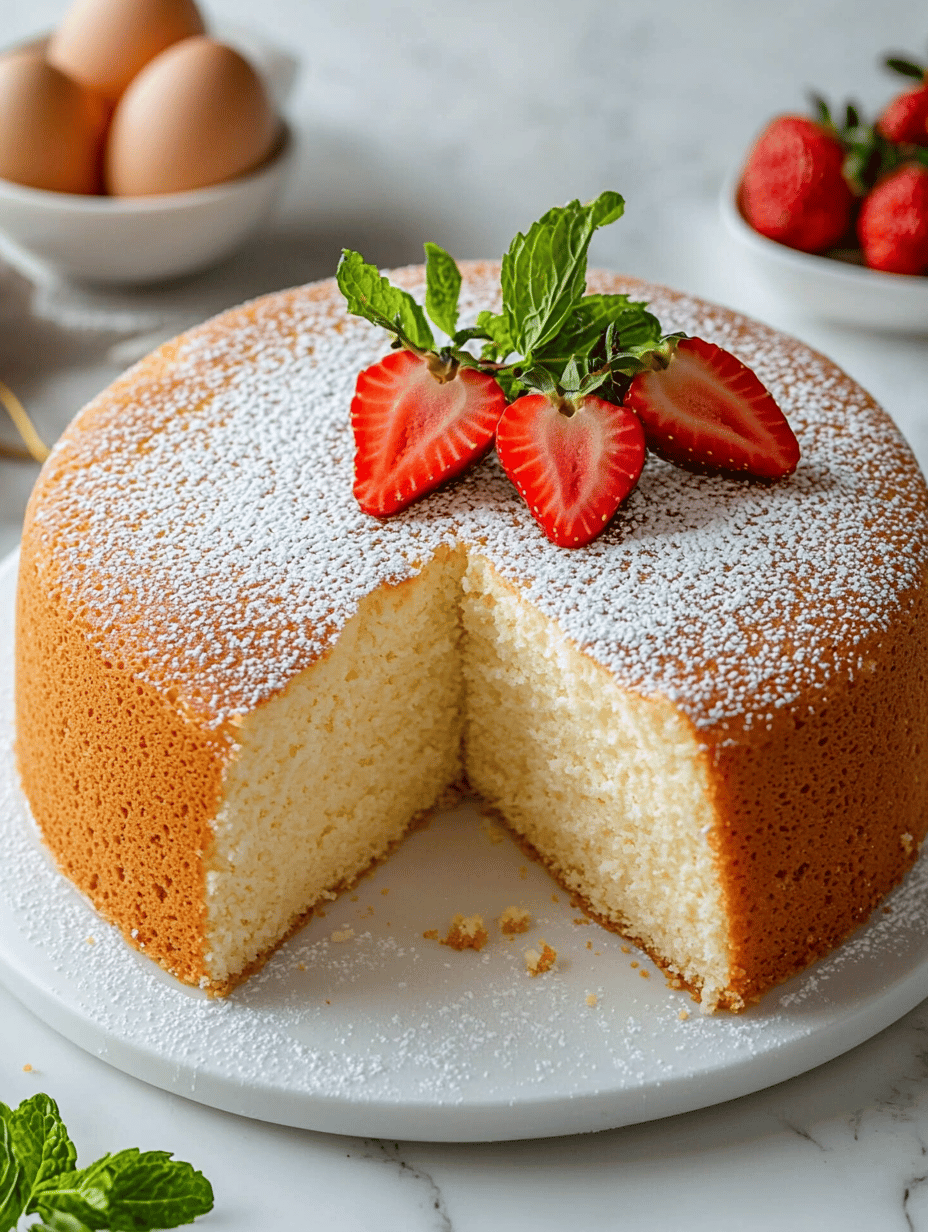
When I first encountered castella, I was mesmerized by its soft, airy texture that practically melts in your mouth. The smell of honey and vanilla wafts as it bakes, filling the whole house with comfort and nostalgia. There’s a certain magic in how simple ingredients come together to create a dessert that feels like a warm hug from Japan itself.
This cake isn’t just about sweetness; it’s about the experience. The gentle sponge, the delicate crackly top, the way it slices so effortlessly—each piece feels like holding a little piece of cloud. With so many desserts feeling hurried or overly complex now, castella offers pure, unpretentious joy.
WHY I LOVE THIS RECIPE?
- It reminds me of childhood afternoons at my grandmother’s house, scent of powdered sugar in the air.
- The way the batter whisks and forms that perfect golden crust is oddly satisfying.
- There’s beauty in how a simple mix of eggs and sugar can feel like a celebration.
- It’s a calming ritual, patiently baked and enjoyed slowly, piece by fluffy piece.
- In a world rushing by, this cake asks only for patience and a moment to breathe.
The season’s cooler days make baking castella feel especially comforting. It’s a quiet act of self-care that celebrates tradition while fitting seamlessly into modern life. Sometimes, the simplest joys are best preserved in layers of spongy cake that feel like a soft whisper of history.
Sharing a slice of castella is a gentle reminder that good things don’t have to be complicated. A simple cake that captures the spirit of calm, warmth, and tradition—these are the moments worth savoring as the days grow shorter.
Japanese Castella Cake
Ingredients
Equipment
Method
- Preheat your oven to 160°C (320°F) and line the loaf pan with parchment paper for easy removal.
- Whisk the eggs in a large bowl until they become slightly frothy and light in color, about 2-3 minutes.
- Gradually add the sugar to the eggs while whisking continuously, ensuring the mixture becomes thick, pale, and ribbon-like, about 5 minutes. This develops volume and a smooth texture.
- Warm the honey with hot water until fully dissolved, then pour it slowly into the egg mixture, gently folding in to incorporate evenly.
- Sift the bread flour into a separate bowl to remove lumps. Gently fold the flour into the wet mixture in three additions, using a rubber spatula to maintain airiness and avoid deflation.
- Once the batter is smooth, pour it into the prepared loaf pan, smoothing the top with a spatula for an even surface. Tap the pan lightly on the counter to remove any large air bubbles.
- Bake in the preheated oven for about 40 minutes, until the top is golden and a toothpick inserted into the center comes out clean. The cake will develop a slightly crackled surface and a delicate crust.
- Remove the cake from the oven and immediately cover it with a clean tea towel or plastic wrap; this traps moisture and keeps the sponge tender. Let it cool completely in the pan for at least 20 minutes.
- Carefully lift the cooled cake out of the pan using the parchment paper, then place on a wire rack. Slice with a serrated knife to reveal its moist, airy crumb and golden crust.
- Serve slices of castella on their own or with a light dusting of powdered sugar. Notice the soft, spongy texture and slightly crackled surface that make this cake so distinctive.
Notes
In the end, castella isn’t just a dessert; it’s a keepsake of slow mornings and cozy evenings. Its airy lightness feels like a moment of stillness—a pause amid the chaos of daily life. That tenderness, the gentle rise, is what makes this humble cake truly special.
Whether as a treat for yourself or a shared comfort, this cake brings a touch of Japan’s quiet elegance into any kitchen. It’s a quiet celebration of simple ingredients turned into something quietly extraordinary. Sometimes, the most unassuming recipes hold the deepest meaning, soaking into the fabric of everyday life one crumb at a time.

Hi, I’m Claire Dawson, and I’m the voice behind The Procrastinators Cookbook. Food has always followed me around, even when I was busy putting other things off. Somewhere between long café shifts, half-finished to-do lists, and meals cooked later than planned, I realized that food was the one thing I always came back to.