
Fruitcake has always felt like a relic—something you bake once a year, mostly because of tradition. But I’ve come to appreciate the slow, messy process of making it from scratch, especially when I tweak the ingredients to suit what’s in my pantry. The best part? It’s a forgiving recipe that rewards patience.
Why I keep making this fruitcake
It’s a bit chaotic to make, but the slow baking process fills my kitchen with warm, spicy smells. The complexity of flavors only improves with age, and every slice feels like a small victory over the chaos of the season. Plus, it’s a nostalgic reminder of family gatherings, a slice of history in every bite.
Ingredients and their stories
- Dried fruits: Chewy, sweet, and deeply concentrated—soaking them in brandy overnight amps up their flavor.
- Nuts: Crunchy and rich—walnuts or pecans add texture and depth.
- Spices: Cinnamon, clove, and nutmeg bring warmth and complexity to each bite.
- Butter: Creamy and rich, it’s the backbone of the batter—use good quality for best flavor.
- Citrus zest: Brightens the entire cake with a zing of lemon or orange—don’t skip it.
- Brown sugar: Adds a molasses undertone that deepens as it bakes.
- Eggs: Bind everything together, giving structure and moisture.
Tools of the trade for a perfect fruitcake
- Loaf pan: Shapes the cake and helps contain the batter during baking.
- Mixing bowls: Combine ingredients thoroughly without mess.
- Electric mixer: Cream butter and sugar efficiently, saving time and effort.
- Cooling rack: Allow the cake to cool evenly without sogginess.
Step-by-step guide to crafting your fruitcake
Step 1: Preheat your oven to 150°C (300°F). Grease a loaf pan with butter and line it with parchment paper.
Step 2: Mix the dried fruits, nuts, and spices in a large bowl, letting the aromas of cinnamon and citrus zest fill the air.
Step 3: In a separate bowl, beat the butter and sugar until creamy, then add eggs one at a time, mixing well.
Step 4: Combine the wet and dry ingredients, stirring until just blended. Pour into the prepared loaf pan.
Step 5: Bake for 1 hour and 15 minutes, or until a skewer inserted into the center comes out clean.
Step 6: Let the cake cool in the pan for 20 minutes, then transfer to a wire rack to cool completely.
Cooking checkpoints and tips to get it right
- Ensure your oven is properly calibrated; too hot and the cake might burn before cooking through.
- Check the cake’s color; it should be a deep golden brown, not burnt but well caramelized.
- Test for doneness by inserting a skewer; it should come out clean, with no wet batter attached.
Common pitfalls and how to fix them
- Over-torched top, leaving the inside underdone.? Use a different oven rack if the top burns too quickly.
- Cake is dry and crumbly.? Reduce oven temp by 10°C (20°F) and extend baking time.
- Fruit isn’t embedding well, making the cake dry.? Add a bit more butter or moisture to the batter.
- Cake cracks on top.? Cover the cake with foil if it browns too fast.
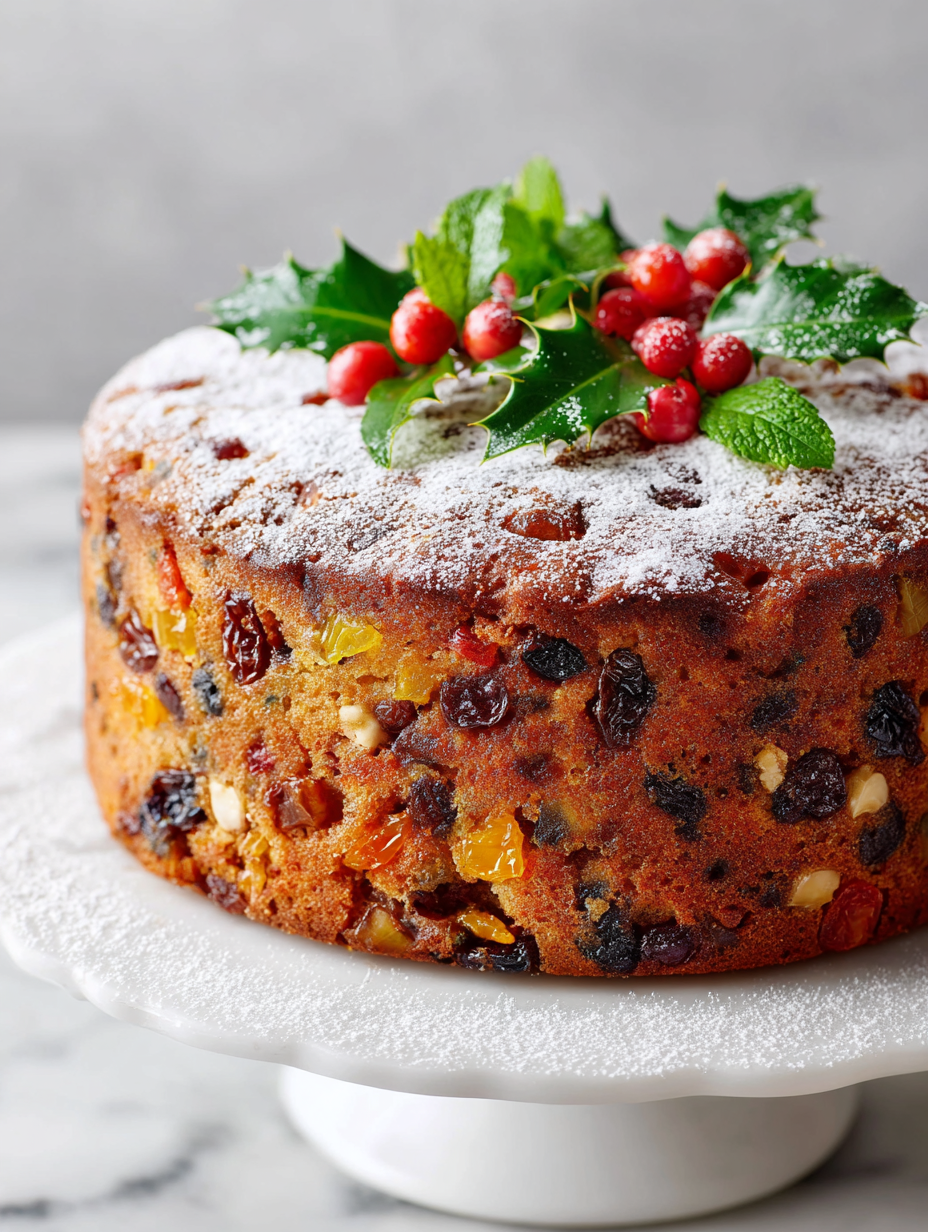
Homemade Fruitcake
Ingredients
Equipment
Method
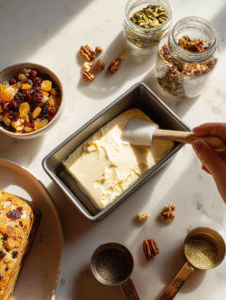
- Preheat your oven to 150°C (300°F). Grease a loaf pan with butter and line it with parchment paper for easy removal.
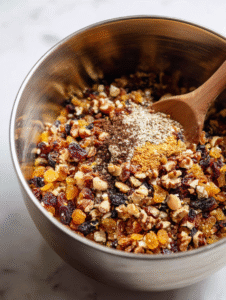
- In a large bowl, mix the soaked dried fruits, chopped nuts, and spices—cinnamon, cloves, and nutmeg—until well combined and fragrant.
- In a separate bowl, use an electric mixer to beat the softened butter and brown sugar together until the mixture is light, fluffy, and creamy, about 3-4 minutes.
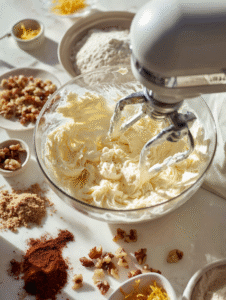
- Add eggs one at a time to the butter mixture, beating well after each addition until fully incorporated.
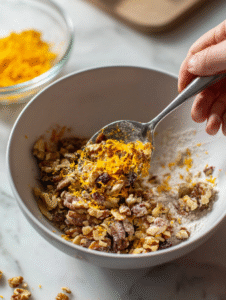
- Stir in the citrus zest, which will give the cake a bright, zesty aroma.
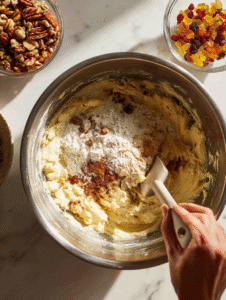
- Gradually fold the dry ingredients—flour and spices—into the wet mixture, mixing just until combined. Then, fold in the fruit and nut mixture, ensuring even distribution.
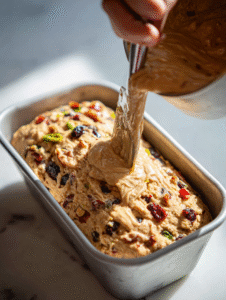
- Pour the batter into your prepared loaf pan, smoothing the top with a spatula for an even surface.
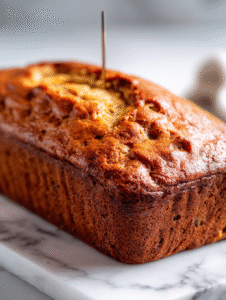
- Bake in the preheated oven for about 1 hour and 15 minutes, or until the top is deep golden brown and a skewer inserted into the center comes out clean.
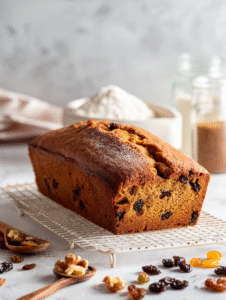
- Once baked, remove the cake from the oven and let it cool in the pan for 20 minutes. Then, transfer it to a wire rack to cool completely, allowing the flavors to settle and develop.
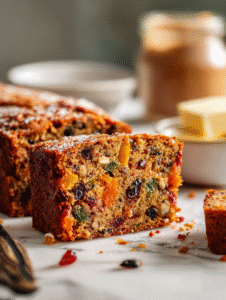
- Slice the cooled fruitcake and enjoy its dense, moist texture with a rich, spicy aroma—perfect for sharing or aging further for enhanced flavor.
Notes

Hi, I’m Claire Dawson, and I’m the voice behind The Procrastinators Cookbook. Food has always followed me around, even when I was busy putting other things off. Somewhere between long café shifts, half-finished to-do lists, and meals cooked later than planned, I realized that food was the one thing I always came back to.