
Perfect scrambled eggs start with one simple truth: low and slow wins the race. It’s about patience, gentle heat, and constant stirring—those tiny, deliberate movements that coax the eggs into a silky, custardy texture. Skip the high heat and rushing, and you’ll notice the difference in the creaminess and how everything just melts together.
I’ve learned that the magic lies in the small details—like pre-whisking your eggs thoroughly, and keeping a watchful eye on the temperature. It’s a process that demands attention but rewards you with eggs that are tender, moist, and almost spoonable. It’s not about perfection, but finding that perfect, personal consistency that makes breakfast feel special, even on busy mornings.
Focusing on how the temperature and gentle movements during cooking transform ordinary eggs into a luxuriously creamy, melt-in-your-mouth texture that elevates breakfast from simple to sublime.
The quiet art of gentle stirring
- The first time I got eggs just right, I felt like I’d cracked a secret only I knew.
- There’s a strange joy in achieving that perfect velvety texture that makes breakfast feel like a special occasion.
- Sometimes, I rush and end up with dry eggs—learning to slow down was a small victory in my kitchen.
- I love how the smell of gently cooked eggs fills the room, promising comfort and a fresh start.
- Getting the heat just right and stirring constantly makes me feel like I’m creating something tender and alive.
The story behind this recipe
- My inspiration for perfect scrambled eggs came from a weekend mornings spent with my grandmother, who had this uncanny ability to make eggs so creamy and tender that they seemed almost velvety. Watching her gently stir those eggs in her old cast iron pan, I realized it’s all about patience and attention to heat. That slow, deliberate process stuck with me and changed how I approach breakfast forever.
- It’s funny how something as simple as eggs can hold so much nostalgia—those mornings of quiet chaos, the smell of butter and fresh eggs filling the kitchen, and the first bite that’s just slightly runny but luxuriously soft. I’ve refined that memory into a method that’s about simplicity, but also a little ritual. It’s a small act of self-care to slow down and coax every bit of richness from those humble eggs.
- heading: The quiet art of gentle stirring
Contextual origin, trivia, or history
- Early scrambled eggs trace back to humble peasant breakfasts in Europe, where simplicity was key due to limited ingredients.
- The technique of gently stirring eggs over low heat was popularized in French cuisine, emphasizing texture and richness.
- Eggs have been a breakfast staple for centuries, but the focus on creamy, soft scramble textures is a relatively modern refinement.
- Historically, adding dairy like cream or butter to eggs was a way to make the dish more luxurious and filling.
- The term ‘scrambled’ originated from the act of stirring eggs into a uniform mixture, dating back to 18th-century European cooking.
Ingredient breakdown: key components
- Eggs: I prefer organic, farm-fresh eggs—they have a richer, almost buttery flavor that really shines when gently cooked; skip cheap eggs if you can, they tend to be watery and dull.
- Butter: A generous knob of butter adds a nutty aroma and silky mouthfeel; if I want a dairy-free version, a splash of olive oil works, though it’s less rich.
- Salt: I like to salt my eggs lightly before cooking for even seasoning; if you’re watching sodium, a pinch at the end can help control saltiness without dulling the flavor.
- Pepper: Freshly ground black pepper adds a mild bite and aroma; for a different kick, try a sprinkle of smoked paprika or a dash of cayenne.
- Cream (optional): A splash of heavy cream or crème fraîche makes the eggs extra creamy; skip it for a lighter, more springy texture—just be sure to cook a little longer if you omit the dairy.
- Milk (alternative): If you don’t have cream, a splash of whole milk or even almond milk can soften the eggs slightly, but stay mindful of over-stirring to keep them tender.
- Herbs (optional): Fresh chives or parsley stirred in at the end add brightness; dried herbs can be used but are less vibrant and a bit more earthy.
Spotlight on key ingredients
Eggs:
- I prefer farm-fresh eggs—they have a richer, almost buttery flavor that really shines when gently cooked; skip cheap eggs if you can, they tend to be watery and dull.
- Butter: A generous knob of butter adds a nutty aroma and silky mouthfeel; if I want a dairy-free version, a splash of olive oil works, though it’s less rich.
- Salt: I like to salt my eggs lightly before cooking for even seasoning; if you’re watching sodium, a pinch at the end can help control saltiness without dulling the flavor.
Butter:
- Melts slowly and evenly, giving a nutty aroma and smooth base; for dairy-free, olive oil will do, but misses that rich finish.
- Cream (optional): Adds a luxurious, velvety texture; skip if you prefer lighter eggs, but be mindful to cook a bit longer to compensate.
- Herbs: Fresh chives or parsley brighten the eggs with a crisp, herbal note; dried herbs work but lack vibrancy and freshness.
Notes for ingredient swaps
- Dairy-Free: Use olive oil or avocado oil instead of butter. Expect a lighter, slightly more grassy flavor, and less richness.
- Vegan: Swap eggs for silken tofu blended until smooth. It’s softer and more neutral, but still creamy if cooked gently.
- Low-Sodium: Skip adding salt or use a salt substitute. The eggs might taste a touch blander, so adjust seasoning at the end.
- Cream Alternative: Coconut cream or cashew cream can replace heavy cream. They add a subtle sweetness and a different richness.
- Herbs: Fresh chives or parsley lift the eggs with brightness. Dried herbs are fine but less vibrant and more earthy.
- Pepper: White pepper offers a milder, less pungent heat. Smoked paprika adds a smoky depth that’s unexpected but welcome.
- Additional Flavor: A splash of soy sauce or fish sauce can introduce umami, but use sparingly to avoid overpowering the eggs.
Equipment & Tools
- Non-stick or cast iron pan: Provides even heat and prevents sticking for gentle cooking.
- Silicone spatula: Gently folds and stirs eggs without breaking curds.
- Small mixing bowl: Holds and whisks the eggs thoroughly before cooking.
- Whisk or fork: Ensures eggs are fully combined and frothy for a uniform scramble.
Step-by-step guide to perfect eggs
- Gather your equipment: a non-stick or well-seasoned cast iron pan, a silicone spatula, a small mixing bowl, and a whisk or fork.
- Crack 3 large eggs into the bowl. Whisk thoroughly for about 20 seconds, until the yolk and whites are fully combined and slightly frothy.
- Preheat your pan over low to medium-low heat, aiming for about 120°C (250°F). Add a generous knob of butter, about 1 tablespoon, and let it melt slowly, shimmering but not browning.
- Once the butter is melted and just starting to foam, pour in the eggs. Let them sit undisturbed for 10-15 seconds, then gently stir with the spatula, scraping the bottom and sides.
- Continue to stir slowly and constantly, lifting and folding the eggs over the heat. Keep the heat gentle; the eggs should be just starting to set but still look slightly runny on top, about 2-3 minutes.
- Check the texture: the eggs should be creamy, moist, and slightly jiggly, with no significant liquid egg remaining. If they look too wet, take them off heat and keep stirring gently.
- Remove from heat when they reach your preferred softness. The residual heat will carry them to perfect creaminess in the next minute.
- Transfer the eggs to a plate or bowl immediately to stop cooking. Let them rest for a few seconds, then serve with toast or your favorite breakfast sides.
Serve immediately after removing from heat for optimal creaminess. Garnish with fresh herbs if desired. Plate with toast or your preferred breakfast accompaniments to complete the experience.
How to Know It’s Done
- Eggs are softly set, creamy, with no liquid egg remaining.
- Surface appears slightly shiny and moist, not dry or rubbery.
- Color is uniform and pale, with a velvety texture when touched.
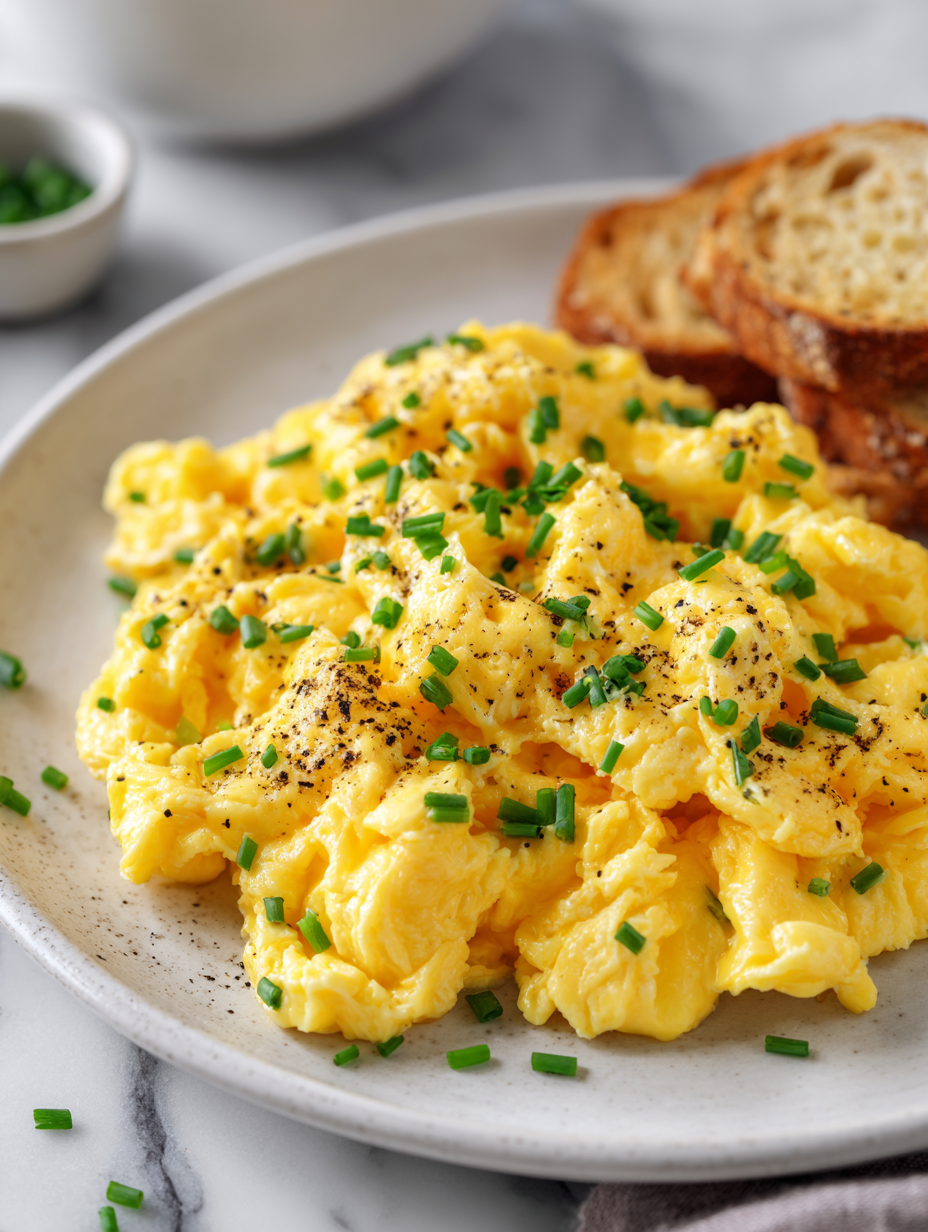
Perfect Gentle Scrambled Eggs
Ingredients
Equipment
Method
- Crack the eggs into a small mixing bowl and whisk thoroughly until the yolks and whites are fully combined and slightly frothy, about 20 seconds.
- Preheat your pan over low to medium-low heat until it's warm but not hot, then add a generous tablespoon of butter. Let it melt slowly, shimmering gently without browning.
- Pour the beaten eggs into the pan. Allow them to sit undisturbed for about 10-15 seconds, until they just begin to set at the edges and turn opaque.
- Gently stir the eggs with your spatula, scraping the bottom and folding the eggs over. Keep the heat low, and stir slowly and continuously to create soft, moist curds.
- Continue stirring gently for another 2-3 minutes, watching the eggs turn velvety and glossy. If using, add a splash of cream now for extra richness.
- When the eggs are just softly set but still slightly runny on top, remove the pan from heat. The residual warmth will finish the cooking for a perfect, silky texture.
- Season with a pinch of salt and freshly ground black pepper. Fold in chopped fresh herbs if desired for a bright, herbal note.
- Serve immediately on a warm plate, accompanied by toast or your favorite breakfast sides for a luxuriously tender bite.
Notes
Pro tips for perfect scrambled eggs
- Use low heat → Gentle, slow cooking prevents eggs from becoming rubbery and preserves silky texture.
- Whisk thoroughly → Achieve a uniform, frothy mixture that cooks evenly and results in tender curds.
- Add butter early → Melts into the eggs, creating a rich, velvety mouthfeel and preventing sticking.
- Constant stirring → Keeps eggs creamy and prevents large curds from forming, aiming for a soft, uniform scramble.
- Remove from heat slightly early → Eggs will carry residual heat and finish to perfection without overcooking.
- Use a silicone spatula → Scrapes gently and folds eggs softly, avoiding breakage of delicate curds.
- Keep the pan slightly cool → Maintain low heat to control cooking speed and achieve that melt-in-mouth texture.
Common mistakes and how to fix them
- FORGOT to control heat → Use low to medium-low heat for gentle cooking.
- DUMPED eggs too early → Remove from heat when eggs are slightly runny and velvety.
- OVER-TORCHED eggs → Lower the temperature or remove from heat sooner to prevent rubberiness.
- MIXED eggs too vigorously → Stir gently and constantly for a creamy texture, not a fluffy one.
Fast fixes for perfect eggs
- If eggs appear watery, lower heat and stir more gently to prevent overcoagulation.
- When eggs stick or burn, splash a little water or cold milk to cool and loosen the bottom.
- Patch over dry or rubbery eggs with a dollop of butter or a sprinkle of fresh herbs.
- Splash some lemon juice or vinegar if eggs smell sulfurous or off, to neutralize odors.
- Shield overcooked eggs with a damp cloth for 5 seconds to rehydrate and soften slightly.
Prep, store, and reheat tips
- Whisk the eggs thoroughly in advance for quicker, even cooking—keep covered in the fridge for up to 24 hours.
- Pre-measure butter or oil and store in small containers; keep refrigerated and bring to room temp before cooking for best melting.
- Eggs can be stored in the fridge for up to 4 days; keep in an airtight container and avoid washing to preserve freshness.
- Reheat gently in a non-stick pan over low heat, stirring constantly; expect the texture to be slightly firmer but still creamy.
- Adding a splash of milk or cream when reheating can help restore some of the original softness—do so gradually, watching for steam and slight bubbling.
Top questions about scrambled eggs
1. How do I prevent my scrambled eggs from turning rubbery?
Use low and gentle heat to keep the eggs soft and custardy, avoiding rubbery textures.
2. Should I whisk the eggs before cooking?
Whisk the eggs thoroughly until frothy and fully combined for an even, creamy scramble.
3. When should I take the eggs off the stove?
Remove the eggs from heat when they’re slightly runny; residual heat will finish the cooking process.
4. Can I use oil instead of butter?
Adding butter early helps create a silky texture and prevents sticking, but you can substitute with olive oil.
5. How do I know when the eggs are done?
Cook the eggs slowly, stirring constantly, until they’re just set and look slightly shiny and moist.
6. Is dairy necessary for perfect scrambled eggs?
A splash of cream or milk makes the eggs extra creamy, but they’ll still be delicious without it.
7. How should I stir the eggs during cooking?
Stir gently and continuously for a velvety texture, avoiding vigorous mixing which makes them fluffy instead.
8. Can I make scrambled eggs ahead of time?
Serve immediately for the best texture and flavor, as they tend to firm up as they cool.
9. How do I reheat leftover scrambled eggs?
Reheat gently in a non-stick pan over low heat with a splash of milk or butter for best results.
10. Does the quality of eggs matter?
Using fresh, high-quality eggs makes a noticeable difference in flavor and creaminess.
Mastering these simple techniques makes breakfast feel less hurried and more intentional. When eggs come together this tender, they remind me that good food often needs patience, not complexity.
In the end, it’s about finding that smooth, creamy texture that feels indulgent but is so easy to make. It’s a small pleasure that can set the tone for the whole day, no matter how busy it gets.

Hi, I’m Claire Dawson, and I’m the voice behind The Procrastinators Cookbook. Food has always followed me around, even when I was busy putting other things off. Somewhere between long café shifts, half-finished to-do lists, and meals cooked later than planned, I realized that food was the one thing I always came back to.