
Mushroom risotto might seem straightforward, but I’ve learned that the real magic is in the mushroom selection. Picking different varieties—oysters, shiitake, or even wild foraged fungi—can totally shift the flavor, adding layers of earthiness or a smoky punch. It’s like listening to a symphony where each mushroom plays a unique note.
Honestly, I find myself lost in those quiet moments of choosing the right fungi. It’s almost meditative—sniffing around the market, feeling the textures, imagining how they’ll cook down. This dish isn’t just about comfort; it’s about honoring the unspoken artistry behind each fungi’s role in the pot.
Every time I make this, I feel a little more connected to the process—more mindful of the tiny details that turn simple ingredients into something memorable. It’s a reminder that sometimes, the secret lies in the small choices, like the mushroom variety that can make or break the whole bowl.
Focusing on the overlooked importance of the mushroom variety and how choosing different types can subtly change the flavor profile, this recipe emphasizes the unspoken artistry behind selecting the right fungi for a deeply personal, almost meditative cooking experience.
The understated art of mushroom selection
- I love how the earthy aroma of wild mushrooms fills the kitchen as they cook down, transforming the dish.
- Choosing the right mushroom variety feels like a quiet rebellion—each one adding a different story to the risotto.
- There’s a small thrill in foraging for mushrooms, but I find just as much joy in selecting pristine, fresh ones at the market.
- Making this dish reminds me to slow down and appreciate the subtle nuances that a good mushroom can bring.
- Sometimes, I toss in a splash of sherry or a drizzle of truffle oil — just a tiny flourish that elevates the whole experience.
The story behind this recipe
- Making this risotto always takes me back to a foggy autumn morning at the farmers’ market. I was drawn to the mushroom stall, overwhelmed by the earthy smell and variety—oysters, chanterelles, shiitakes. That day, I realized it’s not just about following a recipe, but about choosing mushrooms that speak to me, that tell a story.
- Each batch feels like a small adventure—testing different mixes, listening for that perfect aroma, feeling the texture for firmness. It’s a ritual rooted in intuition and a quiet love for the fungi that grow under the radar. That’s what makes this dish special; it’s a celebration of wild, humble ingredients that demand attention.
- heading: ‘The understated art of mushroom selection’
Contextual origin, trivia, or history
- Mushroom risotto has roots in Northern Italy, especially around Lombardy, where rice paddies and forests coexist, providing the perfect environment for this dish to flourish.
- Historically, the use of wild foraged mushrooms in risotto was a way for farmers and foragers to elevate humble ingredients into a celebratory meal.
- Different mushroom varieties can dramatically change the flavor profile, from the delicate earthiness of chanterelles to the smoky depth of shiitakes, reflecting regional and seasonal variations.
- The classic arborio rice used in risotto was developed in Italy in the 19th century, specifically for its high starch content, which creates that signature creamy texture.
Ingredient breakdown
- Mushrooms: I prefer a mix of shiitake and cremini, their earthy aroma really deepens the flavor; swap with porcini if you want a smoky punch.
- Arborio rice: This starchy grain creates that creamy texture I love; you could try carnaroli for an even silkier bite, but stay away from long-grain varieties.
- Onion: Finely chopped yellow onion adds sweetness and depth; shallots work beautifully if you want a mellower, more nuanced flavor.
- Vegetable broth: I simmer my own for richer taste, but store-bought works in a pinch—just make sure it’s warm to avoid shocking the rice.
- White wine: A splash of dry white wine brightens the dish with a subtle acidity; skip it for a milder, more mellow risotto, or add a splash of lemon juice instead.
- Butter & Parmesan: They finish the dish with richness and umami, but for a lighter version, use a drizzle of olive oil and nutritional yeast.
- Garlic (optional): A small clove, minced, adds a fragrant layer—skip if you want a more subdued mushroom flavor, or roast it beforehand for sweetness.
Spotlight on Mushrooms
Mushrooms:
- Shiitake: I love their smoky aroma and chewy texture; they become intensely flavorful as they cook down, adding depth to the risotto.
- Cremini: These small, brown mushrooms are versatile with a meaty bite; they soften beautifully and release a rich, earthy scent during sautéing.
Notes for ingredient swaps
- Dairy-Free: Swap Parmesan for nutritional yeast or a dairy-free cheese. It won’t have that salty, umami punch, but still adds flavor.
- Vegan: Use vegetable broth and skip butter; replace Parmesan with a splash of tamari or a sprinkle of vegan cheese for depth.
- Gluten-Free: Stick with arborio rice (naturally gluten-free). Avoid flavorings that contain gluten, like certain broths or seasonings.
- Low-Sodium: Use low-sodium broth and skip added salt. Focus on mushroom and onion flavors to build richness.
- Herb Variations: Toss in fresh thyme or parsley instead of or alongside traditional seasonings for a bright, herbal note.
- Mushroom Types: Use dried porcini for a smoky, intense flavor—soak and chop them well before cooking, or stick with fresh for a milder earthiness.
- Rice Alternatives: Carnaroli or Vialone Nano rice can be used if you want an even creamier or firmer bite—just adjust cooking time slightly.
Equipment & Tools
- Wide sauté pan: Ensures even cooking and allows for easy stirring.
- Wooden spoon: Gentle stirring, prevents sticking or scratching the pan.
- Ladle or measuring cup: Helps add broth gradually for controlled cooking.
- Sharp knife: Prepares mushrooms, onions, and garlic efficiently.
Step-by-step guide to mushroom risotto
- Equipment & tools: Use a wide, heavy-bottomed pan for even heat; a wooden spoon for stirring; a small ladle or measuring cup for adding broth; a sharp knife for prep.
- Warm the broth: Heat 4 cups of vegetable broth in a saucepan until just simmering, keep on low heat to stay warm.
- Prep the mushrooms: Clean and chop 1 lb mixed mushrooms—shiitake, cremini, or your favorites—set aside.
- Sauté mushrooms: In the big pan, melt 2 tbsp butter over medium heat (160°C/320°F). Add mushrooms, cook until they release their aroma and soften, about 8 minutes. Season with a pinch of salt, set aside.
- Sauté aromatics: In the same pan, add 1 finely chopped small onion, cook until translucent and fragrant, about 3 minutes. Add 1 minced garlic clove, cook for 30 seconds — smell should be sweet and fragrant.
- Toast the rice: Stir in 1 ½ cups arborio rice. Cook, stirring constantly, until the edges look translucent, about 2 minutes. The rice should crackle gently, a faint toasty smell will emerge.
- Deglaze: Pour in ½ cup dry white wine. Stir until mostly absorbed and the alcohol smell fades, about 2 minutes.
- Add broth gradually: Ladle in ½ cup of hot broth, stir continuously until mostly absorbed. Repeat this step, adding broth in ½ cup increments, stirring often, for about 20 minutes. Keep the heat at medium (around 160°C/320°F).
- Monitor texture: When rice is creamy and al dente—just a slight firmness in the center—check for doneness. The mixture should be velvety, not soupy, with a slight jiggle when shaken.
- Finish: Stir in the sautéed mushrooms, 2 tbsp butter, and ½ cup grated Parmesan. Adjust salt and pepper. Turn off heat and let rest for 2 minutes.
- Serve: Plate immediately, garnished with a sprinkle of Parmesan and a drizzle of olive oil if desired. The rice should be luscious and slightly creamy, with a good bite.
Let the risotto rest off the heat for 2 minutes. Serve immediately, garnished with extra Parmesan and a drizzle of good olive oil for shine and flavor.
How to Know It’s Done
- The rice is creamy and slightly al dente—no crunch, no mush.
- The mushroom aroma is rich and earthy, filling the kitchen.
- The color is a warm, inviting ivory with bits of browned mushroom edges.
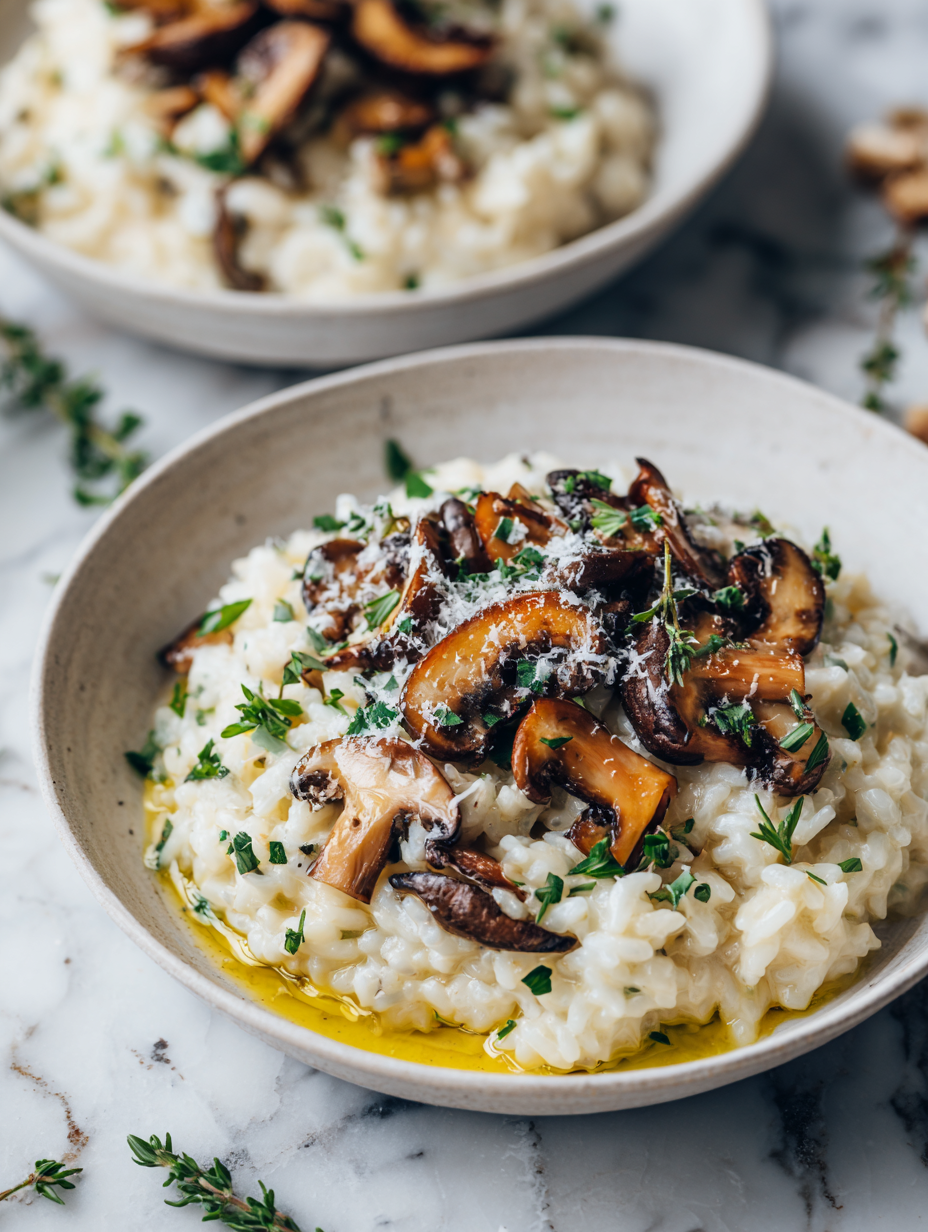
Wild Mushroom Risotto
Ingredients
Equipment
Method
- Heat your broth in a saucepan until it just simmers, then keep it warm on low heat.
- In your wide pan, melt a tablespoon of butter and add a splash of olive oil over medium heat. Toss in the chopped mushrooms and sauté until they release their earthy aroma, become tender, and start to brown, about 8 minutes. Remove them from the pan and set aside.
- In the same pan, add the finely chopped onion and cook until translucent and fragrant, about 3 minutes. Add the minced garlic and cook for another 30 seconds, stirring constantly to prevent burning.
- Add the arborio rice to the pan and toast it, stirring constantly, until the edges turn translucent and it emits a faint toasty aroma, about 2 minutes. This step develops flavor and helps the rice absorb liquids better.
- Deglaze the pan with the white wine, stirring until the wine is mostly absorbed and you smell a rich aroma filling the air.
- Begin adding the warm broth, about half a cup at a time, stirring constantly until the liquid is mostly absorbed before adding more. Continue this process, maintaining a gentle simmer, for about 20 minutes. The rice should become creamy and al dente, with a slight bite in the center.
- When the rice is nearly done, gently fold in the sautéed mushrooms, then stir in the remaining butter and grated Parmesan cheese. Adjust seasoning with salt and freshly ground pepper to taste.
- Turn off the heat and let the risotto rest for a minute or two. Serve immediately, garnished with extra Parmesan and a drizzle of olive oil if desired. The rice should be luscious, velvety, with bits of browned mushroom for texture and flavor.
Notes
Top tips for perfect risotto
- Bold the rice: Toast the arborio grains until they crackle gently and smell toasty, ensuring a rich flavor foundation.
- Stir consistently: Keep the risotto moving in the pan to release starch and achieve that luscious, velvety texture.
- Gradual broth addition: Pour in hot broth in small increments; watch for the rice to absorb and become tender without turning mushy.
- Adjust heat carefully: Maintain a steady simmer around 160°C/320°F to prevent sticking or overcooking the rice.
- Check texture often: The risotto should be creamy, with a slight bite in the center—test by tasting and observing the jiggle.
- Finish with fat: Off the heat, stir in butter and Parmesan for richness and that glossy, inviting finish.
- Serve immediately: Risotto waits for no one; serve straight from the pan for the best texture and warmth.
Common Mushroom Risotto Mistakes & Fixes
- FORGOT to stir continuously → Stir often to prevent sticking and ensure creaminess.
- DUMPED all broth at once → Add broth gradually for proper rice absorption and texture.
- OVER-TORCHED the mushrooms → Cook mushrooms gently until tender and fragrant, avoid burning.
- USED cold broth → Keep broth warm to maintain consistent cooking temperature.
Quick fixes and pantry swaps
- If the risotto is too thick, splash in warm broth and stir until creamy.
- When mushrooms release too much water, increase heat to evaporate excess moisture.
- Splash a little lemon juice if the dish tastes flat or lacks brightness.
- Patch over-salted risotto with a dollop of butter or a splash of cream.
- Shield the pan from direct heat if the rice starts to scorch or stick, reduce flame immediately.
Prep, store, and reheat tips
- You can prep the mushroom cleaning and chopping up to a day ahead; keep them in an airtight container in the fridge—mushrooms stay firm and earthy overnight.
- Cook the risotto up to halfway—just until the rice is slightly underdone—and store it in a covered dish in the fridge for 1–2 days. The texture will be a bit firmer, so plan to reheat carefully.
- Refrigerated risotto will thicken and become creamier as it sits. To reheat, add a splash of warm broth or water, then stir over medium heat until it’s velvety again—smell for that earthy aroma to confirm it’s heated through.
- Cooked mushroom risotto is best enjoyed within 2 days. For longer storage, freeze in portions for up to a month; thaw overnight in the fridge before reheating.
- Reheating will soften the rice further, so expect a slightly creamier, less al dente bite. Keep an eye on the texture and stir well to bring back some of that freshly made magic.
Top questions about mushroom risotto
1. What mushrooms are best for risotto?
Use a mix of mushrooms for depth—shiitake, cremini, and wild varieties add layers of earthiness and smoky aroma.
2. How do I get the perfect creamy risotto?
Add broth gradually, about half a cup at a time, stirring constantly until absorbed to get that creamy texture.
3. Why is stirring important in risotto?
Stir often to release starch and prevent sticking, especially when adding hot broth, for a velvety finish.
4. Can I make risotto dairy-free?
Finish with butter and Parmesan off the heat for richness; you can substitute nutritional yeast for a dairy-free option.
5. Should broth be cold or warm when adding to risotto?
Use warm broth to keep the cooking temperature steady and avoid shocking the rice, which can make it mushy.
6. How do I know when the risotto is done?
Cook the rice until it’s just al dente—tender but with a slight bite—around 20 minutes total.
7. How do I reheat mushroom risotto?
Reheat leftovers with a splash of warm broth and stir until the rice regains its creamy texture.
8. When should I add the mushrooms?
Avoid overcooking the mushrooms; sauté until fragrant and just tender to retain their earthy flavor and texture.
9. Can I use a different rice?
Use arborio rice for the best creaminess; substitutes like carnaroli work well but avoid long-grain varieties.
10. What if my risotto is too thick?
If risotto becomes too thick, stir in a little warm broth or water to loosen it and restore creaminess.
This dish isn’t just about the ingredients; it’s about the quiet moments of choosing and tasting. Every spoonful feels like a small victory—a balance of earthiness, creaminess, and that faint smoky aroma from the mushrooms. It’s a reminder that sometimes, the simplest ingredients can lead to the most memorable meals.
In a world that’s constantly rushing, making mushroom risotto offers a pause—a chance to slow down, focus on the process, and enjoy the subtle art of good cooking. When you serve it, you’re sharing more than just a meal—you’re sharing a piece of that mindful, earthy joy.

Hi, I’m Claire Dawson, and I’m the voice behind The Procrastinators Cookbook. Food has always followed me around, even when I was busy putting other things off. Somewhere between long café shifts, half-finished to-do lists, and meals cooked later than planned, I realized that food was the one thing I always came back to.