
Focusing on the slow caramelization process, I want to share how the patience and attention to detail in developing rich, sweet onion layers turns this humble dish into something deeply comforting, almost meditative in the kitchen. It’s about finding beauty in the everyday act of patiently coaxing out flavor, transforming simple ingredients into something soulful.
There’s something about standing over a bubbling pot, onions turning a glossy, deep amber, that feels like a quiet, ritualistic act. It’s not just about making soup; it’s about creating a moment of calm amidst chaos, where each caramelized slice adds to a layered, complex broth. That slow build, that sweet, smoky aroma, makes this more than just a meal—it’s an act of care.
Focusing on the slow caramelization process, I want to share how the patience and attention to detail in developing rich, sweet onion layers turns this humble dish into a deeply comforting, almost meditative kitchen ritual. It’s about finding beauty in the everyday act of patiently coaxing out flavor, transforming simple ingredients into something soulful.
Patience in caramelizing onions
- Watching the onions slowly turn a rich, caramel hue feels like a small victory in patience.
- That first spoonful, with its deep, sweet broth and gooey cheese, always takes me back to cozy family dinners.
- I love the chaos of slicing onions—it’s messy but oddly satisfying when they hit that perfect caramel stage.
- There’s a quiet pride in crafting this soup from scratch, knowing each step builds layers of flavor.
- Nothing beats the warm, smoky aroma filling the kitchen on a chilly evening, making everyone gather closer.
The story behind this recipe
- My earliest memory of French Onion Soup is from a tiny bistro in Paris. The way the caramelized onions shimmered under a blanket of bubbling cheese felt like a warm hug after a long day wandering cobblestone streets.
- I started making it at home during chilly weekends, trying to replicate that smoky, sweet aroma that fills the kitchen, filling the house with a sense of nostalgia and quiet pride. It’s become my go-to comfort food, especially when I want something simple but soulful.
- Over the years, I’ve tweaked the recipe—less broth, more onions, a splash of sherry—to keep that familiar, layered flavor that reminds me of slow Sunday afternoons and good conversations.
Trivia and historical notes
- French Onion Soup dates back to ancient Rome, where onions were cooked slowly to develop sweetness before being served with bread and cheese.
- The modern version of the soup gained popularity in France in the 18th century, often enjoyed by working-class people as a hearty, affordable meal.
- Traditionally, the caramelization process is key—slowly cooking onions until they turn a deep, sweet brown, which can take up to an hour or more, depending on the heat.
- The iconic crusty toast topped with melted cheese was originally a practical way to use up stale bread, turning it into a comforting dish.
- Despite its humble roots, French Onion Soup has become a symbol of French cuisine, celebrated for its rich, layered flavors and nostalgic appeal.
Key ingredients and tips
- Yellow onions: I prefer sweet yellow onions—they caramelize beautifully and bring a natural richness; skip if you want a sharper, more pungent flavor.
- Beef broth: I use homemade or store-bought, but if you’re vegetarian, mushroom broth adds earthy depth—just watch for a smoky undertone.
- Butter: I stick with unsalted butter for that silky, mellow base; olive oil can be used but it won’t give the same luscious caramelization.
- Gruyère cheese: I love the nutty, melt-in-your-mouth quality—it’s essential for that gooey topping; a mild Swiss can work if you’re in a pinch.
- Sherry or white wine: I splash in a bit for complexity—look for a dry sherry or a crisp white; skip if you prefer a simpler broth, but it adds a lovely zing.
- French baguette: I toast slices until golden and crispy—skip stale bread; a thicker cut holds up better under all that cheese.
- Salt and pepper: I season gradually, tasting as I go—onions release a lot of moisture, so don’t over-salt early on.
Spotlight on key ingredients
Yellow onions:
- I prefer sweet yellow onions—they caramelize beautifully and bring a natural richness; skip if you want a sharper, more pungent flavor.
- Beef broth: I use homemade or store-bought, but if you’re vegetarian, mushroom broth adds earthy depth—just watch for a smoky undertone.
Gruyère cheese:
- I love the nutty, melt-in-your-mouth quality—it’s essential for that gooey topping; a mild Swiss can work if you’re in a pinch.
- Sherry or white wine: I splash in a bit for complexity—look for a dry sherry or a crisp white; skip if you prefer a simpler broth, but it adds a lovely zing.
Notes for ingredient swaps
- Dairy-Free: Swap Gruyère for nutty, melted vegan cheese or a slice of toasted, crispy tofu. It won’t be as gooey but still flavorful.
- Vegetarian Broth: Use mushroom or vegetable broth instead of beef, adding a splash of soy sauce or smoked paprika for depth.
- Onions: Yellow onions are classic, but sweet Vidalia or red onions caramelize beautifully and add a different sweet note.
- White Wine: Dry sherry or apple cider vinegar diluted with water can replace wine, giving a tangy brightness.
- Bread: Stale baguette is traditional, but any crusty country loaf or sourdough works—just toast until crisp for that perfect crunch.
- Butter: Use olive oil or vegan butter to get a similar richness, though the caramelization might be slightly different.
- Cheese: Gruyère can be replaced with raclette, fontina, or even a sharp aged cheddar for different melting qualities and flavors.
Equipment & Tools
- Large heavy-bottomed pot: For slow caramelization and simmering the soup.
- Sharp knife: To slice onions evenly, ensuring uniform caramelization.
- Wooden spoon: For stirring onions without scratching the pot.
- Baking sheet: To toast bread slices evenly.
- Oven-safe bowls: For broiling and serving the soup with cheese topping.
Step-by-step guide to French Onion Soup
- Equipment & Tools: Gather a large heavy-bottomed pot or Dutch oven, a sharp knife, a wooden spoon, a baking sheet, and oven-safe bowls. The pot is for slow cooking; the baking sheet for toasting bread; bowls for serving.
- Slice 4-5 large yellow onions thinly. Uniform slices help even caramelization. Prepare about 10-15 minutes for slicing.
- Melt 2 tablespoons of unsalted butter in the pot over medium heat (about 150°C/300°F). Once melted, add the onions and stir well to coat. Reduce heat to low (around 90°C/195°F).
- Cook onions slowly, stirring every 10 minutes. Let them caramelize for about 45-60 minutes. They should turn a deep amber, smell sweet and smoky, and be very soft. If they start to burn, reduce heat further and stir more frequently.
- (a) Once onions are caramelized, pour in ½ cup of dry sherry or white wine. (b) Scrape the bottom of the pot to deglaze, releasing browned bits. (c) Let the alcohol cook off for 2-3 minutes until fragrant.
- Add 4 cups of beef broth, season with salt and freshly ground pepper. Bring to a gentle simmer and cook for another 15 minutes to meld flavors. The broth should be rich and fragrant, with the onions fully integrated.
- While soup simmers, toast slices of baguette until golden (about 5 minutes at 200°C/390°F). Arrange on a baking sheet and sprinkle generously with grated Gruyère cheese. Bake until cheese is melted and bubbly, about 5-7 minutes.
- Adjust seasoning of the soup with salt and pepper. Ladle hot soup into oven-safe bowls, place a cheesy toasted baguette on top, and broil for 2-3 minutes until cheese forms a golden crust. Watch closely to prevent burning.
- Resting & Finishing: Let the soup sit for a minute after broiling. Serve hot, with a sprinkle of fresh thyme or a dash of balsamic vinegar if desired. The cheese should be gooey, the broth rich, and the bread crispy.
- Checkpoints & How to Know It’s Done: The onions should be deeply caramelized; the broth rich and fragrant; the cheese golden and bubbly. The bread should be crisp, and the soup steaming hot with a deep, smoky aroma.
Let the soup rest for a minute after broiling. Serve immediately, ensuring the cheese is gooey and the bread is crisp. Garnish with herbs or a splash of vinegar for added brightness.
How to Know It’s Done
- Onions are a rich, deep amber, soft and sweet-smelling.
- Broth is flavorful, well-seasoned, and fragrant with caramelized onion notes.
- Cheese on the toast is melted, bubbly, and golden-brown.
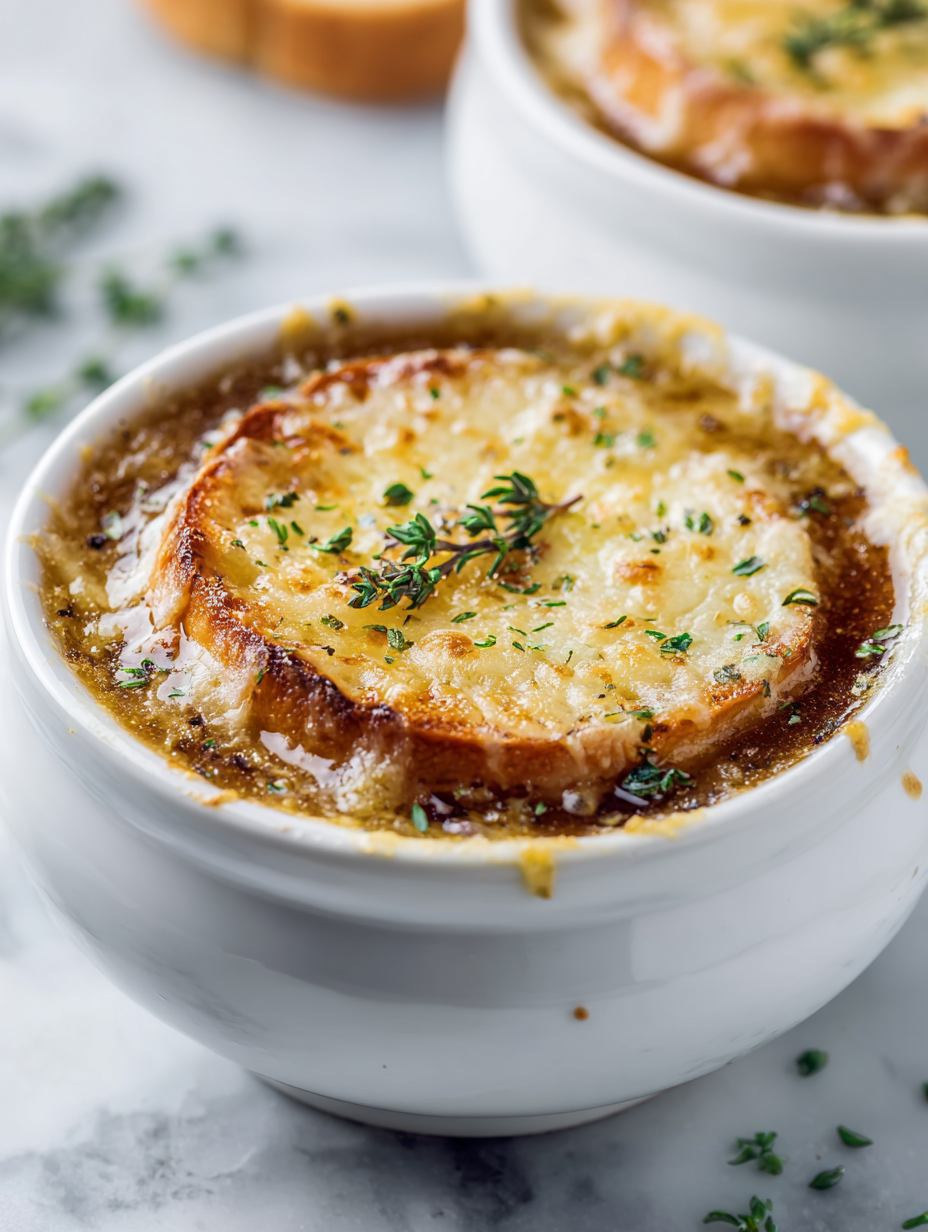
French Onion Soup
Ingredients
Equipment
Method
- Peel and thinly slice the yellow onions, aiming for uniform slices to ensure even caramelization. Set aside.
- Melt the butter in a large heavy-bottomed pot over medium-low heat until it begins to foam and smell buttery, about 2 minutes.
- Add the sliced onions to the pot, stirring well to coat them with butter. Reduce heat to low and cook, stirring occasionally, until they soften and begin to turn golden, about 15 minutes.
- Continue cooking the onions slowly, stirring every 10 minutes. Over the next 45-60 minutes, they will deepen in color, becoming glossy, deep amber and fragrant with a sweet, smoky aroma.
- Once the onions are richly caramelized, pour in the dry sherry or white wine, scraping the bottom of the pot with a wooden spoon to deglaze, releasing all those flavorful browned bits. Let cook for 2-3 minutes until the alcohol evaporates and the mixture thickens slightly.
- Add the beef broth to the pot, stirring to combine. Season with salt and pepper. Bring the mixture to a gentle simmer and cook uncovered for about 15 minutes to allow flavors to meld and broth to deepen.
- While the soup simmers, preheat your oven to 200°C (390°F). Arrange the baguette slices on a baking sheet and toast in the oven for about 5 minutes until golden and crispy.
- Remove the toasted bread from the oven and generously sprinkle the grated Gruyère cheese on top. Return to the oven and broil for 5-7 minutes until the cheese is melted, bubbly, and golden brown.
- Taste the soup and adjust the seasoning with more salt and pepper if needed. Ladle the hot soup into oven-safe bowls, placing a cheesy toast slice on top of each.
- Place the bowls on a baking sheet and broil for an additional 2-3 minutes until the cheese is golden and bubbly. Carefully remove from the oven and serve immediately, enjoying the rich aroma and layered textures.
Notes
Tips for Perfect French Onion Soup
- Bolded mini-head: Caramelize onions slowly over low heat; patience brings out their sweet, smoky flavor.
- Bolded mini-head: Stir frequently during caramelization; this prevents burning and ensures even color.
- Bolded mini-head: Deglaze with wine or sherry thoroughly; scraping the browned bits adds depth and complexity.
- Bolded mini-head: Toast bread slices until golden; this creates a sturdy, crispy base for melting cheese.
- Bolded mini-head: Broil just until cheese bubbles and turns golden; keep a close eye to avoid burning.
- Bolded mini-head: Taste broth before serving; adjust salt and pepper to balance the rich sweetness of caramelized onions.
- Bolded mini-head: Use a heavy-bottomed pot; it distributes heat evenly, preventing hotspots that can scorch onions.
Common mistakes and how to fix them
- FORGOT to deglaze: Scrape the bottom after adding wine; prevents burning and adds flavor.
- DUMPED the onions: Keep stirring slowly; onions can burn easily if left unattended.
- OVER-TORCHED cheese: Broil just until bubbly; watch closely to avoid burning the cheese.
- MISSED seasoning: Taste broth before serving; adjust salt and pepper for depth.
Quick Fixes and Pantry Swaps
- If onions burn, splash in a little water to cool and prevent further scorching.
- When caramelization stalls, turn the heat lower and stir more frequently to develop sweetness.
- Splash a bit of sherry or wine if the broth lacks depth; it adds smoky aroma instantly.
- Patch burnt cheese by removing the top layer and adding fresh cheese before broiling again.
- Shield the bread with foil if it browns too quickly during broiling; keep an eye on it.
Prep, store, and reheat tips
- Caramelized onions can be made a day ahead; cool completely and refrigerate in an airtight container for up to 2 days. Reheat gently on the stove, smelling the sweet, smoky aroma as it warms.
- Soup can be prepared up to 24 hours in advance. Store in the fridge and gently reheat on low, stirring occasionally until steaming and fragrant.
- Toasting and cheese toasting can be done ahead; keep bread slices in an airtight bag and rewarm in the oven at 180°C/350°F until crispy, then add cheese and broil briefly before serving.
- The flavors deepen after a day or two—refrigerate the soup in a sealed container for up to 2 days. Reheat slowly, tasting and adjusting seasoning as needed, until rich and steaming.
- Avoid freezing the entire soup, as the texture of the onions may change. If frozen, reheat thoroughly in a pot, watching for separation or loss of richness. Best enjoyed fresh or within 2 days.
Top questions about French Onion Soup
1. How do I know when the onions are properly caramelized?
Look for onions that are soft, deeply caramelized, and fragrant with a sweet smoky aroma. The broth should be rich and flavorful, with cheese melted and bubbly on top.
2. What’s the visual cue for perfect caramelization?
The broth should be dark, thick, and fragrant, with a noticeable sweetness from the onions. The cheese should be golden and gooey, with a crispy edge from broiling.
3. What tools are essential for making this soup?
Use a sturdy, heavy-bottomed pot to ensure even heat distribution and prevent burning. A sharp knife helps slice onions thinly and evenly, making caramelization uniform.
4. How do I fix common cheese or seasoning issues?
If the cheese isn’t melting well, broil a little longer or add a splash of water when reheating to loosen the cheese. For overly salty broth, dilute with a bit of water or add a sugar pinch.
5. What’s the best bread for topping?
Stale bread works best when toasted until crispy. Use a broiler or toaster oven to get that perfect crunch. The cheese should be bubbling and golden, with a slightly crispy top.
6. Any tips for caramelizing onions evenly?
Caramelize the onions slowly over low heat, stirring frequently. This process can take up to an hour but develops deep, complex flavors and a sweet aroma.
7. Can I make this soup in advance?
Yes, you can prepare the caramelized onions and broth a day ahead. Cool and refrigerate separately. Reheat gently on the stove, smelling for that sweet, smoky aroma.
8. How should I reheat leftovers?
When reheating, do so slowly over low heat, stirring occasionally. Reheat broth until steaming and cheese until bubbly and golden. Recrisp bread in the oven if needed.
9. What quick fixes if something goes wrong?
If onions stick or burn, add a splash of water or broth to loosen and cool the pan. If cheese burns during broiling, remove and add fresh cheese, then broil again carefully.
10. Can I customize ingredients for dietary needs?
Use a variety of onions for depth—yellow for sweetness, red for sharpness. For broth, beef adds richness; mushroom or vegetable broth works well for a vegetarian version.
There’s something about the slow, patient process of caramelizing onions that makes this soup feel like more than just a dish. It’s about the quiet ritual, the smoky sweetness filling the kitchen, and the simple joy of creating something deeply comforting from humble ingredients.
In the end, French Onion Soup is a reminder that patience and attention to detail turn everyday moments into something worth savoring. It’s a dish that connects me to tradition, to my own memories, and to the warm, savory aroma that lingers long after the bowls are empty.

Hi, I’m Claire Dawson, and I’m the voice behind The Procrastinators Cookbook. Food has always followed me around, even when I was busy putting other things off. Somewhere between long café shifts, half-finished to-do lists, and meals cooked later than planned, I realized that food was the one thing I always came back to.