
This roast chicken recipe is all about the subtle magic of balancing citrus brightness with fragrant herbs. It’s the kind of dish that feels like a small celebration, even if it’s just a weeknight dinner. The lemon and herbs don’t overpower; they lift the chicken into something fresh and deeply savory at once.
What I love most is how a simple tweak—adding lemon zest and fresh herbs—can turn a basic roast into a memorable meal. It’s honest cooking, the kind that feels satisfying without fuss. Plus, the aroma as it roasts—bright, herby, with a citrus zing—makes the kitchen smell like a little sanctuary of warmth.
Focusing on the overlooked art of balancing citrus and herbs to create a roast chicken that’s both bright and deeply savory, emphasizing how this simple tweak transforms the dish from basic to memorable.
The overlooked art of citrus balance
- I get a quiet thrill every time I hear that sizzle as the chicken hits the hot pan, knowing it’s going to be a fragrant, herby crust.
- Nothing beats the smell of roasted lemon and thyme filling the kitchen—it’s like a warm hug on a busy weeknight.
- I used to think roast chicken was predictable, but adding that burst of citrus somehow makes it feel like a special treat, even in a rush.
- There’s a small, proud moment when I carve into perfectly tender meat, the herbs and lemon juices mingling on the plate.
- Sometimes, I forget how simple ingredients—lemon, herbs, a good chicken—can turn into something that feels fancy without fuss.
Story Behind This Dish
- This recipe came together after a weekend of experimenting with how citrus and herbs can elevate simple roast chicken. I wanted something that felt bright and fresh but still comforting. The idea of adding lemon zest and thyme struck me one evening—something I’d seen in a tiny village cookbook years ago, tucked away among more complicated dishes.
- It’s become my go-to when I need a meal that’s straightforward but feels special. The scent of roasting lemon and herbs filling the kitchen is a small reminder that simple ingredients, treated with care, can make a real impact.
- heading
- Story Behind This Dish
Contextual origin, trivia, or history
- This dish draws inspiration from classic Provencal cooking, where lemon and herbs are staples for brightening poultry.
- Historically, roast chicken seasoned with herbs and citrus became popular in Mediterranean coastal regions due to the abundance of fresh herbs and lemons.
- The use of lemon in roasted poultry dates back to medieval Europe, where citrus was prized for its ability to cut through rich meats and add freshness.
- In many cultures, herbs like thyme and rosemary have been used for centuries not just for flavor but also for their preservative qualities.
Key ingredients and tips
- Chicken: I prefer a plump, organic bird for richer flavor and juicier meat—plus, the skin crisps up beautifully in the oven.
- Lemon: I use both zest and juice—zest for bright aroma, juice for that zesty punch that makes the chicken sing. Skip if you’re out of fresh lemons, but it’s worth it.
- Herbs: Fresh thyme and rosemary are my go-tos—they release fragrant oils that seep into the meat. Dried herbs won’t give quite the same vibrant aroma, so use sparingly if substituting.
- Garlic: I love adding whole cloves tucked under the skin—gives a mellow, roasted garlic scent that’s almost candy-like when done right. If you’re pressed, garlic powder works, but loses some of that depth.
- Olive Oil: I use a good extra-virgin—helps crisp the skin and binds the herbs and lemon to the chicken. For a lighter touch, cut back; for more flavor, brush on generously, especially the skin.
- Salt: Don’t skimp—salting the chicken inside and out ensures it’s seasoned all the way through. I like coarse sea salt for that satisfying crunch and flavor punch.
- Pepper: Freshly cracked black pepper adds a subtle heat and depth—don’t skip it, even if you’re tempted to keep it simple.
Spotlight on key ingredients
Lemon:
- I love how lemon zest and juice brighten the chicken with a zesty, aromatic punch that wakes up the senses.
- Its bright, citrusy aroma is almost intoxicating as it roasts, filling the kitchen with a fresh, clean scent.
Herbs:
- Fresh thyme and rosemary release fragrant oils that seep into the meat, creating a deep, herby aroma and flavor.
- During roasting, they can sometimes burn if overexposed, so tucking sprigs into the cavity keeps their scent vibrant and fresh.
Notes for ingredient swaps
- Chicken: For a leaner option, turkey works well but may need slightly longer roasting time. For a richer flavor, try Cornish game hen.
- Lemon: Lime can add a similar bright acidity, though it’s a tad less floral. Lemon zest can be swapped with orange zest for a sweeter citrus note.
- Herbs: Fresh parsley or tarragon can substitute thyme and rosemary, offering a different aromatic profile but still fresh and vibrant.
- Garlic: Shallots or leeks can add mellow sweetness; if you’re out, garlic powder works, but won’t give that roasted depth.
- Olive Oil: Avocado oil has a similar smoky, fruity flavor and high smoke point. For a lighter dish, use a neutral oil like grapeseed.
- Salt: Sea salt flakes add a crunch and pure saltiness, but table salt can be used in a pinch—just reduce the amount slightly.
- Pepper: White pepper offers a milder heat and doesn’t alter the color, ideal if you want less visible spice in the dish.
Equipment & Tools
- Oven: To evenly cook and crisp the chicken skin.
- Roasting pan or oven-safe skillet: To hold the chicken during roasting and collect juices.
- Small bowl: For mixing the herb and lemon marinade.
- Basting brush: To apply marinade and pan juices during cooking.
- Meat thermometer: To check internal temperature for doneness.
- Kitchen tongs or carving knife: For handling and carving the cooked chicken.
Step-by-step Roast Chicken Guide
- Preheat your oven to 220°C (425°F). Rinse the chicken and pat dry thoroughly with paper towels. Set aside.
- In a small bowl, mix together salt, pepper, chopped fresh thyme, and rosemary. Rub this herb mixture all over the chicken, including under the skin where possible.
- Zest two lemons and squeeze their juice into a small bowl. Combine with 2-3 tablespoons olive oil and a few crushed garlic cloves. Brush this mixture generously all over the chicken.
- Tuck a few sprigs of thyme and rosemary into the cavity along with lemon slices for extra aroma. Place the chicken on a roasting pan or oven-safe skillet, breast side up.
- Roast in the preheated oven for about 1 hour and 15 minutes, or until the skin is golden and crisp. Baste with pan juices every 20 minutes for extra flavor and moisture.
- Check for doneness: the juices should run clear when pierced, and the internal temperature should reach 75°C (165°F). The skin should be deep golden and crackly.
- Once out of the oven, let the chicken rest for 10-15 minutes. Tent loosely with foil if needed to keep warm. Carve and serve with a squeeze of fresh lemon juice and herbs.
Let the chicken rest on a cutting board for at least 10 minutes, tented loosely with foil. Carve and serve with a squeeze of fresh lemon and herbs for bright contrast.
How to Know It’s Done
- Skin is deep golden and crispy, with fragrant herby aroma.
- Juices run clear when pierced at the thickest part of the thigh.
- Internal temperature reaches 75°C (165°F) for safe, juicy meat.
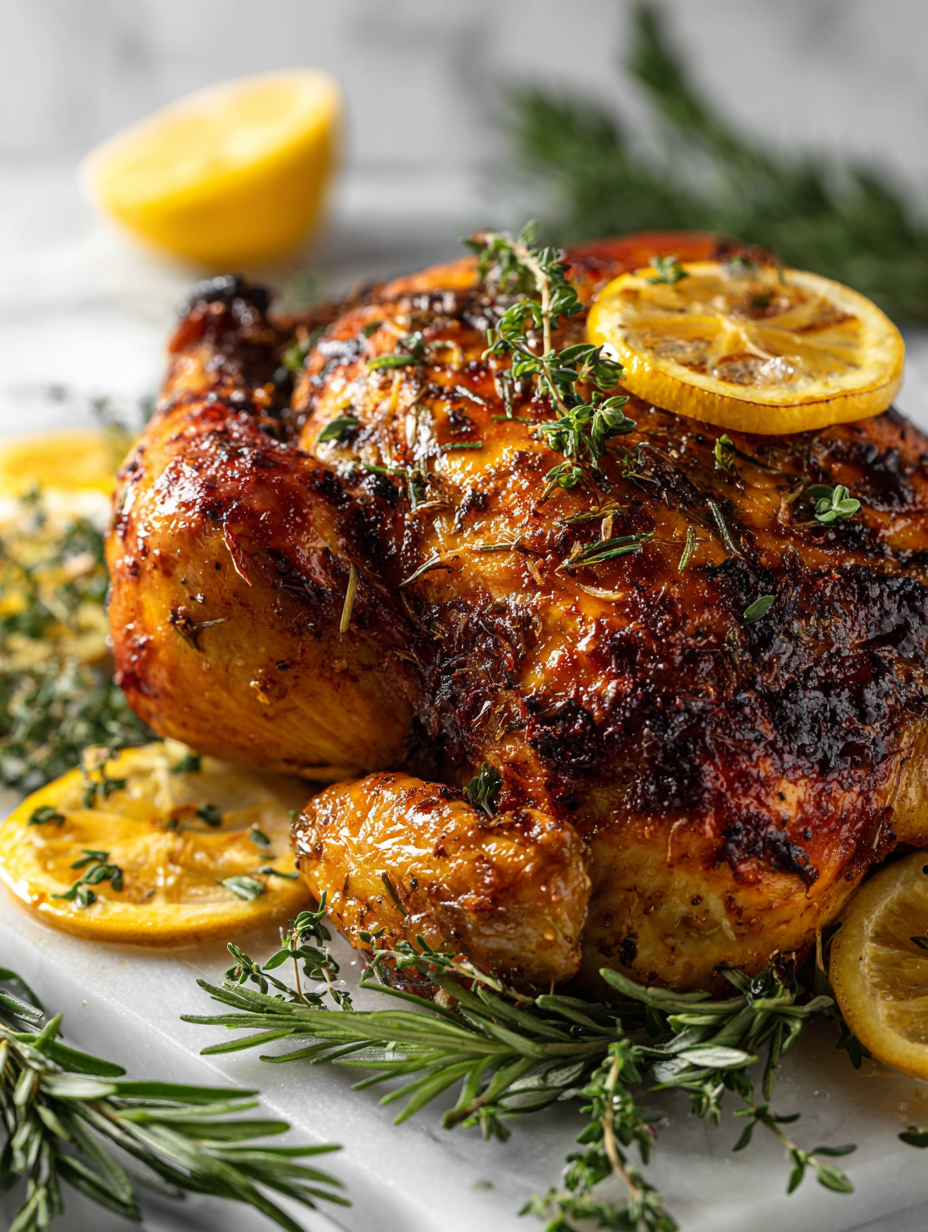
Citrus Herb Roast Chicken
Ingredients
Equipment
Method
- Preheat your oven to 220°C (425°F). Rinse the chicken inside and out, then pat dry thoroughly with paper towels. Place it in a roasting pan or oven-safe skillet, ready for seasoning.
- Mix together a generous amount of coarse sea salt, freshly cracked black pepper, and finely chopped thyme and rosemary. Rub this herb mixture all over the chicken skin and inside the cavity, ensuring an even coating that penetrates the skin for maximum flavor.
- Zest both lemons and squeeze their juice into a small bowl. Add the crushed garlic and olive oil, then whisk until well combined. Brush this fragrant mixture all over the chicken, covering the skin evenly. Tucking a few sprigs of thyme and rosemary, along with lemon slices, inside the cavity infuses the meat with bright, herby aroma.
- Place the chicken in the oven and roast for about 1 hour and 15 minutes, or until the skin turns deep golden and crispy. Baste the chicken with pan juices every 20 minutes to enhance flavor and keep the meat moist.
- Check for doneness by inserting a meat thermometer into the thickest part of the thigh; it should read 75°C (165°F). The juices should run clear, and the skin should be beautifully crisp and golden.
- Once cooked, remove the chicken from the oven and let it rest for at least 10 minutes under loose foil. This allows the juices to redistribute, resulting in tender, juicy meat. Carve and serve, squeezing fresh lemon juice over the slices for an added burst of citrus brightness.
Tips for Perfect Roast Chicken
- Bolded mini-head: Use high heat at the start → Sear the chicken skin quickly to get a golden, crispy crust.
- Bolded mini-head: Baste with pan juices → Every 20 minutes, spoon the flavorful drippings over the skin for extra richness.
- Bolded mini-head: Tuck herbs under the skin → Keeps the fragrant oils close to the meat and prevents burning of delicate herbs.
- Bolded mini-head: Add lemon slices inside → Infuses the meat with bright, citrusy aroma from the inside out.
- Bolded mini-head: Rest before carving → Rest the chicken for at least 10 minutes to let juices distribute and stay moist.
- Bolded mini-head: Use a meat thermometer → Check for 75°C (165°F) in the thigh for perfectly cooked, tender meat.
- Bolded mini-head: Roast uncovered → Keeps the skin crisp and allows the heat to brown the surface evenly.
Common mistakes and how to fix them
- FORGOT to pat dry chicken; excess moisture prevents crispy skin—dry thoroughly for best results.
- DUMPED too much salt; balance with under-salting or rinsing to avoid overly salty meat.
- OVER-TORCHED skin; lower oven temperature or tent with foil if skin darkens too quickly.
- MISSED resting time; let chicken rest at least 10 minutes for juicier, easier carving.
Quick Fixes and Pantry Swaps
- When chicken skin isn’t crisp enough, splash a little more oil and crank the heat for 5 seconds.
- If lemon juice is too sharp, patch with a touch of honey to mellow the acidity.
- When herbs burn, shield with foil or add them later in the roasting process.
- Dumped salt? Rinse the chicken quickly and pat dry to avoid overly salty meat.
- If pan juices are too thin, simmer briefly to concentrate flavors and shimmer.
Prep, store, and reheat tips
- You can prep the herb and lemon marinade a day ahead; keep it covered in the fridge for a fresh, zesty aroma when ready to use.
- Roast chicken can be cooked up to 2 days in advance; store in an airtight container in the fridge, where it stays moist and flavorful.
- Reheat gently in the oven at 150°C (300°F) until warmed through, about 15-20 minutes, until the skin crisps slightly and the meat is hot—avoid microwaving to prevent sogginess.
- Leftover chicken keeps well for 3-4 days; the flavors deepen slightly, making it perfect for salads, sandwiches, or just a simple reheat fix.
- For longer storage, shred the chicken and freeze in portions for up to 3 months; thaw overnight in the fridge for the next quick, bright meal, with lemony aroma intact.
Top questions about roast chicken
1. Should I bring the chicken to room temperature first?
Use room temperature chicken for even cooking and better browning. Cold chicken can slow down the roasting process.
2. How do I know when the chicken is cooked perfectly?
A meat thermometer inserted into the thickest part of the thigh should read 75°C (165°F). Juices should run clear.
3. Why rest the chicken after roasting?
Let the cooked chicken rest for at least 10 minutes under foil. This helps juices redistribute and keeps the meat moist.
4. Should I start with a high or low oven temperature?
Preheat your oven to high (220°C/425°F) to start with a quick sear. Lower to 180°C/350°F to finish roasting.
5. How often should I baste the chicken?
Brush the chicken with lemon and herb marinade before roasting. Baste every 20 minutes with pan juices for flavor and moisture.
6. Can I use dried herbs instead of fresh?
Use fresh herbs like thyme and rosemary for the best aroma. Dried herbs can be used but won’t release as much fragrance.
7. My chicken skin isn’t crispy, what do I do?
If the skin isn’t crispy enough, increase oven temperature or broil for the last 2-3 minutes. Keep a close eye to prevent burning.
8. Should I stuff lemon slices inside the chicken?
Add lemon slices inside the cavity for a burst of citrus aroma. This also helps keep the meat moist.
9. What’s the best equipment for roasting a chicken?
Use a roasting pan with a rack to allow air circulation and even browning. Alternatively, place directly on a baking sheet lined with foil.
10. How should I store and reheat leftovers?
Leftover chicken can be stored in the fridge for 3-4 days. Reheat in the oven at 150°C (300°F) for best results.
This roast chicken with lemon and herbs feels like a small act of kindness in the kitchen. Its bright aroma and juicy meat remind me why simple ingredients, treated with care, can turn into something memorable.
Whenever I make this, I appreciate how a few fresh herbs and citrus can elevate a basic meal into a moment worth savoring. It’s honest food, grounded in tradition but still lively and comforting—perfect for any season or occasion.

Hi, I’m Claire Dawson, and I’m the voice behind The Procrastinators Cookbook. Food has always followed me around, even when I was busy putting other things off. Somewhere between long café shifts, half-finished to-do lists, and meals cooked later than planned, I realized that food was the one thing I always came back to.