
There’s something quietly enchanting about a bowl of spaghetti that highlights the interplay of just a few ingredients—ripe tomatoes, fragrant basil, and al dente pasta. It’s the kind of dish that feels like a warm hug from summer itself, no fuss, just honest flavor that speaks for itself.
I often think of this recipe as my kitchen’s little ritual—an ode to simplicity and the magic of fresh produce. It’s not about complex techniques, but about paying attention: the glisten of ripe tomatoes, the fragrant burst of basil, and the comforting chew of perfectly cooked spaghetti. It’s honest cooking, rooted in seasonality and a love for good ingredients.
Focusing on the quiet magic of how fresh basil and ripe tomatoes transform a simple spaghetti into a dish that captures the essence of summer, right in your kitchen.
The Art of Simple Elegance
- This dish reminds me of summer evenings at my grandmother’s table, where simplicity brought everyone together.
- I feel a rush of pride when I see the vibrant red tomatoes and fresh basil glistening in my bowl.
- There’s a peaceful chaos in chopping tomatoes and basil—like a little ritual that resets my day.
- Cooking this always sparks a sense of nostalgia, transporting me to sunlit Italian markets and carefree afternoons.
Short personal story or inspiration behind the recipe
- This recipe came from a lazy summer afternoon when I had ripe tomatoes and fresh basil just begging to be turned into something simple. I remember the first time I threw it together—no fuss, just letting the ingredients do their thing. That moment, when the basil scent hits your nose and the tomatoes burst with juiciness, felt like a tiny celebration in my kitchen.
- Over the years, I’ve come back to this dish whenever I need a reminder that the best meals are often the simplest. It’s my go-to for rushed weeknights and relaxed weekends alike, a dish that’s honest, fresh, and full of flavor. It’s not about perfection, but about letting the ingredients shine and trusting your instincts in the kitchen.
- heading: The magic of fresh ingredients
Contextual origin, trivia, or history
- This simple dish traces its roots to Italy’s southern regions, where fresh ingredients like tomatoes and basil are abundant and celebrated.
- The combination of tomato and basil in pasta dishes gained popularity in Italy during the Renaissance, symbolizing the harmony of local flavors.
- Historically, spaghetti with tomato sauce was once considered a humble peasant food before becoming a staple in Italian cuisine worldwide.
- Fresh basil was once so treasured in Italy that it was believed to ward off evil spirits, making it a sacred herb in many households.
Ingredient breakdown: key components
- Fresh ripe tomatoes: I love the juicy, bright flavor of heirloom tomatoes; if yours are mealy, add a splash of good olive oil to boost their richness, and don’t skimp on the salt to enhance their natural sweetness.
- Basil: I prefer to tear basil leaves just before adding them to preserve their aroma. If your basil is limp, soak it briefly in cold water and gently pat dry, then add at the very end to keep that vibrant scent.
- Spaghetti: I use traditional bronze-cut pasta for that slightly rougher surface which holds sauce better. If you only have smooth pasta, just ensure you cook it al dente, so it doesn’t turn mushy when tossed.
- Garlic: I love the pungent punch of freshly minced garlic; if you’re sensitive to raw garlic, sauté it gently until golden to mellow its sharpness without losing flavor.
- Olive oil: I choose extra virgin for that fruity, peppery note—if yours is too mild, add a tiny pinch of chili flakes for a smoky kick that complements the tomatoes.
- Salt and pepper: I season in layers—start with a pinch of sea salt during cooking, then adjust with freshly cracked black pepper at the end for depth and brightness.
- Optional chili flakes: A pinch adds a subtle heat that wakes up the dish—if you prefer milder, skip it, but don’t omit it entirely, as it balances the sweetness of the tomatoes.
Spotlight on key ingredients
Tomatoes:
- Juicy, slightly tart, bursting with umami; their natural sweetness intensifies when gently cooked, releasing a fragrant, bright aroma.
- Basil: Fragrant and peppery, basil leaves turn aromatic and vibrant when torn; they soften quickly, losing their scent if overcooked, so add at the end.
Basil:
- Bright green, fragrant, with a slightly peppery punch; torn leaves release more aroma than chopped, and they wilt fast when exposed to heat.
- Tomatoes: Flesh is juicy and soft, with a slight seedy texture; they soften and release their juices, creating a glossy sauce that clings to pasta.
Notes for ingredient swaps
- Tomatoes: Heirloom or vine-ripened tomatoes bring a sweet, juicy burst. If unavailable, use canned whole peeled tomatoes—crush them by hand for a fresh feel.
- Basil: Fresh basil has a fragrant, peppery punch. Dried basil will do in a pinch, but add it earlier to let flavors develop, though it won’t be as bright.
- Olive oil: Use a fruity extra virgin for richness. If you only have light olive oil, boost flavor with a squeeze of lemon or a pinch of chili flakes.
- Garlic: Fresh garlic is punchy and aromatic. Garlic powder can be a quick substitute, but use half the amount and add it earlier in cooking to avoid bitterness.
- Spaghetti: Traditional bronze-cut pasta is ideal, but smooth pasta works fine. Cook until just al dente—overcooking ruins the texture and sauce cling.
- Salt: Sea salt enhances all flavors. If you’re out, kosher salt works well but adjust the quantity to avoid oversalting.
- Chili flakes: Add a pinch for heat—if you prefer milder, skip it or add at the end for a gentle kick. Fresh chili can be used for more vibrant heat.
Equipment & Tools
- large saucepan: boil pasta efficiently in plenty of water
- wide skillet: cook and toss the sauce with pasta
- wooden spoon: stir ingredients gently without scratching cookware
- colander: drain pasta without breaking it
Step-by-step guide to spaghetti with tomato and basil
- Gather your equipment: a large saucepan for boiling pasta, a wide skillet for sauce, a wooden spoon, and a colander. The large pot ensures enough water for the spaghetti to move freely, preventing sticking.
- Bring a generous amount of water to a boil over high heat, around 100°C (212°F). Add a hefty pinch of salt—salty like the sea—this flavors the pasta from the inside out. Drop in the spaghetti and cook until just al dente, about 8 minutes. Stir occasionally to prevent sticking.
- While pasta cooks, prepare the sauce: peel and finely chop 3-4 garlic cloves. Rinse 2 cups of ripe cherry or heirloom tomatoes, slicing some thin if large. Tear fresh basil leaves into pieces—don’t chop, keep the oils intact.
- Heat 2-3 tablespoons of good-quality olive oil in the skillet over medium heat, around 160°C (320°F). Add garlic, sauté until fragrant, about 30 seconds—watch for a slight golden hue and fragrant aroma, not burnt or bitter.
- Add the tomatoes to the skillet, cook gently for 3-4 minutes, pressing them slightly with the back of a spoon. They should soften, releasing their juice—look for a slight shimmer and a few bubbling spots. If they stick or burn, lower the heat or add a splash of water.
- Taste and season the sauce with salt and a grind of black pepper. If the sauce looks too thick or dry, stir in a tablespoon of pasta water—starchy and glossy—this helps everything cling together.
- Drain the pasta via colander, reserving a cup of pasta water. Immediately toss the hot pasta into the skillet with the tomato sauce. Add torn basil and toss quickly to coat evenly—look for a vibrant, glossy surface and fragrant basil scent. If too dry, loosen with reserved pasta water.
- Remove from heat, finish with a drizzle of olive oil, and give it a gentle toss. Let it rest for a minute—this helps flavors meld and cool slightly for optimal serving temperature.
Toss pasta with sauce off the heat. Let sit for a minute to meld flavors. Serve immediately, topped with extra basil or a drizzle of olive oil if desired.
How to Know It’s Done
- Pasta: al dente with a slight bite, not mushy.
- Sauce: vibrant, fragrant, with bubbling tomatoes and fragrant garlic.
- Appearance: glossy, evenly coated pasta with fresh basil visibly bright and aromatic.
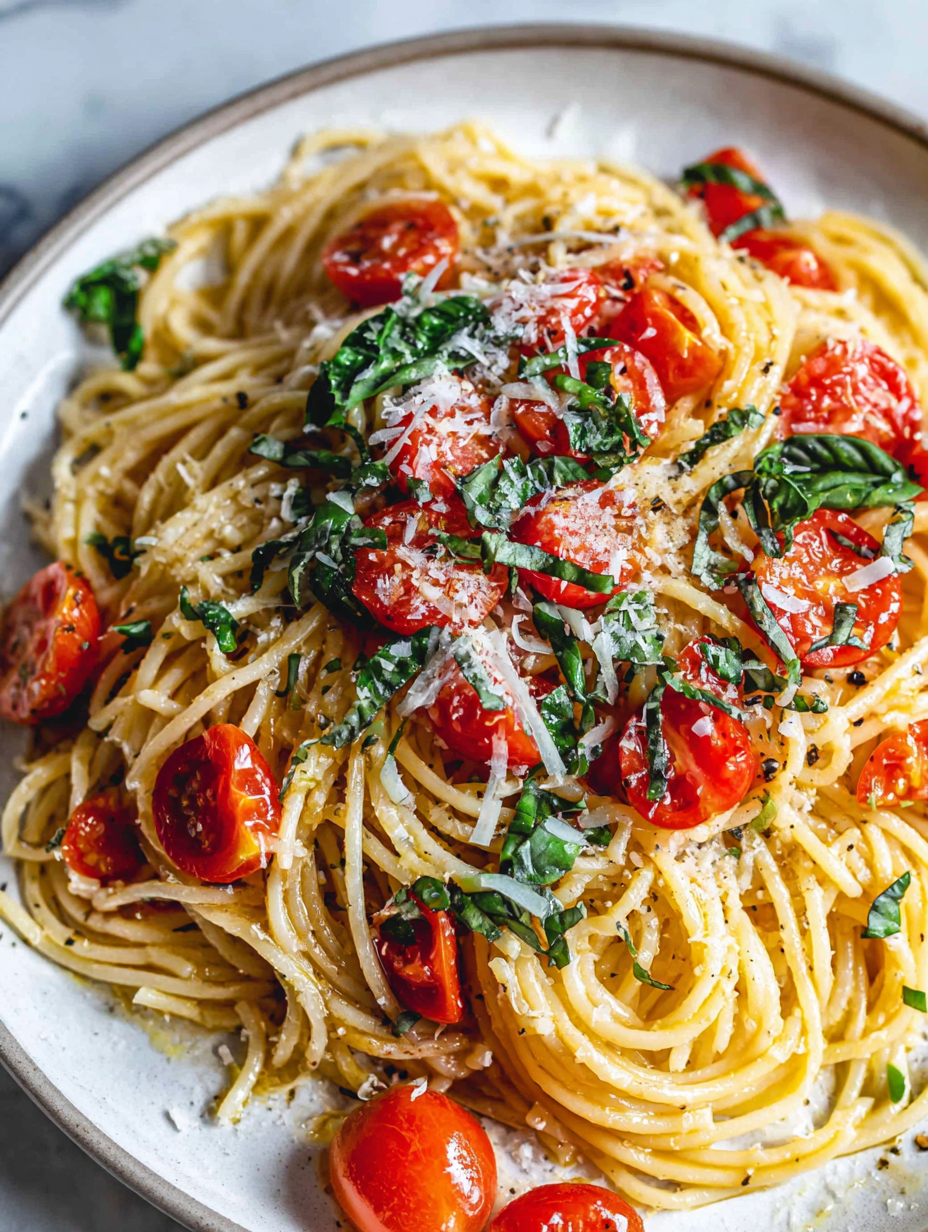
Spaghetti with Fresh Tomato and Basil
Ingredients
Equipment
Method
- Bring a large saucepan of generously salted water to a rolling boil. Add the spaghetti and cook until just al dente, about 8 minutes, stirring occasionally. Drain and set aside, reserving a cup of pasta water.
- While the pasta cooks, rinse and halve or tear the tomatoes into bite-sized pieces. Peel and finely mince the garlic cloves. Tear the basil leaves into small pieces to release their aroma.
- Heat the olive oil in a wide skillet over medium heat until it shimmers and starts to smell fragrant, about 30 seconds. Add the minced garlic and sauté gently until just golden and fragrant, about 30 seconds to 1 minute. Be careful not to burn it.
- Add the chopped tomatoes to the skillet. Cook gently, pressing them slightly with the back of a spoon, until they soften and release their juices, about 3-4 minutes. The tomatoes should shimmer and bubble slightly, creating a glossy, fragrant sauce.
- Taste the sauce and season with salt, black pepper, and chili flakes if using. If the sauce seems too thick, stir in a splash of reserved pasta water to loosen and enhance the glossiness.
- Drain the cooked spaghetti and immediately transfer it into the skillet with the tomato sauce. Toss gently with a wooden spoon to coat all the pasta evenly. Add torn basil leaves and toss again until fragrant and vibrant, about 30 seconds.
- Remove from heat and drizzle with a little more olive oil if desired. Let sit for a minute to meld flavors and cool slightly. The dish should be glossy, fragrant, and vibrant with fresh basil and juicy tomatoes.
- Serve immediately, garnished with extra basil if desired. Enjoy this bright, simple, and satisfying bowl of summer-inspired spaghetti.
Pro tips for perfect spaghetti
- Bolded mini-head: Use the pasta water → Reserve a cup of starchy water to loosen the sauce if it becomes too thick, adding shine and cohesion.
- Bolded mini-head: Tear basil instead of chopping → Gently tearing basil leaves releases more essential oils and aroma, keeping the flavor vibrant.
- Bolded mini-head: Sauté garlic carefully → Cook garlic over medium heat just until fragrant and slightly golden, avoiding bitterness from burning.
- Bolded mini-head: Cook tomatoes gently → Softening tomatoes over moderate heat preserves their sweetness and prevents a watery sauce.
- Bolded mini-head: Taste and adjust seasoning → Season in layers, tasting often; salt enhances sweetness, pepper adds depth, and a splash of pasta water can brighten the dish.
- Bolded mini-head: Toss pasta in the sauce → Mix immediately after draining to ensure the sauce clings evenly, adding a splash of pasta water if needed for gloss.
- Bolded mini-head: Serve promptly → Finish with a drizzle of olive oil and fresh basil, serving hot to enjoy the full fragrance and texture.
Common mistakes and how to fix them
- FORGOT to season pasta water properly → Always salt generously for flavor.
- DUMPED pasta into cold water → Use boiling water for tender, al dente pasta.
- OVER-TORCHED sauce → Keep heat moderate; stir often to prevent burning.
- SKIPPED tearing basil → Tear basil to release maximum aroma and prevent bruising.
Quick fixes and pantry swaps
- When sauce looks dull, splash in a little pasta water to shimmer and brighten flavors.
- If basil turns black, add it at the very end—preserving aroma and vibrant color.
- Splash olive oil on tomatoes if they seem dry—boosts juiciness and flavor instantly.
- Patch overcooked pasta by tossing with a tiny bit of hot water and a drizzle of oil.
- Shield burnt garlic by removing the pan from heat immediately—rescue with fresh basil and a squeeze of lemon.
Prep, store, and reheat tips
- You can prepare the tomato and basil mixture ahead—chop tomatoes and tear basil the day before, then store in an airtight container in the fridge for up to 24 hours. The fresh aroma might mellow but still bright.
- Cook the spaghetti al dente ahead of time, drain, toss lightly with olive oil to prevent sticking, then store in a sealed container in the fridge for up to 1 day. Reheat in boiling water for 1 minute to restore texture.
- The sauce can be made up to 2 hours in advance. Keep it covered in the fridge; the flavors will meld, and the basil scent might intensify. Reheat gently over low heat, stirring often, until warmed through—look for bubbling and aroma.
- Reheating the dish: toss the pasta and sauce together in a skillet over low heat, adding a splash of pasta water if it looks dry. Watch for the sauce to shimmer and the basil to release its fragrance again. Do not overheat to prevent mushiness.
Top questions about spaghetti with tomato and basil
1. Can I use canned tomatoes instead of fresh?
Use ripe, juicy tomatoes for the best flavor—try heirlooms or cherry tomatoes. The fresher, the brighter the sauce will taste.
2. When should I add the basil?
Add basil at the end of cooking to keep its aroma fresh and vibrant. If you add it earlier, it might lose its scent.
3. How do I know when the pasta is done?
Cook the pasta until just al dente, about 8 minutes. It should have a slight bite, not mushy, for the best texture and sauce absorption.
4. Why reserve pasta water?
Reserve a cup of pasta water before draining. It’s starchy and helps loosen the sauce if it gets too thick or dry.
5. Can I use regular olive oil?
Use good quality extra virgin olive oil. It adds a fruity, peppery note that really enhances the fresh flavors of the dish.
6. Should I chop or tear the basil?
Tear basil leaves instead of chopping to release more aroma. It also prevents bruising and preserves flavor.
7. How much salt should I add to the water?
Make sure to season the cooking water generously with salt—salty like the sea—to flavor the pasta internally.
8. Can I skip the chili flakes?
Add a pinch of chili flakes if you like a subtle heat. It balances the sweetness of the tomatoes and adds depth.
9. How soon should I serve it after cooking?
Serve the pasta immediately after tossing with the sauce for the best flavor and texture. Letting it sit can cause it to dry out or lose freshness.
10. How do I reheat leftovers without losing flavor?
If the sauce thickens too much when reheating, stir in a little hot pasta water or olive oil to loosen it up.
This dish captures the essence of summer—bright, fresh, and unpretentious. It’s a reminder that sometimes, simple ingredients done well bring the most comfort.
In the rush of everyday life, a bowl of spaghetti with tomato and basil offers a moment of clarity—pure flavor, honest effort, and a little bit of sunlight on your plate.

Hi, I’m Claire Dawson, and I’m the voice behind The Procrastinators Cookbook. Food has always followed me around, even when I was busy putting other things off. Somewhere between long café shifts, half-finished to-do lists, and meals cooked later than planned, I realized that food was the one thing I always came back to.