
Braising lamb shanks in red wine feels like unlocking a hidden world of flavor. There’s something about the slow, gentle heat that transforms tough meat into something tender and rich, with a glossy, deep sauce that clings to every bite. It’s not a dish I whip up on a whim; it’s a ritual that demands patience and care, but the reward is worth every minute.
I’ve always loved how this dish connects me to old-world traditions, where slow-cooked meals were a family affair. The aroma of wine, garlic, and herbs filling the kitchen as the shanks simmer away is intoxicating—kind of like a warm hug you can smell. It’s a meal that feels special without fuss, perfect for those weekends when you want to slow down and savor every forkful.
Focusing on the forgotten art of braising, I see lamb shanks as a canvas for deep, soulful flavors that tell a story of patience and tradition.
Rediscovering Slow Cooking Magic
- Cooking this dish reminds me of my grandmother’s kitchen, where slow braises were a Sunday ritual that filled the house with warmth and spice.
- There’s a quiet satisfaction in watching the sauce reduce to a glossy, deep red that coats the lamb shanks perfectly.
- I love how the rich aroma of wine and herbs can turn a simple dinner into a moment of celebration, even on a regular weeknight.
- This recipe has become my go-to when I need comfort—something about the tenderness and savory depth always soothes the soul.
Rediscovering Slow Cooking Magic
Cooking lamb shanks with red wine sauce has always been my way of reclaiming slow, mindful cooking amidst busy days. This dish reminds me of lazy Sundays spent in my grandmother’s kitchen, where patience turned simple ingredients into something memorable. It’s a recipe that’s more than just food; it’s a ritual of slow transformation, a quiet celebration of taking time for flavor. Every time I make it, I feel like I’m honoring a tradition of care and craft that’s easy to forget in our fast-paced lives.
Historical & Cultural Tidbits
- Lamb shanks have been a staple in Mediterranean and Middle Eastern cuisines for centuries, valued for their rich flavor and affordability.
- The technique of braising tougher cuts like shanks in wine dates back to ancient times, where slow cooking was a way to maximize flavors and tenderness.
- Red wine sauces for meats became popular in French cuisine during the Renaissance, aiming to enrich hearty dishes with depth and complexity.
- In medieval Europe, lamb was often reserved for special occasions, and slow-cooked shanks with wine were considered a luxurious comfort food.
Ingredient breakdown: key components
- Lamb shanks: I love how their marrow-y richness melts into the sauce, making every bite deeply savory. If you prefer leaner, try beef or veal shanks for a different but still hearty experience.
- Red wine: I go for a robust, fruity wine like a Shiraz or Merlot—something that adds depth without overpowering. Skip the fancy bottle; a good-quality, affordable wine works just as well, and the aroma of wine bubbling is pure comfort.
- Garlic: I use plenty of garlic—its pungent aroma turns sweet and mellow as it cooks. For a milder, less assertive flavor, toss in a few shallots instead.
- Onions & carrots: These add sweetness and body to the sauce. I prefer a mix of yellow onion and a touch of parsnip for extra earthiness, but a simple onion and celery combo works too.
- Herbs: Fresh thyme and rosemary bring herbal depth. If I’m out, a pinch of dried herbs suffices, but fresh really brightens the sauce with a fragrant, piney scent.
- Broth or stock: I lean towards beef or vegetable stock, which enriches the sauce without dulling the wine’s brightness. If I want a lighter sauce, I dilute with a splash of water or a bit of tomato paste for acidity.
- Olive oil & seasonings: I use good-quality olive oil to brown the shanks, and season generously with salt and pepper—those simple tweaks make a noticeable difference in flavor and crust.
Spotlight on key ingredients
Lamb shanks:
- I love how their marrow-y richness melts into the sauce, making every bite deeply savory. If you prefer leaner, try beef or veal shanks for a different but still hearty experience.
- Red wine: I go for a robust, fruity wine like a Shiraz or Merlot—something that adds depth without overpowering. Skip the fancy bottle; a good-quality, affordable wine works just as well, and the aroma of wine bubbling is pure comfort.
Red wine:
- I go for a robust, fruity wine like a Shiraz or Merlot—something that adds depth without overpowering. Skip the fancy bottle; a good-quality, affordable wine works just as well, and the aroma of wine bubbling is pure comfort.
- Garlic: I use plenty of garlic—its pungent aroma turns sweet and mellow as it cooks. For a milder, less assertive flavor, toss in a few shallots instead.
Notes for ingredient swaps
- Meat Alternatives: Beef shanks or veal osso buco can stand in for lamb, offering a slightly different, yet equally rich, flavor profile.
- Red Wine: Use a hearty, dry port or a splash of balsamic vinegar diluted with water for a milder acidity and depth, especially if you prefer a sweeter note.
- Aromatics: Shallots or leeks can replace onions for a subtler, sweeter baseline that still builds a savory foundation.
- Vegetables: Parsnips or turnips can add earthiness instead of carrots, and keep the sauce hearty and thick.
- Herbs: Fresh sage or bay leaves can substitute thyme and rosemary, imparting a different herbal aroma that pairs well with braised meats.
- Stock/Broth: Mushroom or chicken broth can substitute beef or vegetable stock for a lighter, subtly different sauce that still enhances the lamb’s richness.
- Oil & Seasonings: Avocado oil or ghee can replace olive oil; skip the herbs if you want a cleaner, more neutral flavor, focusing on the wine and meat.
Equipment & Tools
- Dutch oven: For even braising and heat retention during oven cooking.
- Tongs: To handle and turn the hot shanks safely.
- Sharp knife: For trimming and prepping the meat and vegetables.
- Fine sieve: To strain and smooth the sauce for a silky finish.
Step-by-step guide to lamb shanks
- Gather all equipment: Dutch oven (for even braising), tongs (to handle shanks), sharp knife (for prep), and a fine sieve (for sauce). Preheat oven to 160°C (320°F).
- Season lamb shanks generously with salt and pepper. Heat olive oil in the Dutch oven over medium-high heat until shimmering.
- Sear shanks: brown each side for about 4-5 minutes until deeply golden. Do this in batches if needed, then set aside.
- Add chopped onions, carrots, and garlic to the same pot. Cook for 5-7 minutes, stirring often, until fragrant and veggies start to soften.
- Deglaze: pour in about 250ml (1 cup) of red wine, scraping up any browned bits from the bottom. Let it simmer for 2-3 minutes until slightly reduced.
- Nestle the shanks back into the pot, add herbs (thyme, rosemary), and pour in enough beef or vegetable stock to come halfway up the meat.
- Bring to a gentle simmer, then cover with a tight lid. Transfer to the oven and braise for 2.5–3 hours, or until meat is falling-off-the-bone tender.
- Check after 2 hours: the meat should be soft but not falling apart. If it’s still tough, continue braising, checking every 15 minutes.
- Once done, carefully remove shanks from sauce. Rest briefly on a plate, tented loosely with foil to keep warm.
- Meanwhile, strain the sauce through a fine sieve into a saucepan. Bring to a simmer and reduce by half until glossy and slightly thickened, about 10-15 minutes.
- Taste and adjust seasoning with salt and pepper. If sauce is too thin, add a small knob of butter or a splash of cream to finish.
- Plate the lamb shanks, spoon generous amounts of the rich red wine sauce over. Garnish with fresh herbs if desired.
- Serve hot, with crusty bread or creamy mashed potatoes to soak up the sauce. Enjoy the tender, flavorful bite.
Rest the lamb shanks briefly on a warm plate, tented with foil. Pour the sauce over just before serving for maximum gloss and flavor. Garnish with fresh herbs if desired.
How to Know It’s Done
- Meat: Use a fork to test; it should be very tender and easily pull away from the bone.
- Sauce: Should be glossy, thick enough to coat the back of a spoon, with a deep wine aroma.
- Color: Shanks should be a deep, golden-brown crust, and sauce should be a rich, ruby-red hue.
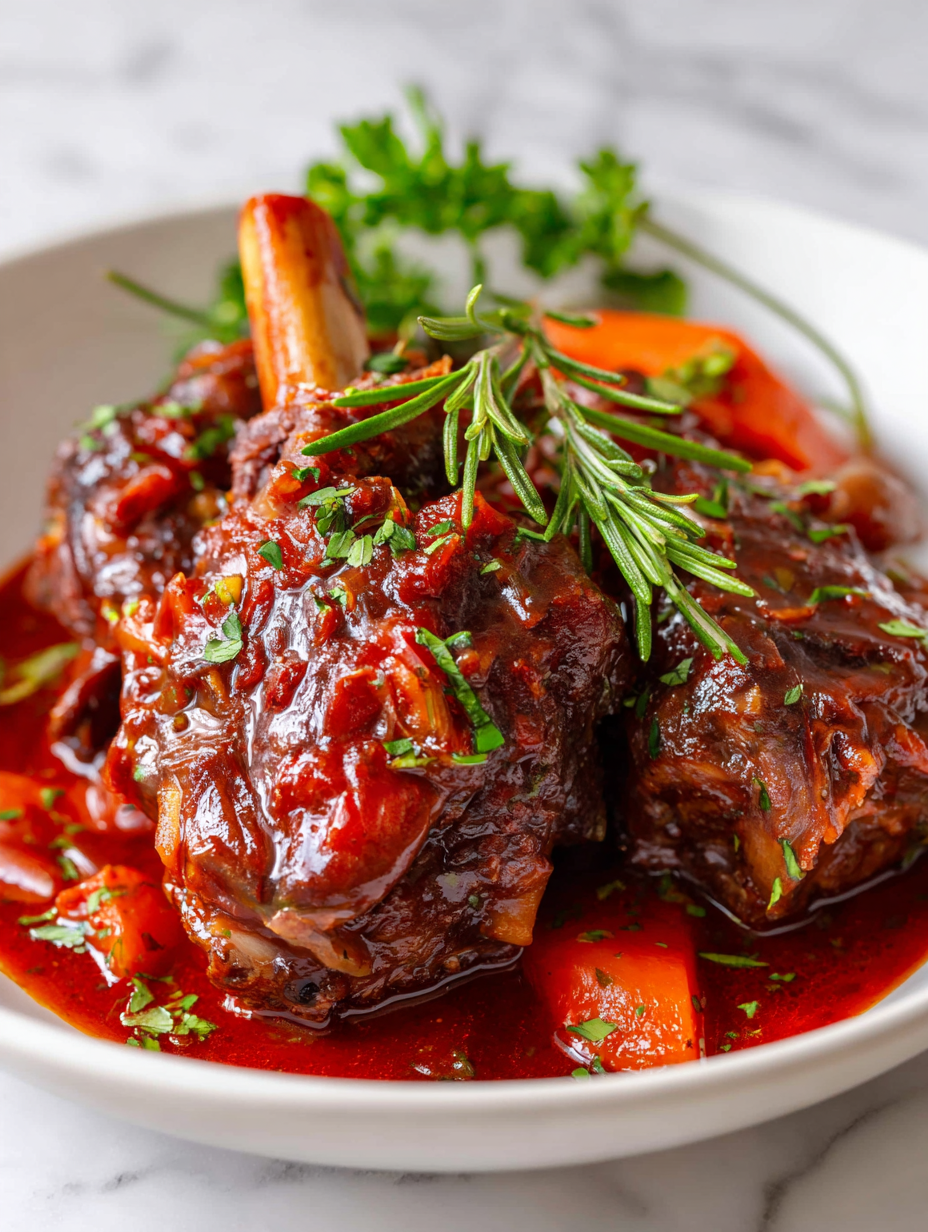
Braised Lamb Shanks in Red Wine
Ingredients
Equipment
Method
- Preheat your oven to 160°C (320°F). Season the lamb shanks generously with salt and pepper. Heat olive oil in a Dutch oven over medium-high heat until shimmering.
- Carefully place the shanks into the hot oil, searing for about 4-5 minutes on each side until they develop a deep golden-brown crust and release a rich, nutty aroma. Use tongs to turn them gently, ensuring even browning.
- Remove the shanks and set aside. In the same pot, add chopped onions, sliced carrots, and minced garlic. Cook, stirring occasionally, for 5-7 minutes until the vegetables are fragrant and start to soften, filling your kitchen with a savory aroma.
- Pour in the red wine, scraping the bottom of the pot with a wooden spoon to loosen any browned bits. Bring the mixture to a simmer and cook for 2-3 minutes until the wine reduces slightly and the mixture thickens just a bit.
- Nestle the seared lamb shanks back into the pot among the vegetables. Add sprigs of thyme and rosemary, then pour in enough stock to come halfway up the sides of the shanks. Bring to a gentle simmer.
- Cover the Dutch oven with a tight-fitting lid and transfer it to the preheated oven. Let the shanks braise slowly for about 2.5 to 3 hours, or until the meat is fork-tender and starting to fall off the bone.
- Once cooked, carefully remove the shanks and set them aside to rest briefly. Strain the sauce through a fine sieve into a saucepan, pressing to extract all the flavorful juices. Bring the sauce to a simmer and cook until glossy and slightly thickened, about 10-15 minutes.
- Taste the sauce and adjust seasoning with salt and pepper. Pour the rich, glossy sauce over the lamb shanks, garnish with fresh herbs if desired, and serve hot with crusty bread or mashed potatoes for a complete, comforting meal.
Pro tips for perfect lamb shanks
- Bolded Tip: Sear the shanks until deeply golden—this caramelizes the surface, locking in flavor and adding richness to the sauce.
- Bolded Tip: Deglaze the pan with wine after searing—scrape up those flavorful browned bits for a more complex sauce.
- Bolded Tip: Keep the oven at a steady 160°C (320°F)—slow, even heat ensures tender, falling-off-the-bone lamb.
- Bolded Tip: Reduce the sauce until glossy—this concentrates flavors and gives it a beautiful, thick sheen.
- Bolded Tip: Rest the meat briefly before serving—this helps the juices redistribute, keeping each bite juicy and tender.
Common mistakes and how to fix them
- FORGOT to deglaze: Scrape up browned bits, then add wine to unlock flavor.
- DUMPED the sauce: Strain and reduce it to intensify richness and gloss.
- OVER-TORCHED the shanks: Sear on medium-high, then lower heat to prevent burning.
- SKIPPED resting: Let meat rest 5 minutes for juices to settle, avoiding dryness.
Quick fixes and pantry swaps
- When sauce shimmers and shreds from the spoon, it’s ready—don’t over-reduce, or it’ll become too thick.
- Splash a bit of water or broth if sauce is too intense—balance the wine’s richness with gentle dilution.
- Patch a burnt pan by soaking in hot water and baking soda—lifting stubborn bits without harsh scrubbing.
- DUMPED the meat by accident? Cover with foil, lower oven heat, and gently simmer to tenderize again.
- Shield the shanks from over-torching by searing on medium heat—use a thermometer if needed, aiming for 160°C (320°F).
Prep, store, and reheat tips
- You can prep the lamb shanks and chop the vegetables a day ahead. Keep them in airtight containers in the fridge. The aroma of garlic and herbs will already fill your kitchen, making the cooking process feel more manageable.
- Store the cooked, cooled shanks and sauce separately in the fridge for up to 2 days. The sauce will develop a richer, more concentrated flavor overnight, with the wine aroma deepening.
- Reheat gently on the stovetop over low heat, stirring occasionally. The sauce may thicken; add a splash of stock or water to loosen it. The meat should be heated to around 60°C (140°F) for optimal tenderness without drying out.
- For longer storage, freeze the lamb and sauce in airtight containers for up to 3 months. Thaw overnight in the fridge and reheat slowly, watching for the sauce to shimmer and thicken again.
Top questions about lamb shanks
1. How do I know when lamb shanks are cooked enough?
Look for shanks with a good amount of marrow visible; it adds richness to the sauce. When cooked, the meat should be very tender and easily pull apart with a fork.
2. What’s the visual cue for perfect sauce and meat tenderness?
The sauce should be glossy and slightly thickened, clinging to the meat with a deep red hue. The meat should fall off the bone easily when tested with a fork.
3. Can I use different types of wine for the sauce?
Use a robust red wine like Shiraz or Merlot for depth of flavor. If you prefer a milder taste, a fruity Pinot Noir can work. The wine should smell aromatic and fruity as it reduces.
4. How long should I sear the lamb shanks?
Brown the shanks until deep golden-brown, about 4-5 minutes per side. This caramelizes the surface and enhances flavor. If they burn, reduce heat and scrape off burnt bits before adding wine.
5. How do I thicken and finish the sauce?
Reduce the sauce by simmering until it’s thick enough to coat the back of a spoon, about 10-15 minutes. It should be shiny and deep red, with a fragrant wine aroma.
6. How should I store leftovers and reheat them?
Store the cooked lamb and sauce separately in airtight containers. Reheat gently on the stove over low heat until the sauce shimmers and meat is hot but not drying out.
7. Can I prepare this dish in advance?
You can prep the vegetables and season the shanks a day ahead. The flavors will deepen overnight, making the final cooking quicker and more aromatic. Keep everything refrigerated until ready to cook.
8. What quick fixes if the sauce is too thick or intense?
If the sauce becomes too thick or gloopy, splash in a bit of warm water or broth to loosen it. If it’s too intense, a splash of balsamic or a pinch of sugar can balance the flavors.
9. How can I tell if the lamb is safe and tender?
Use a thermometer to check that the meat reaches at least 60°C (140°F) for safety and tenderness. Also, the meat should shred easily with a fork, and the sauce should be fragrant and glossy.
10. What are the final signs my lamb shanks are done?
When the meat is falling off the bone, the sauce is glossy and coats the meat well, and the aroma of wine and herbs is vibrant, your dish is ready to serve.
Cooking lamb shanks with red wine sauce is a reminder that patience in the kitchen yields the most soulful flavors. Each tender bite, coated in that glossy, wine-rich sauce, feels like a small celebration of slow, mindful cooking.
In these busy times, taking the time to master this dish reconnects me to tradition and the simple joy of transforming tough cuts into something truly memorable. It’s a dish that asks for attention, but gives back so much in depth and comfort.

Hi, I’m Claire Dawson, and I’m the voice behind The Procrastinators Cookbook. Food has always followed me around, even when I was busy putting other things off. Somewhere between long café shifts, half-finished to-do lists, and meals cooked later than planned, I realized that food was the one thing I always came back to.