
Baking onion rings might seem unconventional, but honestly, it’s a game changer for those of us who want crispy bites without the greasy aftermath. The oven’s gentle heat caramelizes the onions beautifully, giving them a sweet, smoky depth that frying never quite matches. Plus, no splattering oil or lingering smell—just a warm, inviting kitchen aroma.
I used to stick with deep-frying because I thought that was the only way to get that perfect crunch. But over time, I realized baking can do the job just as well, if not better. It’s less stressful, cleaner, and honestly, it makes me feel a little virtuous while still indulging in those irresistible, crispy bites. It’s become my go-to for game nights or quick snacks, especially when I want something satisfying but straightforward.
Focusing on baking onion rings instead of frying offers a healthier twist that still delivers crispy, caramelized bites without the mess and lingering oil smell.
Story Behind This Recipe
- This recipe was born out of a lazy weekend craving for something crispy and familiar, but I didn’t want the usual deep-fried mess. I remember peeling onions late at night, the house filled with that sweet, pungent smell that always makes me nostalgic for my grandma’s kitchen. Baking these rings felt like a small rebellion against greasy comfort foods, with a little more health and a lot less hassle.
- I started experimenting with oven-baked versions years ago when friends kept asking for a healthier snack that still felt indulgent. Each batch taught me more about balancing crunch and caramelization—turning simple onions into something that tastes like a treat but doesn’t leave you feeling greasy. Over time, I’ve tweaked the seasoning and baking time, but the core idea remains: crispy, sweet, and just a little smoky, straight from the oven.
- heading
- Story Behind This Recipe
Key Ingredients Breakdown
- Yellow onions: I like sweet onions like Vidalia for their natural caramelization, but yellow works just fine—look for firm, heavy bulbs with dry skins.
- Breadcrumbs: Panko gives that extra crunch I crave, but regular dried breadcrumbs can work if you prefer a softer bite—just toast them lightly first for flavor.
- Egg wash: It’s simple but crucial—helps the coating stick. If you’re out of eggs, a splash of milk with a pinch of cornstarch can help bind.
- Seasonings: I keep it honest with just salt, pepper, and paprika—adding a touch of smoked paprika boosts the smoky flavor, no oil needed.
- Oil spray: I use a light mist of olive or avocado oil—just enough to help the coating crisp up without drowning it in grease. A spray bottle is your friend here.
- Flour: All-purpose flour is my go-to for dusting; it creates a dry surface that the egg wash and breadcrumbs cling to. For gluten-free, try rice flour or cornstarch.
- Optional: Parmesan cheese—sprinkled into the breadcrumbs for a cheesy, savory punch that turns simple into special.
Spotlight on key ingredients
Yellow onions:
- I like sweet onions like Vidalia for their natural caramelization, but yellow works just fine—look for firm, heavy bulbs with dry skins.
- Breadcrumbs: Panko gives that extra crunch I crave, but regular dried breadcrumbs can work if you prefer a softer bite—just toast them lightly first for flavor.
- Egg wash: It’s simple but crucial—helps the coating stick. If you’re out of eggs, a splash of milk with a pinch of cornstarch can help bind.
Breadcrumbs:
- Panko provides a light, airy crunch that holds up well in baking—if you prefer a denser coating, use regular dried breadcrumbs, toasted for flavor.
- Egg wash: Acts as the glue for the coating—if eggs aren’t available, milk mixed with a little flour works as a substitute, creating a similar sticky surface.
- Seasonings: Smoked paprika adds a smoky depth, but regular paprika or chili powder can add different flavor twists—adjust according to your taste.
Notes for ingredient swaps
- Dairy-Free: Almond milk or water can replace eggs, but expect slightly less binding and crispness.
- Gluten-Free: Use rice flour or cornstarch instead of wheat flour for a lighter, crunchier coating.
- Breadcrumbs: Crushed cornflakes or crushed nuts add texture and flavor—just watch for burning at high heat.
- Onion Varieties: Sweet onions like Vidalia or Walla Walla caramelize better, but red onions bring a sharper bite.
- Oil Spray: Avocado or coconut oil spray works well; they add a subtle flavor, but olive oil is fine for that familiar aroma.
- Seasonings: Swap smoked paprika for regular paprika or add cayenne for heat—adjust to your spice preference.
- Cheese (Optional): Parmesan adds umami; skip or substitute with nutritional yeast for vegan-friendly flavor.
Equipment & Tools
- Baking sheet: Holds the rings during baking, ensures even heat exposure.
- Parchment paper: Prevents sticking and makes cleanup easier.
- Three shallow dishes: Organize flour, egg, and breadcrumb coatings.
- Mixing bowls: Prepare and hold the coatings.
- Oil spray bottle: Lightly coat the rings for crispiness.
- Tongs or fork: Handle onion rings without breaking the coating.
Step-by-step guide to baked onion rings
- Preheat your oven to 220°C (430°F). Line a baking sheet with parchment for easy cleanup.
- Slice the onions into ½-inch (1.25 cm) thick rings. Keep the rings intact for better coating adherence.
- Set up three shallow dishes: one with flour, one with beaten eggs, and one with seasoned panko breadcrumbs. Add a pinch of salt, pepper, and paprika to the breadcrumbs.
- Dip each onion ring into the flour, ensuring it’s evenly coated. Tap off excess.
- Next, dunk the floured ring into the egg wash, turning to coat completely. Let excess drip off.
- Finally, press the ring into the breadcrumb mixture, coating thoroughly. Place on the prepared baking sheet.
- Once all rings are coated, spray them lightly with oil spray. This helps achieve a golden, crispy exterior.
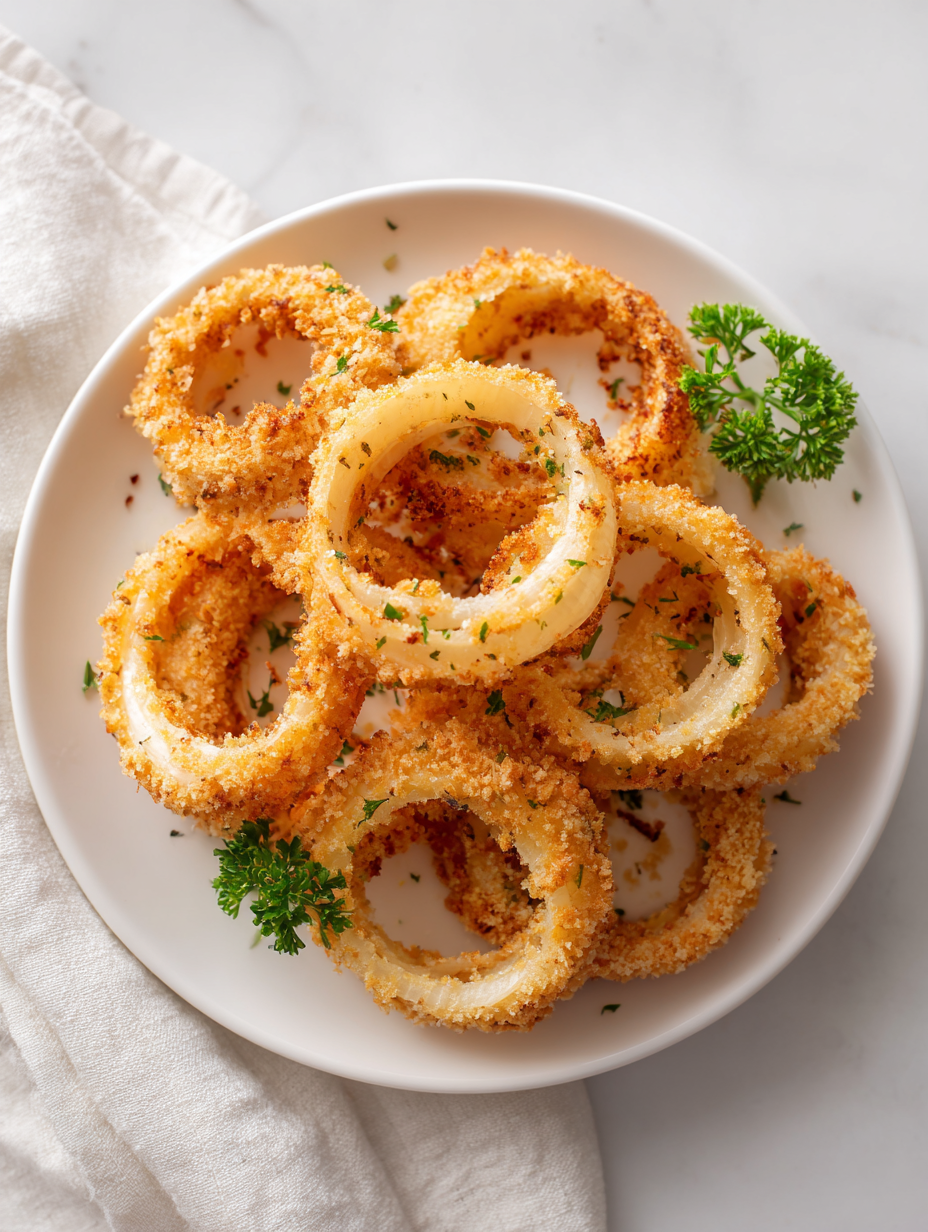
- Bake in the oven for 15-20 minutes, flipping halfway through. Look for a deep golden hue and a crackling sound when tapped.
- Check the color and crispness. If they’re too pale, bake a few minutes longer. If burnt, reduce oven temp slightly or shorten baking time.
- Remove from oven and let rest for 2-3 minutes. Serve immediately for best crunch and flavor.
Let the onion rings rest for a couple of minutes on a wire rack to retain crispness. Serve hot with your favorite dip or just as they are.
How to Know It’s Done
- Color: Deep golden brown on the edges.
- Texture: Crispy exterior with tender onion inside.
- Appearance: Coating adheres evenly without flaking.
Baked Onion Rings
Ingredients
Equipment
Method
- Preheat your oven to 220°C (430°F) and line a baking sheet with parchment paper to prevent sticking.
- Peel the onions and slice them into ½-inch thick rings, keeping them intact for easier coating.
- Set up three shallow dishes: one with flour, one with beaten eggs, and one with seasoned panko breadcrumbs mixed with smoked paprika, salt, and pepper.
- Dip each onion ring into the flour, turning to coat evenly, then shake off excess.
- Next, immerse the floured onion ring into the egg wash, ensuring it’s completely coated.
- Press the coated ring into the seasoned panko breadcrumbs, pressing gently to adhere the coating evenly.
- Place each coated onion ring onto the prepared baking sheet, spacing them out for even baking.
- Lightly spray the coated onion rings with olive oil spray to help them crisp up in the oven.
- Bake the onion rings in the oven for 15-20 minutes, flipping them halfway through, until they are golden and crispy with a slight crackle when tapped.
- Remove the onion rings from the oven and let them rest for 2-3 minutes on a wire rack to keep them crispy.
- Serve immediately with your favorite dip or enjoy them on their own while still warm and crunchy.
Notes
Pro tips for crispy baked onion rings
- Bolded mini-head: Use a light hand with oil spray to avoid soggy coating; just a mist is enough.
- Bolded mini-head: Dip quickly into the egg wash—prolonged soaking can make the coating slide off.
- Bolded mini-head: Keep the breadcrumb mixture dry—moisture causes clumping and uneven coating.
- Bolded mini-head: Bake rings on a wire rack set over the baking sheet for maximum crispness and even air flow.
- Bolded mini-head: Flip the onion rings halfway through baking to ensure even browning on all sides.
- Bolded mini-head: Rest baked rings briefly on a paper towel to absorb excess surface moisture and maintain crunch.
- Bolded mini-head: Serve immediately after resting—freshness is key for that perfect crispy bite.
Common mistakes and how to fix them
- FORGOT to preheat oven → Ensure oven is hot before baking.
- DUMPED onion slices too thick → Use ½-inch slices for even cooking.
- OVER-TORCHED coating → Reduce heat or bake shorter for perfect crispness.
- TOO MUCH oil spray → Lightly mist to avoid soggy coating.
Quick fixes and pantry swaps
- When onion slices are too thick → Slice thinner for quicker, even cooking.
- If coating isn’t crispy → Increase oven temp or spray lightly with more oil.
- Splash with lemon juice if onion flavor is too sharp or raw-tasting after baking.
- Patch soggy spots with an extra quick spray of oil and a few minutes back in the oven.
- Shield burnt edges with foil if coating browns too fast or starts to scorch.
Prepping and storing ahead
- Prep the onion rings: coat them in breadcrumbs and arrange on a tray lined with parchment—up to 2 hours ahead. The coating firms up, making frying or baking easier later.
- Store in an airtight container in the fridge for up to 24 hours. The onion flavor mellows slightly, but they retain crunch if kept dry and cool.
- Reheat in a 180°C (350°F) oven for 8-10 minutes. The smell of toasted breadcrumbs and a crackling surface tell you they’re ready again.
- For longer storage, freeze the pre-coated rings on a tray, then transfer to a bag. Bake straight from frozen—add 5 minutes to baking time, watch for that golden hue.
Top questions about baked onion rings
1. Why bake instead of fry?
Baking uses dry heat, so onion rings get crispy without the grease and oil smell from frying. It’s a healthier, less messy way to enjoy that crunch.
2. How do I prepare the onion rings?
Preheat your oven to 220°C (430°F). Slice onions into ½-inch rings, coat in flour, egg, and breadcrumbs, then bake for 15-20 minutes until golden and crispy.
3. Can I use different breadcrumbs?
Use panko breadcrumbs for extra crunch. If you prefer softer coating, regular dried breadcrumbs work, but toast them first for flavor.
4. Can I make these ahead and store?
Yes, you can freeze coated onion rings on a tray, then transfer to a bag. Bake straight from frozen, adding about 5 minutes.
5. What if they aren’t crispy?
If the coating isn’t crispy enough, increase oven temperature slightly or spray with a bit more oil before baking. Flip halfway for even browning.
6. Can I skip the egg wash?
Egg wash helps the breadcrumbs stick. If out of eggs, use a splash of milk mixed with a pinch of cornstarch as a substitute.
7. What type of onions work best?
Use sweet onions like Vidalia for caramelized flavor. Red onions bring a sharper bite, while yellow onions caramelize beautifully in the oven.
8. How much oil should I use?
Spray lightly with oil before baking. Too much oil makes them soggy, but a light mist helps achieve that crispy exterior.
9. How do I know when they’re done?
Check for a deep golden color and a crackling sound when tapped. The coating should be firm and well adhered, with tender onions inside.
10. How should I serve baked onion rings?
Serve immediately after resting on a wire rack. They’re best hot, with a crispy exterior and sweet, caramelized onion inside.
These baked onion rings are a reminder that you don’t always need oil and fuss to get something crispy and satisfying. They’re perfect for when you want comfort food with a little less guilt and a whole lot of crunch. I find myself reaching for them on busy nights or when I need a quick, honest snack.
Sharing this recipe feels like passing along a secret for a simple pleasure. The smell of caramelized onions and toasted breadcrumbs filling the kitchen is as good as the first bite—familiar, warm, and just a little bit special.

Hi, I’m Claire Dawson, and I’m the voice behind The Procrastinators Cookbook. Food has always followed me around, even when I was busy putting other things off. Somewhere between long café shifts, half-finished to-do lists, and meals cooked later than planned, I realized that food was the one thing I always came back to.