
Puff pastry bites are often seen as just another party appetizer, but I like to think of them as a blank canvas. It’s the kind of dish that invites creativity—no need for fancy ingredients, just a little imagination and a handful of leftovers or pantry staples.
What really gets me excited is customizing each bite with unexpected fillings—think caramelized onion and blue cheese, or spicy chorizo with a dollop of sour cream. It’s a simple way to turn something familiar into a little personal culinary statement, especially when you want to impress without too much fuss.
Baking these bites is surprisingly forgiving, and they come out golden and flaky every time—crisp edges, warm centers, and that irresistible buttery aroma filling the kitchen. It’s a humble dish with the power to surprise, perfect for making any gathering feel a bit more special or just elevating a quiet night in.
Focusing on the overlooked art of customizing puff pastry bites with unexpected fillings, turning a simple appetizer into a personal culinary canvas.
The story behind this recipe
- This recipe was born out of a lazy Sunday morning, when I rummaged through the fridge and found leftover cheese, a half-empty jar of pesto, and a sheet of puff pastry. Instead of making a fuss, I just threw everything together, hoping for the best. The smell that filled the kitchen—warm, buttery, with a hint of herbs—made me realize how simple ingredients can turn into something unexpectedly satisfying.
- Over the years, I’ve kept tweaking it, adding bits of what I have on hand—sun-dried tomatoes, bits of cooked sausage, even a smear of hummus. It’s become my go-to for quick snacks and impromptu gatherings, and I love how flexible it is. It’s one of those dishes that reminds me that sometimes, the best ideas come from just playing around with what’s already in the fridge.
- heading
- story_type
Key ingredients for perfect bites
- Frozen puff pastry: I always keep a couple sheets in the freezer—bakes up flaky and golden, but watch the edges—they can burn quickly if you’re not careful.
- Cheese: I love a sharp cheddar or a creamy brie; both melt beautifully and add that gooey, savory touch. Feel free to experiment with your favorites, but avoid overly watery cheeses that won’t hold shape.
- Herbs and seasonings: Fresh thyme or a sprinkle of smoked paprika can elevate the flavor instantly. I keep dried herbs on hand for a quick boost—just don’t overdo it, or they’ll taste stale.
- Fillings: Leftover roasted veggies or cooked meats work like magic here. I like to add a tiny splash of balsamic or a dollop of mustard for a flavor punch—just a small amount, or it’ll overpower the pastry.
- Egg wash: Brushing with beaten egg gives that shiny, golden finish. I sometimes mix in a pinch of turmeric or smoked paprika for extra color and flavor—don’t skip this step, or they won’t look as appetizing.
- Optional toppings: Seeds, flaky sea salt, or fresh herbs sprinkled on top before baking add texture and visual appeal. I like a sprinkle of sesame seeds for a nutty crunch—just don’t load too much, or it could burn.
Spotlight on key ingredients
Cheese:
- Frozen puff pastry: I always keep a couple sheets in the freezer—bakes up flaky and golden, but watch the edges—they can burn quickly if you’re not careful.
- I love a sharp cheddar or a creamy brie; both melt beautifully and add that gooey, savory touch. Feel free to experiment with your favorites, but avoid overly watery cheeses that won’t hold shape.
- Herbs and seasonings: Fresh thyme or a sprinkle of smoked paprika can elevate the flavor instantly. I keep dried herbs on hand for a quick boost—just don’t overdo it, or they’ll taste stale.
Egg wash:
- Brushing with beaten egg gives that shiny, golden finish. I sometimes mix in a pinch of turmeric or smoked paprika for extra color and flavor—don’t skip this step, or they won’t look as appetizing.
- Fillings: Leftover roasted veggies or cooked meats work like magic here. I like to add a tiny splash of balsamic or a dollop of mustard for a flavor punch—just a small amount, or it’ll overpower the pastry.
Notes for ingredient swaps
- Dairy-Free: Swap regular cheese for a nut-based or dairy-free cheese alternative—still melty, but watch the moisture level.
- Vegan: Use plant-based puff pastry (check ingredients), and replace cheese with seasoned mashed avocado or hummus for creaminess.
- Gluten-Free: Try a gluten-free puff pastry or use sliced roasted vegetables as a base—keep an eye on texture and flakiness.
- Spicy: Add a dash of cayenne or hot sauce to your fillings for extra kick—just a little, so it doesn’t overpower the pastry.
- Herb Variations: Fresh basil or cilantro can brighten up the flavor—use sparingly, as fresh herbs can be pungent when heated.
- Sweet Version: Fill with fruit preserves or a sprinkle of cinnamon sugar—bake until golden, for a quick dessert twist.
- Extra Crunch: Sprinkle with crushed nuts or seeds before baking—adds texture, but keep an eye to prevent burning.
Equipment & Tools
- Baking sheet: To hold and bake the puff pastry squares evenly.
- Parchment paper: Prevents sticking and makes cleanup easier.
- Rolling pin: To gently flatten and smooth the pastry sheet.
- Sharp knife or pizza cutter: To cut the pastry into even squares.
- Pastry brush: To apply egg wash for a shiny, golden finish.
- Cooling rack: To cool the bites evenly and maintain crispness.
Step-by-step guide to puff bites
- Preheat your oven to 200°C (390°F). Line a baking sheet with parchment paper. Set aside.
- Thaw one sheet of puff pastry in the fridge for about 30 minutes. Keep it cold but pliable.
- Lightly flour your work surface. Roll the pastry sheet gently to smooth out creases and slightly increase size, about 2-3 mm thickness.
- Using a sharp knife or a pizza cutter, cut the pastry into 24 small squares, roughly 2 inches each. Keep scraps for re-rolling if needed.
- Prepare your fillings: mix cheese, herbs, and any cooked or leftover ingredients in a small bowl. Keep close to your workspace.
- Place each pastry square on the prepared baking sheet. Spoon a small amount (about 1 tsp) of filling in the center of each square. Be careful not to overfill.
- Brush the edges of each square with a little beaten egg using a pastry brush. This helps the pastry turn golden and shiny.
- Bake the bites in the preheated oven for 15-20 minutes. Check after 12 minutes; they should be puffed, golden, and crisp at the edges.
- a. If they’re browning too quickly, turn down the oven to 180°C (355°F).
- b. If the pastry isn’t puffing or browning evenly, rotate the baking sheet halfway through.
- c. When the tops are deep golden and the filling is bubbling, remove from the oven.
- Let the bites rest on the baking sheet for 5 minutes. They’ll be hot and flaky right out of the oven.
- Transfer to a wire rack or serve directly on a platter. Sprinkle with finishing touches like seeds or herbs if desired.
Allow the baked bites to rest for 5 minutes. Serve warm, garnished with fresh herbs or seeds for added texture and visual appeal.
How to Know It’s Done
- Golden and flaky pastry edges, with a slight jiggle in the filling, indicates doneness.
- Internal temperature of the filling reaches 74°C (165°F) if using cooked meats or fillings.
- Surface should be evenly golden, with no raw pastry visible.
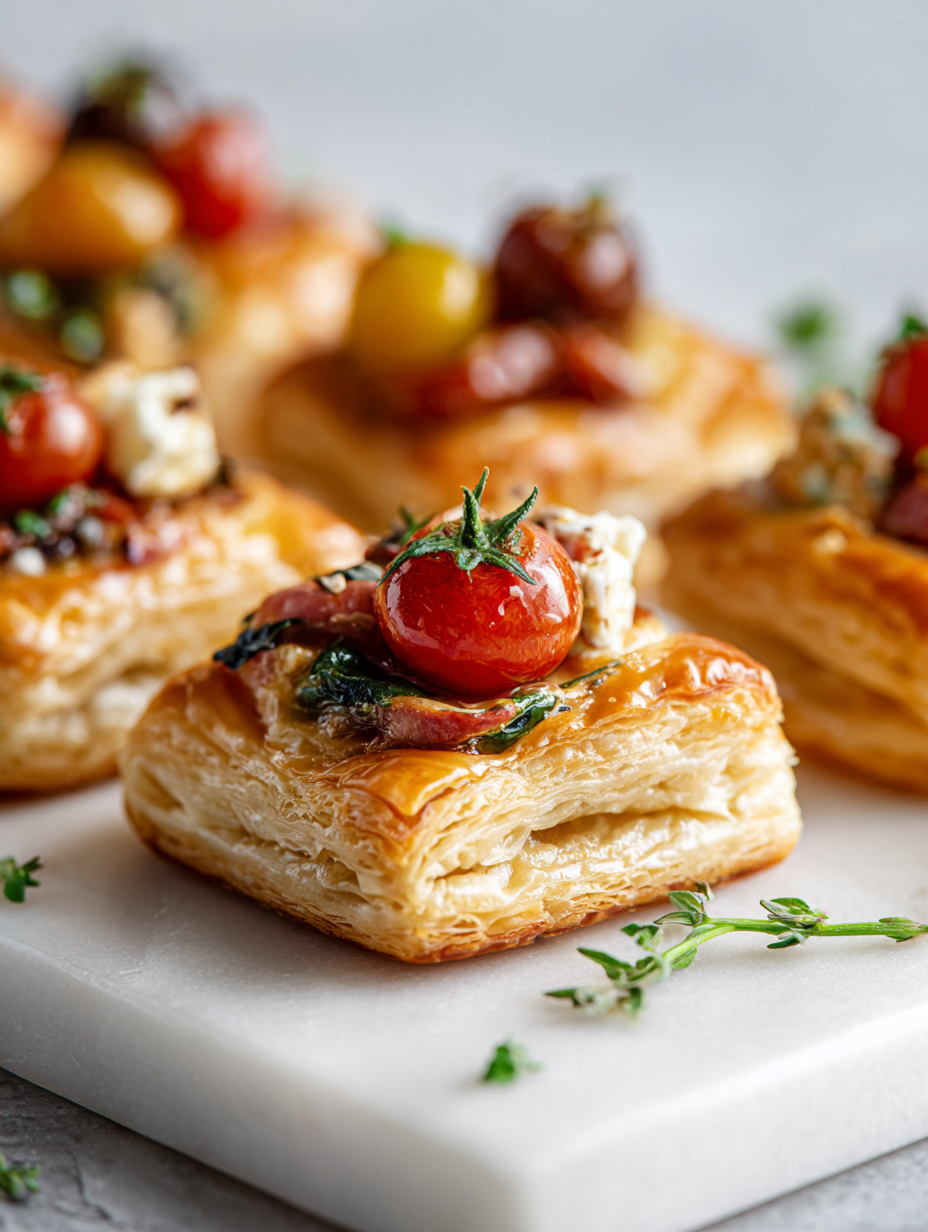
Customizable Puff Pastry Bites
Ingredients
Equipment
Method
- Thaw the puff pastry sheet in the fridge for about 30 minutes until pliable but still cold.
- Lightly flour your work surface and gently roll out the pastry with a rolling pin to smooth creases and slightly increase its size, about 2-3 mm thick.
- Using a sharp knife or pizza cutter, cut the pastry into 24 even squares, approximately 2 inches each. Gather scraps to re-roll if needed.
- In a small bowl, mix the shredded cheese with dried herbs and, if desired, a small splash of mustard or balsamic for extra flavor.
- Place each pastry square on the prepared baking sheet lined with parchment paper.
- Spoon about 1 teaspoon of the cheese mixture into the center of each square, being careful not to overfill.
- Brush the edges of each pastry square with the beaten egg using a pastry brush. This will give a shiny, golden finish.
- Bake in a preheated oven at 200°C (390°F) for 15-20 minutes, until the bites are puffed, golden, and crispy at the edges.
- Check the bites around 12 minutes to ensure they aren’t browning too quickly, and rotate the baking sheet if needed for even coloring.
- Once baked to a deep golden hue and bubbling at the filling, remove the bites from the oven and let them rest for 5 minutes on a cooling rack.
- Transfer the bites to a serving platter, sprinkle with optional toppings like seeds or herbs, and enjoy the warm, flaky, cheesy bites right away.
Notes
Pro tips for perfect puff bites
- Chill the pastry before handling to keep it flaky and prevent sogginess.
- Use a light hand when rolling to avoid tearing the delicate puff pastry sheets.
- Brush with egg wash generously for a shiny, golden finish that looks as good as it tastes.
- Keep fillings minimal—about 1 teaspoon—to prevent overflow and ensure crisp edges.
- Rotate the baking sheet halfway through baking for even color and puff.
- Watch the oven closely after 12 minutes—edges can brown quickly, so adjust as needed.
- Let baked bites rest for 5 minutes before serving to allow filling to set slightly.
Common mistakes and how to fix them
- FORGOT to keep the pastry cold → Chill the pastry until just pliable to prevent sogginess.
- DUMPED filling in the center → Use a teaspoon to avoid overstuffing and spilling over.
- OVER-TORCHED edges → Rotate the baking sheet or lower heat to prevent burning.
- MISSED egg wash step → Always brush with egg wash for a shiny, golden finish.
Quick fixes and pantry swaps
- When pastry edges burn → Shield with aluminum foil for 5 seconds to protect and cool.
- If filling leaks out → Dampen edges with water before sealing for a better stick.
- When bites are soggy → Splash in a hot oven for 3 minutes to crisp the crust.
- Dumped too much filling → Patch with extra pastry or scrape off excess before baking.
- When pastry shrinks → Chill assembled bites for 10 minutes before baking to maintain shape.
Prep, store, and reheat tips
- Prepare the puff pastry squares and fillings in advance; keep them refrigerated for up to 24 hours for convenience.
- Assemble the bites just before baking to maintain the crispness of the pastry and the freshness of the fillings.
- Store leftover baked bites in an airtight container in the fridge for up to 2 days; reheat in a 180°C (355°F) oven until crisp and warmed through, about 8-10 minutes, until you hear a slight crackle when gently pressed.
- Frozen baked bites can be stored for up to a month; reheat directly from frozen at 180°C (355°F) for 12-15 minutes, until flaky and hot in the center.
- Reheating will sometimes soften the pastry; a quick blast in the oven helps restore some of that original crunch and aroma.
Top questions about puff pastry bites
1. How do I cut the pastry without tearing it?
Use a sharp knife or pizza cutter to get clean, even squares. If the pastry tears, gently patch with scraps and re-bake.
2. Can I skip the egg wash?
Egg wash gives a shiny, golden crust. If you skip it, the pastry might look dull and less appetizing.
3. How do I know when they’re done?
Bake at 200°C (390°F) for 15-20 minutes until golden and crisp. Check around 12 minutes to prevent over-browning.
4. My bites are soggy—what now?
If the bites are soggy after baking, reheat in a hot oven for 5 minutes to restore crunch.
5. What cheeses work best?
Use firm, flavorful cheeses like sharp cheddar or brie. For a smoky touch, add a pinch of smoked paprika.
6. Can I make these ahead?
Leftover baked bites can be stored in the fridge for 2 days. Reheat in a 180°C (355°F) oven until crisp and hot, about 8-10 minutes.
7. What if the filling leaks out during baking?
If filling leaks out, chill the assembled bites for 10 minutes before baking. This helps prevent overflow and keeps the filling contained.
8. How much filling should I use?
Use a light hand with fillings—about 1 teaspoon per square—to avoid sogginess and ensure a crisp crust.
9. Can I make these gluten-free?
For a gluten-free version, try a gluten-free puff pastry or thin slices of roasted vegetables as a base.
10. My pastry is over-browning—what do I do?
If the pastry edges brown too quickly, rotate the baking sheet or reduce oven temperature slightly to prevent burning.
These puff pastry bites aren’t just a quick snack—they’re a way to hold on to that flaky, buttery goodness in every bite. When you make them, you’re not just baking; you’re creating a little moment of joy that’s easy to share or keep for yourself. They remind me that simple ingredients, treated with a bit of attention, can turn into something memorable.
No matter how many times I bake these, I still find a quiet satisfaction in that first crispy crunch and warm melt-in-your-mouth filling. It’s a dish that feels like a small celebration, even on the busiest days. And honestly, that’s exactly what I need right now—something straightforward, comforting, and just a little bit special.

Hi, I’m Claire Dawson, and I’m the voice behind The Procrastinators Cookbook. Food has always followed me around, even when I was busy putting other things off. Somewhere between long café shifts, half-finished to-do lists, and meals cooked later than planned, I realized that food was the one thing I always came back to.