
Baking chicken meatballs instead of frying them isn’t just about cutting calories; it turns out to be a game changer for keeping them juicy and tender. No splattering oil, no greasy smell—just evenly cooked, flavorful bites straight from the oven. It’s my go-to method when I want something comforting without the mess or guilt.
There’s something satisfying about knowing these meatballs are cooked through with just a simple bake. It’s a bit forgiving, too—no need to worry about flipping or overcooking on the stovetop. Plus, the smell of seasoned chicken mingling with herbs while baking feels like a little celebration in my kitchen, especially on busy weeknights.
Focusing on how baking the meatballs instead of frying keeps them juicier and less greasy, perfect for a weeknight dinner that feels indulgent but isn’t heavy.
The story behind this recipe
- This recipe came together one chilly evening when I was craving something hearty but didn’t want to mess with frying. Baking these chicken meatballs felt like a small act of rebellion against greasy cleanup, plus they stayed moist and tender, which surprised me. The smell of garlic and herbs baking into the chicken always takes me back to my childhood kitchen, where Sunday dinners were all about simple, honest food.
- I started tweaking my usual stovetop meatball recipe to see if oven-baking could deliver the same flavor, but with less fuss. Turns out, it’s a win—juicy, evenly cooked, and the kind of dish I can prep ahead for busy nights. Once you get the hang of it, it’s hard to go back to frying.
- heading
- story_type
Key Ingredients and Tips
- Ground chicken: I prefer it fresh for the best juiciness, but frozen works in a pinch—just thaw thoroughly. The mild flavor needs good seasoning to shine through.
- Breadcrumbs: I use plain panko for extra crunch, but regular dried breadcrumbs are fine if you want a softer bite. They help keep the meatballs tender and light.
- Egg: It’s your binder, keeping everything together. Skip it if you’re egg-sensitive, but be prepared to add a touch more breadcrumbs to compensate.
- Garlic & herbs: Fresh garlic gives a punch of aroma that’s hard to beat. Dried herbs are okay, but use a little more to match the fresh’s vibrancy.
- Olive oil: I drizzle a bit in the mix for richness and to keep the meatballs moist. Skip if you’re aiming for leaner, but they’ll be a tad drier.
- Salt & pepper: Season generously—don’t be shy. The salt amplifies the chicken’s flavor, and cracked black pepper adds a subtle heat.
- Optional cheese: A sprinkle of grated Parmesan inside adds umami, but you can skip it for a dairy-free version—just expect a slightly different flavor profile.
Spotlight on key ingredients
Ground chicken:
- I prefer it fresh for the best juiciness, but frozen works in a pinch—just thaw thoroughly. The mild flavor needs good seasoning to shine through.
- Breadcrumbs: I use plain panko for extra crunch, but regular dried breadcrumbs are fine if you want a softer bite. They help keep the meatballs tender and light.
- Egg: It’s your binder, keeping everything together. Skip it if you’re egg-sensitive, but be prepared to add a touch more breadcrumbs to compensate.
Garlic & herbs:
- Fresh garlic gives a punch of aroma that’s hard to beat. Dried herbs are okay, but use a little more to match the fresh’s vibrancy.
- Olive oil: I drizzle a bit in the mix for richness and to keep the meatballs moist. Skip if you’re aiming for leaner, but they’ll be a tad drier.
Notes for ingredient swaps
- Dairy-Free: Use ground turkey or pork instead of chicken. They’re leaner but still moist and flavorful.
- Breadcrumbs: Swap panko for crushed cornflakes for extra crunch and a slightly sweeter taste.
- Egg: Flaxseed meal mixed with water makes a good vegan binder, but the texture might be a bit denser.
- Herbs: Fresh basil or oregano can replace parsley for a more aromatic punch—adjust quantity to taste.
- Olive Oil: Avocado oil offers a milder flavor and high smoke point, good for mixing or finishing.
- Garlic: Roasted garlic adds sweetness and depth if fresh garlic feels too sharp—smell will be richer.
- Cheese: Nutritional yeast can add umami without dairy, but won’t melt or create the same richness.
Equipment & Tools
- Oven: Bake the meatballs evenly.
- Baking sheet lined with parchment: Prevent sticking and easy cleanup.
- Mixing bowl: Combine ingredients thoroughly.
- Measuring spoons and cups: Ensure accurate ingredient quantities.
- Cooling rack (optional): Allow excess moisture to escape during resting.
Step-by-step guide to baked chicken meatballs
- Preheat your oven to 200°C (390°F). Gather a baking sheet lined with parchment paper and a mixing bowl. Having everything ready makes the process smoother.
- In the bowl, combine 1 pound ground chicken, 1/2 cup panko breadcrumbs, 1 beaten egg, 2 minced garlic cloves, 1 teaspoon salt, 1/2 teaspoon black pepper, and a tablespoon chopped fresh parsley. Mix gently but thoroughly.
- Roll the mixture into meatballs about 1.5 inches in diameter. Try to keep them uniform for even baking. Place them on the prepared baking sheet, spaced apart.
- Bake in the oven for 18-20 minutes. The outside should turn lightly golden, and the meatballs will start to crack slightly. The smell of garlic and herbs will be inviting.
- Check for doneness: the internal temperature should reach 75°C (165°F). If they’re not quite there, give them another 2-3 minutes. If they start to crack open excessively, lower the heat slightly or reduce baking time.
- Remove from oven and let rest for 5 minutes. Resting keeps them juicy. Serve with your favorite sauce or straight from the tray for a casual bite.
Let the meatballs rest for 5 minutes on a plate or rack to retain juiciness. Serve warm, with a sprinkle of fresh herbs or a drizzle of olive oil if desired.
How to Know It’s Done
- Probe temp reaches 75°C (165°F).
- Meatballs are golden and slightly cracked on top.
- They jiggle slightly when gently moved, but hold shape.
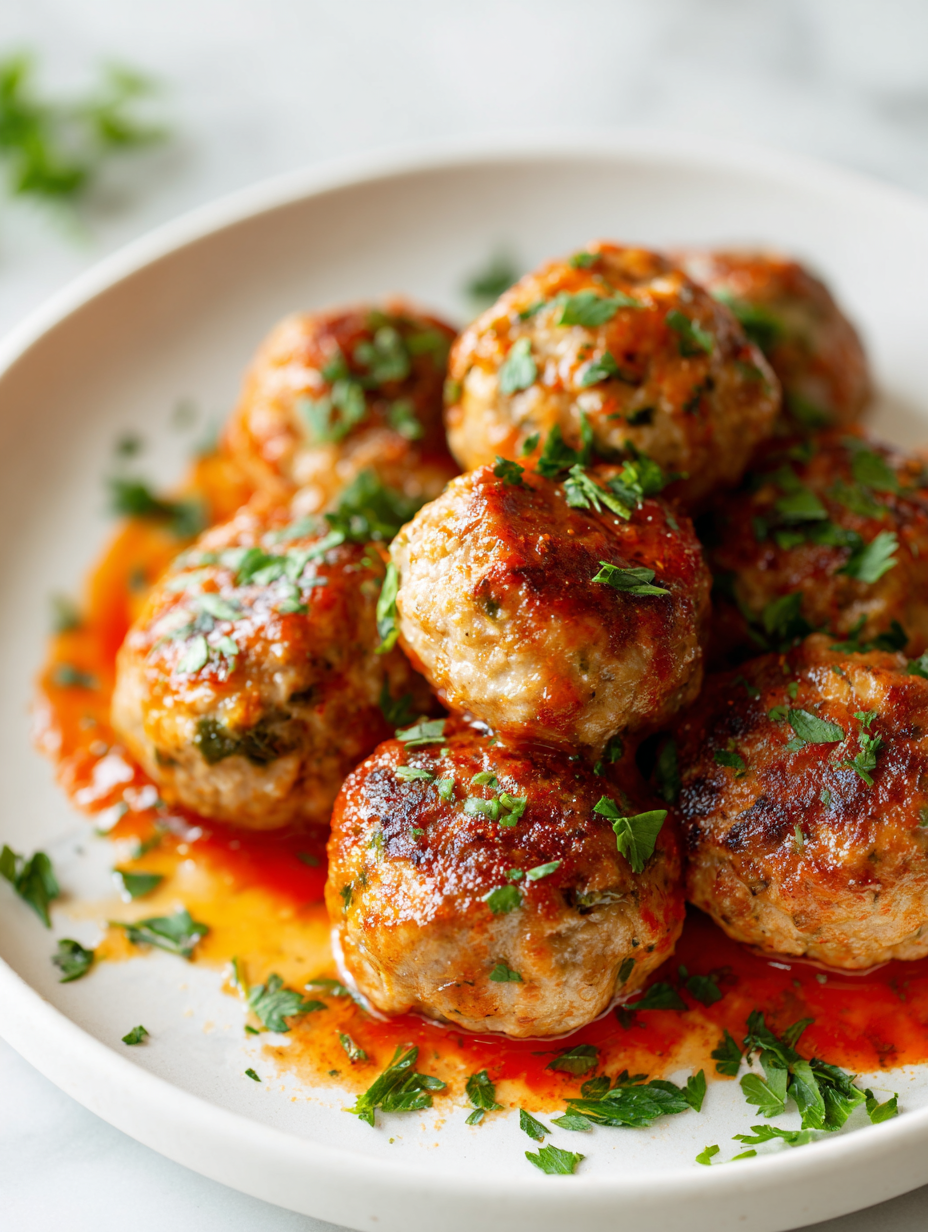
Baked Chicken Meatballs
Ingredients
Equipment
Method
- Preheat your oven to 200°C (390°F) and line a baking sheet with parchment paper. This ensures even cooking and easy cleanup.
- In a large mixing bowl, combine the ground chicken, panko breadcrumbs, beaten egg, minced garlic, salt, pepper, and chopped parsley. Gently mix everything together until just combined, being careful not to overwork the mixture.
- Use your hands or a small scoop to shape the mixture into uniform meatballs about 1.5 inches in diameter. Place each meatball on the prepared baking sheet, spacing them evenly apart.
- Bake the meatballs in the preheated oven for 18-20 minutes, or until they turn lightly golden on the outside and are cooked through. You'll hear a gentle sizzle as they bake.
- Check that the meatballs reach an internal temperature of 75°C (165°F). If they need a bit more time, pop them back in for another 2-3 minutes. They should be firm but moist inside.
- Once done, remove the baking sheet from the oven and let the meatballs rest for about 5 minutes. Resting helps keep them juicy and prevents them from falling apart when served.
- Serve the baked chicken meatballs warm, garnished with extra parsley or a drizzle of olive oil if desired. They pair perfectly with your favorite sauce or a simple side salad.
Notes
Tips & Tricks for Perfect Meatballs
- Bolded Mini-Head: Keep meat mixture cold → Cold ingredients prevent sticking and make shaping easier.
- Bolded Mini-Head: Use a gentle hand when mixing → Overmixing can make meatballs dense, so just combine until ingredients are evenly distributed.
- Bolded Mini-Head: Uniform size matters → Use a small scoop for even baking and consistent texture.
- Bolded Mini-Head: Bake on a hot sheet → Preheated baking sheet helps develop a slight crust and prevents sticking.
- Bolded Mini-Head: Don’t overcrowd the pan → Leave space between meatballs for even heat and browning.
- Bolded Mini-Head: Rest before serving → Resting for 5 minutes keeps juices in and prevents meatballs from falling apart when handled.
- Bolded Mini-Head: Finish with a drizzle of oil → A light drizzle post-baking enhances flavor and adds a glossy finish.
Common mistakes and how to fix them
- FORGOT to preheat oven → Always preheat for even cooking and better crust.
- DUMPED meat mixture directly on baking sheet → Shape meatballs first, then bake.
- OVER-TORCHED meatballs → Reduce baking time or lower oven temperature slightly.
- MISSED resting time → Rest meatballs 5 minutes before serving for juiciness.
Quick fixes and pantry swaps
- When meatballs stick, splash a little water on your hands before shaping for less cling.
- If meat mixture feels dry, open the fridge for a splash of olive oil to loosen it up.
- DUMPED too many meatballs on the tray? Patch space with a second baking sheet, quick fix.
- Overcooked meatballs turn dry—reduce baking time, always check for a slight jiggle inside.
- When the oven smells smoky, shield the meatballs with foil and lower the temperature slightly.
Prep, store, and reheat tips
- Prepare the meatball mixture up to 24 hours in advance; keep it covered in the fridge, the flavors meld and deepen overnight, making shaping easier.
- Shape the meatballs ahead of time and store them on a plate covered with plastic wrap for up to 12 hours; keep them refrigerated to prevent bacteria growth.
- Cooked meatballs can be stored in an airtight container in the fridge for 3-4 days; reheat gently in the oven at 160°C (320°F) until warmed through, noticing the aroma of herbs rekindling.
- To freeze, lay uncooked meatballs on a baking sheet, freeze until firm, then transfer to a zip-top bag; they’ll keep for 2-3 months. Bake directly from frozen, adding a few extra minutes.
- Reheating cooked meatballs in the microwave should be done on medium power, watching for steam and a slight crackle as they warm, preserving juiciness and flavor.
Common questions about baked chicken meatballs
1. How do I know if the ground chicken is fresh?
Use ground chicken that’s fresh or thoroughly thawed frozen. The smell should be mild, not sour or fishy.
2. What’s the ideal baking time and temperature?
Bake at 200°C (390°F) for about 18-20 minutes until golden and firm. Check internal temp—75°C (165°F) is safe.
3. How big should the meatballs be?
Shape the mixture into uniform balls about 1.5 inches in diameter for even cooking. Use a small scoop if you have one.
4. Why do my meatballs crack or burn?
If they crack open or turn dark too fast, lower the oven temp slightly or reduce baking time. Rest them before serving.
5. Can I use different breadcrumbs?
Use panko for a crispy exterior, or regular breadcrumbs for a softer bite. Adjust seasoning since bread type affects flavor.
6. Can I omit cheese from the recipe?
Adding grated Parmesan inside boosts umami, but skip if you want dairy-free or a milder flavor.
7. How do I reheat leftover meatballs?
Reheat in the oven at 160°C (320°F) for 10-15 minutes until steaming hot. Check for aroma and texture as cues.
8. Should I rest the meatballs after baking?
For best juiciness, let cooked meatballs rest for 5 minutes before serving. They’ll stay moist and tender.
9. Can I make these meatballs in advance?
Yes, you can prepare the mixture or shape the meatballs ahead. Keep covered in the fridge up to 24 hours.
10. What if the mixture is too wet to shape?
If the meat mixture feels too sticky, add a bit more breadcrumbs or chill it for 15 minutes before shaping.
These baked chicken meatballs are honest comfort food, simple but with a touch of care in every bite. They remind me of family dinners that were unpretentious, loud, and full of flavor. It’s a dish I keep coming back to, especially when I want something nourishing without the fuss.
Cooking them feels like a small ritual—measuring, mixing, shaping—then watching them turn golden in the oven. They’re a reminder that good food doesn’t have to be complicated, just well-made. And honestly, those smells lingering in the kitchen are what make it all worthwhile.

Hi, I’m Claire Dawson, and I’m the voice behind The Procrastinators Cookbook. Food has always followed me around, even when I was busy putting other things off. Somewhere between long café shifts, half-finished to-do lists, and meals cooked later than planned, I realized that food was the one thing I always came back to.