
Stuffed olives feel like a tiny act of culinary rebellion. They’re simple, yes, but the moment you pop one into your mouth, the burst of salty, briny flavor combined with a surprise filling makes you pause. It’s like turning a humble snack into a little ritual that’s both meditative and satisfying.
What I love about this recipe is how flexible it is—each filling can tell a different story. From creamy cheeses to spicy chorizo or even nutty tapenades, these bites invite experimentation. Plus, they’re perfect for when you want something quick but crave that slow, thoughtful process of stuffing each olive with care.
Focusing on the overlooked charm of transforming simple olives into tiny, flavorful bites through creative stuffing, highlighting the meditative process and the surprising variety of fillings that turn an everyday snack into a culinary conversation.
The subtle art of olive stuffing
- These olives remind me of lazy summer afternoons at my grandmother’s house, where simple bites felt like little celebrations.
- I get a thrill from experimenting with fillings—each one a tiny surprise that sparks a smile or a curious glance from friends.
- There’s a quiet satisfaction in perfecting the stuffing technique, turning a basic snack into a miniature piece of art.
- Every time I make these, I feel a burst of pride, like I’ve created something both humble and unexpectedly elegant.
The charm of tiny bites
- I stumbled upon stuffed olives during a chaotic dinner party years ago. A jar of olives and a handful of leftover cheeses turned into an unexpectedly delightful platter. That moment made me realize how a tiny, simple bite can carry so much personality.
- Since then, I’ve kept a small jar of stuffed olives in the fridge, just in case I need a quick snack or a spontaneous appetizer. It’s a little ritual that brings a moment of calm amidst the chaos of daily life.
- heading:
Historical & Cultural Snippets
- Stuffed olives have roots in Mediterranean preservation techniques, dating back centuries when flavor-packed fillings were used to extend shelf life.
- Historically, Italian and Spanish tapas often featured stuffed olives as a way to showcase local cheeses, herbs, and cured meats, turning a simple snack into a cultural expression.
- In the 20th century, stuffed olives gained popularity in cocktail bars, especially with the rise of martinis, shifting from humble snack to elegant garnish.
- The variety of fillings reflects regional tastes—spicy chorizo in Spain, creamy goat cheese in France, and bright lemon zest in Greece—each telling a local story.
- Modern twists, like stuffing with smoked salmon or wasabi, are recent innovations that keep the tradition alive and adaptable for contemporary palates.
Key Ingredients Breakdown
- Green or black olives: I love the firm, salty punch they bring—pick the ones with smooth, shiny skins for the best bite. Feel free to swap for pitted cherry peppers if you want a spicy kick.
- Cream cheese: It’s my go-to for creamy, mellow filling that holds well. If you want a tangier note, try mascarpone or ricotta—just soften and mix thoroughly.
- Stuffing options (herbs, nuts, cheese): I prefer chopped almonds or walnuts for crunch, but toasted pine nuts work beautifully too—add a smoky depth that’s hard to resist.
- Lemon zest: Brightens everything with a zesty pop. Skip if you’re not a citrus fan, but your taste buds might thank you for the zing.
- Herbs & spices: Fresh parsley or thyme add freshness—just chop finely. If you like a little heat, sprinkle in some red pepper flakes for a subtle kick.
- Optional fillings (meats, seafood): Small bits of chorizo or smoked salmon turn these into mini-party bites. Use sparingly to keep the flavor balanced and not overwhelming.
- Olive oil or marinade: A drizzle adds sheen and a touch of richness. Use a good quality extra virgin—your nose will catch the difference, especially if it’s fruity and peppery.
Spotlight on key ingredients
Olives & Cream Cheese:
- Green or black olives: I love the firm, salty punch they bring—pick the ones with smooth, shiny skins for the best bite. Feel free to swap for pitted cherry peppers if you want a spicy kick.
- Cream cheese: It’s my go-to for creamy, mellow filling that holds well. If you want a tangier note, try mascarpone or ricotta—just soften and mix thoroughly.
- Lemon zest: Brightens everything with a zesty pop. Skip if you’re not a citrus fan, but your taste buds might thank you for the zing.
Notes for ingredient swaps
- Dairy-Free: Swap cream cheese for hummus or mashed avocado—both add creaminess but with different flavor profiles.
- Vegan: Use tofu blended with lemon juice and herbs instead of cheese—keeps it smooth and fresh without dairy.
- Nut Allergies: Replace chopped nuts with crispy chickpeas or toasted seeds for crunch and texture.
- Spicy Kick: Add chopped pickled jalapeños or a dash of hot sauce instead of red pepper flakes—brings heat with a tang.
- Citrus Twist: Lime zest can replace lemon zest for a slightly different brightness—think green and zesty instead of yellow and sharp.
- Herb Variations: Fresh basil or dill can take the stuffing in a new direction—just chop finely to avoid overpowering.
- Olive Types: Black olives or kalamata can replace green olives—offer a richer, slightly different saltiness and color.
Equipment & Tools
- small sharp knife: to pit and open the olives carefully
- mixing bowl: to prepare and combine the stuffing ingredients
- spoon: to fill the olives precisely
- small plate: for arranging and serving the stuffed olives
Step-by-step guide to stuffed olives
- Gather your equipment: a small sharp knife, a mixing bowl, a spoon, and a small plate for stuffing.
- Pit the olives if they aren’t already pitted. Use the knife to gently pry open, taking care not to split them.
- Prepare your filling: in the bowl, mix softened cream cheese with chopped herbs, lemon zest, and a pinch of salt until smooth.
- Using the spoon, carefully stuff each olive with the cheese mixture. Don’t overfill—just enough to fill the cavity.
- If adding nuts or small bits of cured meat, insert these into the filling for extra texture and flavor.
- Arrange the stuffed olives on a plate. Drizzle with a little olive oil or a splash of your favorite marinade.
- Let the olives rest at room temperature for 10 minutes to meld flavors and soften slightly. Serve as a snack or appetizer.
Allow the olives to rest at room temperature for about 10 minutes after filling. Drizzle with olive oil or marinade just before serving to enhance flavor and shine. Serve on a small plate or platter, perfect for sharing.
How to Know It’s Done
- Olive filling is firm but not cracked, with a slight jiggle when gently shaken.
- Olives have a shiny appearance, with no excess stuffing spilling out.
- A gentle smell of herbs and citrus should be detectable, indicating good flavor integration.
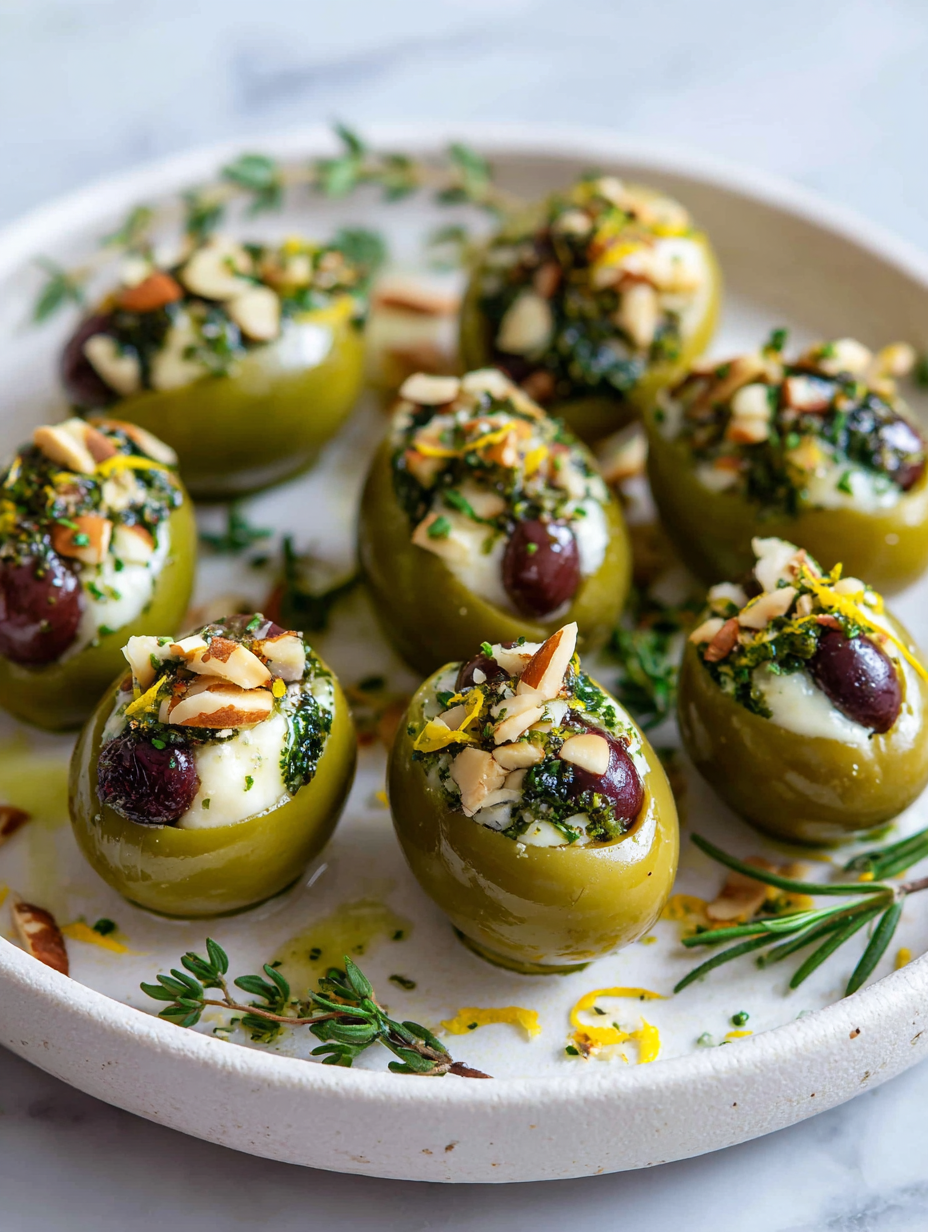
Stuffed Olives
Ingredients
Equipment
Method
- Use your small sharp knife to carefully pit each olive, making a small slit if necessary to access the cavity. Gently open the olive without tearing the skin, then set aside.
- In the mixing bowl, combine the softened cream cheese with finely chopped parsley, lemon zest, and a pinch of salt and pepper. Mix until the filling is smooth, creamy, and well combined, with a fresh aroma.
- Using a spoon, carefully scoop a small amount of the cheese mixture and gently stuff it into each olive’s cavity. Press lightly to ensure the filling sits snugly without overflowing.
- If you like some crunch, sprinkle chopped nuts into the filling before inserting into the olives or add them on top once stuffed. This adds texture and a nutty flavor contrast.
- Place the stuffed olives on a small plate and drizzle with a tiny bit of good quality olive oil for a glossy finish. Let them rest at room temperature for about 10 minutes to allow flavors to meld.
- Serve the stuffed olives as a savory snack or appetizer, enjoying their firm texture and burst of salty, creamy flavor with each bite.
Notes
Pro tips for stuffed olives
- Use fresh herbs; they release more aroma and flavor when stuffed into the olives.
- When stuffing, slightly overfill the cavity; the filling will settle and look more generous.
- Gently tap the stuffed olives on the counter to settle the filling and remove air pockets.
- Chill the filled olives for 15 minutes; it firms up the filling and makes handling easier.
- For a glossy finish, lightly brush the olives with a bit of olive oil before serving.
- Use a silicone spatula to gently smooth out the filling for a cleaner, more professional look.
- If the filling is too soft, refrigerate it for 10 minutes before stuffing; it will hold better.
Common mistakes and how to fix them
- FORGOT to open olives fully? Use a small knife to gently pry—avoid tearing the skin.
- DUMPED filling? Use a smaller spoon or piping bag for neater stuffing.
- OVER-TORCHED olives? Reduce heat immediately and cover pan to prevent burning.
- MISSED flavor? Add a pinch of salt or lemon zest to enhance the filling’s brightness.
Quick fixes and pantry swaps
- When olives burst open, patch the filling with a toothpick to seal in flavor.
- Splash a little lemon juice if stuffing feels too dry or bland.
- When filling oozes out, wipe with a damp cloth for a cleaner presentation.
- DUMPED filling? Use a small piping bag or spoon for precise placement.
- If olives seem too bitter, rinse briefly and pat dry before stuffing.
Prep, store, and reheat tips
- Stuffed olives can be prepared up to 24 hours in advance; keep them refrigerated to maintain freshness and prevent spoilage. The filling develops a richer flavor as it sits.
- Store the stuffed olives in an airtight container in the fridge. They will stay good for 2-3 days, but the texture might soften slightly over time.
- For best texture, avoid storing with too much liquid—drizzle with a little olive oil to keep them shiny and prevent drying out.
- To reheat, serve at room temperature or give them a quick 10-second spin in the microwave. Watch for the filling to warm through—aim for just warm, not hot, to preserve the flavors and texture.
Top questions about stuffed olives
1. Can I use unpitted olives?
Use pitted olives or pit them yourself for easier stuffing and fewer tears in your eyes.
2. What fillings work best for stuffed olives?
Fill with creamy cheeses or spicy meats—whatever suits your mood or pantry chaos that day.
3. Should I chill the olives before serving?
Chill the stuffed olives for at least 15 minutes so the filling firms up and stays put when served.
4. How long can I store stuffed olives?
Yes, they keep well in the fridge for up to 3 days, but expect a slight softening of the filling.
5. How much filling should I put in each olive?
Gently overfill the cavity—they settle nicely and look more generous, plus it’s easier to stuff without mess.
6. What’s the best way to stuff the olives?
Use a small spoon or piping bag for neat, tidy stuffing—your future self will thank you.
7. Should I add anything on top before serving?
Add a drizzle of good olive oil or a splash of marinade for shine and extra flavor right before serving.
8. Can I customize the fillings?
Feel free to experiment with spicy, cheesy, or herby fillings—these little bites are your canvas.
9. What if the olives split while stuffing?
When olives burst open or the filling oozes out, a quick patch with a toothpick works magic.
10. How do I prevent the filling from being too runny?
If the filling feels too soft, chill it for 10 minutes to firm up before stuffing.
These stuffed olives are more than just a snack; they’re a tiny, satisfying project that makes me slow down and focus. The moment they hit your tongue, the salty brine and rich filling come alive with vivid texture and bold flavor. They remind me that the simplest ingredients can carry the biggest stories.
Whenever I make these, I’m reminded of how small acts in the kitchen can turn into moments of quiet pride. They’re perfect for spontaneous gatherings or just a quiet evening when you need something flavorful and real. Honestly, they’re a little reminder that good things often come in tiny, unassuming packages.

Hi, I’m Claire Dawson, and I’m the voice behind The Procrastinators Cookbook. Food has always followed me around, even when I was busy putting other things off. Somewhere between long café shifts, half-finished to-do lists, and meals cooked later than planned, I realized that food was the one thing I always came back to.