
Making cheese pinwheels is like reclaiming a bit of childhood chaos—there’s no perfect roll, just the satisfaction of peeling apart flaky, buttery layers to reveal that gooey, cheesy center. It’s a messy process, but honestly, that’s part of the charm—it’s hand-rolled, a little uneven, and perfectly imperfect. Every batch feels like a small act of rebellion against the precision of modern baking, a reminder that sometimes, the best things come from relaxed hands and a little bit of chaos.
This recipe is rooted in the joy of simple ingredients turned into something unexpectedly delightful. I love how the smell of melted cheese mingling with buttery pastry fills the kitchen, warming up even the coldest days. It’s a nostalgic comfort food, perfect for sharing with friends or just curling up with a good movie on a lazy weekend.
There’s something freeing about the process, too—no need for perfection, just a messy roll, a sprinkle of cheese, and a quick bake. It’s a reminder that good food doesn’t have to be fancy; it just has to be honest, flavorful, and made with a bit of love. That’s what makes cheese pinwheels so satisfying to make and even more satisfying to eat.
Focusing on the nostalgic comfort of homemade cheese pinwheels, this recipe emphasizes the imperfect, hand-rolled charm that makes each batch unique—and a little messy, but utterly satisfying.
Embracing Imperfection in Every Roll
- Making cheese pinwheels feels like a small act of rebellion—messy, imperfect, but utterly satisfying.
- The smell of melted cheese and buttery pastry fills the kitchen, bringing back childhood memories of weekend treats.
- There’s a joy in hand-rolling these; it’s a reminder that good food doesn’t need to be perfect, just honest and flavorful.
- Every batch is a little different—imperfect, quirky, and uniquely mine—but always delicious.
The story behind this recipe
- Making cheese pinwheels takes me back to lazy weekend mornings with my grandma. She’d roll out the dough with an old wooden pin, her hands steady and confident, humming softly as the cheese oozed out in gooey strings. Those mornings felt slow and warm, like a secret shared just between us. Now, whenever I make these, I try to recapture that simple, messy joy of creating something satisfying with my own hands.
- There’s a particular thrill in seeing the swirl of buttery pastry and melted cheese come together—kind of like a small, edible sculpture. It’s not about perfection, but about that imperfect, hand-rolled charm that makes each batch special. These pinwheels are a reminder that good food doesn’t need to be fancy; it just needs a little bit of love and a lot of flavor.
- heading
- story_type
Historical Tidbits on Cheese Pinwheels
- Cheese pinwheels likely originated in European bakeries, where pastry chefs experimented with rolled dough filled with cheese and herbs during the 19th century.
- The spiral design is inspired by traditional European pastries like Danish and Swiss rolls, adapted for a more rustic, homemade feel.
- In many cultures, similar rolled pastries served as portable snacks for farmers and workers, making them a practical, handheld treat.
- The concept of filling and rolling dough dates back thousands of years, with variations found in ancient Middle Eastern and Mediterranean cuisines.
Ingredient breakdown: key components
- Flour: I prefer a soft, all-purpose flour for a tender, flaky dough. If you want more chew, swap in bread flour, but be careful with hydration.
- Butter: Cold, cubed butter is key—it creates flaky layers and melt-in-your-mouth texture. Use a good quality, unsalted butter for flavor, or try chilled coconut oil for a dairy-free twist.
- Cheddar Cheese: Sharp cheddar gives a punch of flavor and melts beautifully, oozy and golden. For a milder taste, mozzarella works, but skip the sharpness.
- Egg Wash: Beaten egg brushed on before baking gives a shiny, golden crust. For a softer finish, mix a little milk or cream instead—just keep an eye on color.
- Cream Cheese: Adds richness and helps bind the filling—makes each bite creamy and satisfying. For a lighter version, ricotta can step in, but it won’t be as gooey.
- Herbs & Seasonings: A sprinkle of thyme or paprika adds depth—use fresh herbs if you have them, but dried works in a pinch. Don’t skip salt, it boosts all the flavors.
- Salt & Pepper: Basic, but crucial—don’t skimp on salt in the dough or filling; it’s what makes everything taste balanced and punchy.
Spotlight on key ingredients
Cheddar Cheese:
- I love a sharp, aged cheddar—melts beautifully and gives that gooey, golden pull. For milder flavor, mozzarella is a softer, less pungent alternative, but skip the punch.
- Butter: Cold, cubed butter creates flaky layers—its solid state during mixing is what makes the pastry tender and crisp. Using a high-fat, unsalted butter enhances flavor and texture.
Herbs & Seasonings:
- Flour: I favor a soft, all-purpose flour for a tender dough that’s easy to work with. If you want a sturdier crust, bread flour adds chew but watch the hydration, it might need a splash more water.
- Fresh thyme or parsley adds a bright, aromatic note—dried herbs work too, just use half as much to avoid overpowering. Salt in the dough and filling boosts all those cheesy, buttery flavors.
Notes for ingredient swaps
- Dairy-Free: Use vegan cheese or cashew cheese for a similar melty, savory effect—though it may lack the same richness.
- Flour: Swap all-purpose flour for whole wheat or spelt for a nuttier flavor and denser texture; reduce water slightly if needed.
- Butter: Replace with chilled coconut oil or vegan butter for dairy-free options; expect a slightly different flaky quality.
- Cheddar Cheese: Try Gruyère or Monterey Jack for a different melt and flavor profile—mild or nutty, depending on choice.
- Egg Wash: Use milk or plant-based milk brushed on top for a softer, less shiny crust, or skip entirely for a matte finish.
- Herbs & Seasonings: Fresh thyme or basil can be substituted with dried herbs—use half the amount for concentrated flavor.
- Salt & Pepper: Sea salt or smoked salt can add a different dimension—adjust to taste, especially if using salty cheeses.
Equipment & Tools
- Mixing bowl: Combine dry ingredients and prepare filling.
- Pastry cutter or fork: Cut in butter until crumbly.
- Rolling pin: Roll out dough evenly.
- Plastic wrap: Wrap dough for chilling.
- Sharp knife: Slice logs into pinwheels.
- Baking sheet: Bake the pinwheels.
- Parchment paper: Prevent sticking on baking sheet.
- Pastry brush: Apply egg wash.
Step-by-step guide to cheese pinwheels
- Gather all ingredients: flour, cold butter, cheese, egg, herbs, salt, pepper. Preheat your oven to 190°C (375°F).
- In a large bowl, mix 2 cups of flour with 1/2 teaspoon salt. Cut in 1/2 cup cold butter until crumbly.
- Add 1/4 cup ice water gradually, mixing until dough just comes together. Knead lightly on a floured surface, then divide in half and shape into disks.
- Wrap dough disks in plastic wrap. Chill in the fridge for at least 30 minutes to relax gluten and firm up butter.
- Meanwhile, prepare the filling: grate 1 cup sharp cheddar, finely chop herbs, and mix with 4 oz softened cream cheese. Season with salt and pepper.
- Remove dough from fridge. On a floured surface, roll each disk into a rectangle about 25×30 cm (10×12 inches), roughly 3 mm thick.
- Spread half of the cheese filling evenly over each rectangle, leaving a 1 cm border around the edges.
- Starting from a long side, carefully roll up each rectangle into a tight log, pinching the edges to seal.
- Using a sharp knife, cut each roll into 1.5–2 cm (0.6–0.8 inch) thick slices. Place pinwheels cut side up on a baking sheet lined with parchment paper.
- Brush the tops with beaten egg for a shiny, golden crust. Bake for 15-20 minutes, until puffed and golden brown.
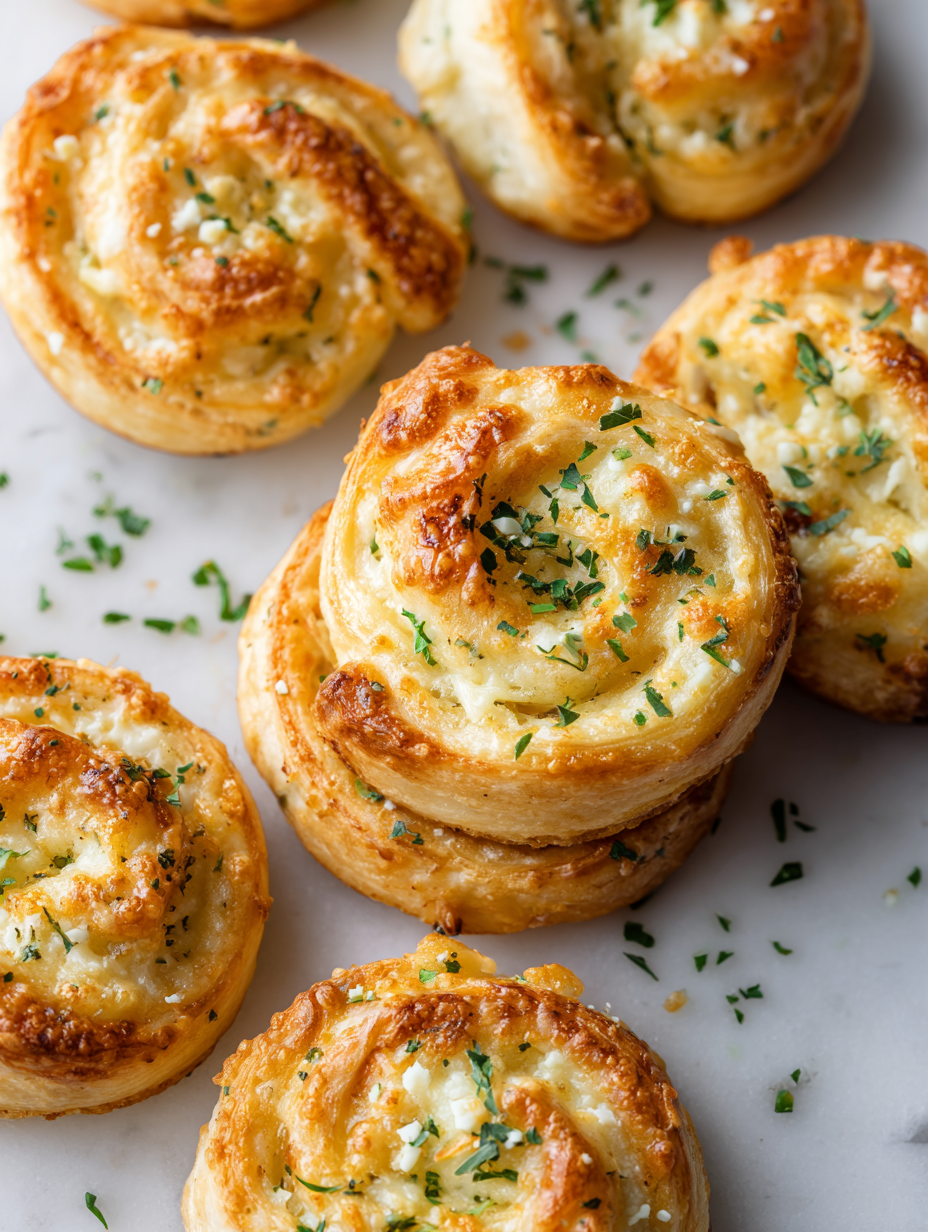
- Check the pinwheels: they should be crisp on top, cheese melted and bubbly inside, and edges lightly browned.
- Remove from oven. Let rest for 5 minutes before serving warm. Serve with a sprinkle of fresh herbs if desired.
Rest baked pinwheels for 5 minutes on a wire rack to set. Serve warm, perhaps with a simple salad or as part of a snack platter.
How to Know It’s Done
- Golden, crispy tops with a slight sheen from the egg wash.
- Cheese inside should be melted and oozy when sliced.
- Edges should be light brown and flaky, not pale or soggy.
Cheese Pinwheels
Ingredients
Equipment
Method
- Mix the flour and salt in a large bowl, then cut in the cold butter until the mixture resembles coarse crumbs.
- Gradually add ice water, a tablespoon at a time, mixing gently until the dough just comes together and feels soft but not sticky.
- Divide the dough into two equal disks, wrap each tightly in plastic wrap, and chill in the refrigerator for at least 30 minutes to relax the gluten and firm up the butter.
- Meanwhile, combine the grated cheese, softened cream cheese, and chopped herbs in a bowl; season with salt and pepper, then mix until smooth.
- Remove one dough disk from the fridge and place on a lightly floured surface; roll into a rectangle about 25x30 cm (10x12 inches), approximately 3 mm thick.
- Spread half of the cheese filling evenly over the dough, leaving a small border around the edges.
- Carefully roll the dough tightly from the longer side into a log, pinching the seam to seal.
- Use a sharp knife to cut the log into 1.5-2 cm (0.6-0.8 inch) thick slices, creating the pinwheel shape.
- Place the slices cut side up on a baking sheet lined with parchment paper, spacing them slightly apart.
- Brush the tops with the beaten egg to give a shiny, golden crust, then bake in a preheated oven at 190°C (375°F) for 15-20 minutes, until puffed and golden brown.
- Remove from the oven and let the pinwheels rest for 5 minutes to set the cheese. Serve warm and enjoy the flaky, cheesy layers with a crispy finish.
Notes
Tips and tricks for perfect pinwheels
- Keep butter very cold to achieve flaky layers—dice it finely for easier incorporation.
- Chill dough thoroughly—at least 30 minutes—this helps prevent shrinkage and makes rolling easier.
- Use a sharp knife or serrated cutter—clean cuts prevent squishing the layers and help keep the swirl intact.
- Brush with egg wash generously—this creates a shiny, golden crust and helps the cheese melt beautifully.
- Bake until tops are deep golden—around 15-20 minutes at 190°C (375°F)—watch for bubbling cheese and crispy edges.
- Rest pinwheels 5 minutes after baking—this helps set the cheese and makes them easier to handle.
- Serve warm—melty cheese and flaky pastry are at their best right out of the oven, with a little crackle on the crust.
Common mistakes and how to fix them
- FORGOT to chill butter: Make sure butter is cold for flaky layers; fix by refrigerating before use.
- DUMPED too much water: Add water gradually; too much makes dough sticky and hard to roll.
- OVER-TORCHED the pinwheels: Bake at 190°C (375°F); check color at 15 minutes to prevent burning.
- SKIPPED egg wash: Results in dull crust; brush with egg for shiny, golden finish.
Quick fixes and pantry swaps
- When dough cracks, splash a little cold water and knead lightly to fix it.
- If cheese isn’t oozy enough, bake a few extra minutes or brush with more egg wash.
- Dumped too much flour? Gently knead in a splash of water for better texture.
- Over-torched edges? Shield with foil and lower oven temp slightly for even baking.
- Splash a bit of water on the baking sheet if pinwheels stick—prevents tearing during removal.
Prep, store, and reheat tips
- Prepare the dough and cut into logs ahead—wrap tightly and refrigerate for up to 24 hours, which helps relax gluten and makes slicing easier, with a tender, flaky result.
- Assemble and slice the pinwheels a few hours before baking—store covered in the fridge for up to 12 hours. The flavors meld and the pastry firms up, making baking more even.
- Reheat leftovers in a 180°C (350°F) oven for 8-10 minutes—look for crisp edges and gooey cheese when warmed. Microwave is faster but softens the pastry considerably.
- Store baked pinwheels in an airtight container for 2 days at room temperature or up to 4 days in the fridge. Reheat briefly for best texture, and expect the pastry to soften slightly with refrigeration.
Top questions about cheese pinwheels
1. Can I use margarine instead of butter?
Use cold butter, diced finely, to create flaky, layered pastry. Warm butter melts too quickly, ruining the texture.
2. Can I substitute margarine for butter?
Yes, but margarine tends to produce a softer, less flaky crust. Keep it cold and handle gently for best results.
3. How do I get the cheese to melt evenly?
Ensure the cheese is shredded finely and evenly spread to prevent uneven melting and bursting during baking.
4. How do I know when they are done?
Bake until the pinwheels are deep golden and cheese is bubbling, about 15-20 minutes at 190°C (375°F).
5. Can I skip chilling the dough?
Chill the dough for at least 30 minutes to prevent shrinking and make rolling easier.
6. Can I make these ahead of time?
Yes, you can prepare the dough in advance, wrap tightly, and refrigerate for up to 24 hours before baking.
7. How should I store leftovers?
Store baked pinwheels in an airtight container for up to 2 days at room temperature or 4 days in the fridge.
8. How do I reheat leftover pinwheels?
Reheat in a 180°C (350°F) oven for 8-10 minutes until crispy and cheese is gooey again.
9. What if my dough cracks while rolling?
When dough cracks, lightly splash cold water and knead gently to restore pliability.
10. My cheese isn’t melting properly, what can I do?
If cheese isn’t melting well, bake a few extra minutes or brush with more egg wash for shine.
Making these cheese pinwheels is a bit like embracing the chaos—each one turns out a little different, but that’s what makes them special. They remind me that sometimes, the best comfort food is simple, imperfect, and made with love, right in your own kitchen.
Whenever I bake a batch, I think about how these little swirls connect me to childhood memories and messy weekends. They’re not just snacks—they’re a reminder to enjoy the process and find joy in the small, cheesy, flaky moments.

Hi, I’m Claire Dawson, and I’m the voice behind The Procrastinators Cookbook. Food has always followed me around, even when I was busy putting other things off. Somewhere between long café shifts, half-finished to-do lists, and meals cooked later than planned, I realized that food was the one thing I always came back to.