
When I first tried glazing a ham with a splash of bourbon and a hint of fresh lemon, I didn’t expect the brightness to cut through the dense meat so beautifully. It’s a simple tweak, but it elevates the entire dish, especially during the dark days of December. This recipe isn’t about perfection, but about making a messy, flavorful mess that feels like a secret shared around the table.
Why I Keep Coming Back to This Glaze
The balance of sweet, smoky, and bright flavors always surprises me. It’s forgiving—adjust the acidity or sweetness, and it still works. Plus, it’s quick to whip up, making holiday prep less frantic. Every time I make it, I remember that simple joys come from a good glaze and shared stories over a carved ham.
Breaking Down the Key Players in Your Glaze
- Brown sugar: Adds sweetness and depth; use dark for a richer flavor.
- Apple cider vinegar: Brightens the glaze with a tangy kick; skip if you prefer milder.
- Smoked paprika: Gives a smoky background; substitute with chipotle for more heat.
- Lemon zest: Lifts the whole thing with zesty brightness; lemon juice can replace zest.
- Honey: Balances acidity and sweetness; maple syrup works as a substitute.
- Mustard powder: Adds a subtle sharpness; Dijon can be used for a more intense tang.
- Soy sauce: Provides saltiness and umami; tamari is a gluten-free swap.
Tools of the Trade for Glazing Glory
- Baking tray: To hold the ham and catch drips from the glaze.
- Sharp knife: For scoring the fat and carving.
- Saucepan: To make and reduce the glaze.
- Basting brush: To coat the ham evenly.
- Meat probe or instant-read thermometer: To check internal temperature.
Step-by-Step Guide to a Perfectly Glazed Christmas Ham
Step 1: Preheat your oven to 160°C (320°F).
Step 2: Score the ham’s fat in a diamond pattern, about 1 cm deep.
Step 3: Mix your glaze ingredients in a saucepan: sweet, tangy, smoky.
Step 4: Brush the glaze generously over the ham’s surface.
Step 5: Bake uncovered, basting every 20 minutes, until the glaze is caramelized and sticky, about 1.5 hours.
Step 6: Let the ham rest for 15 minutes before carving and serving.
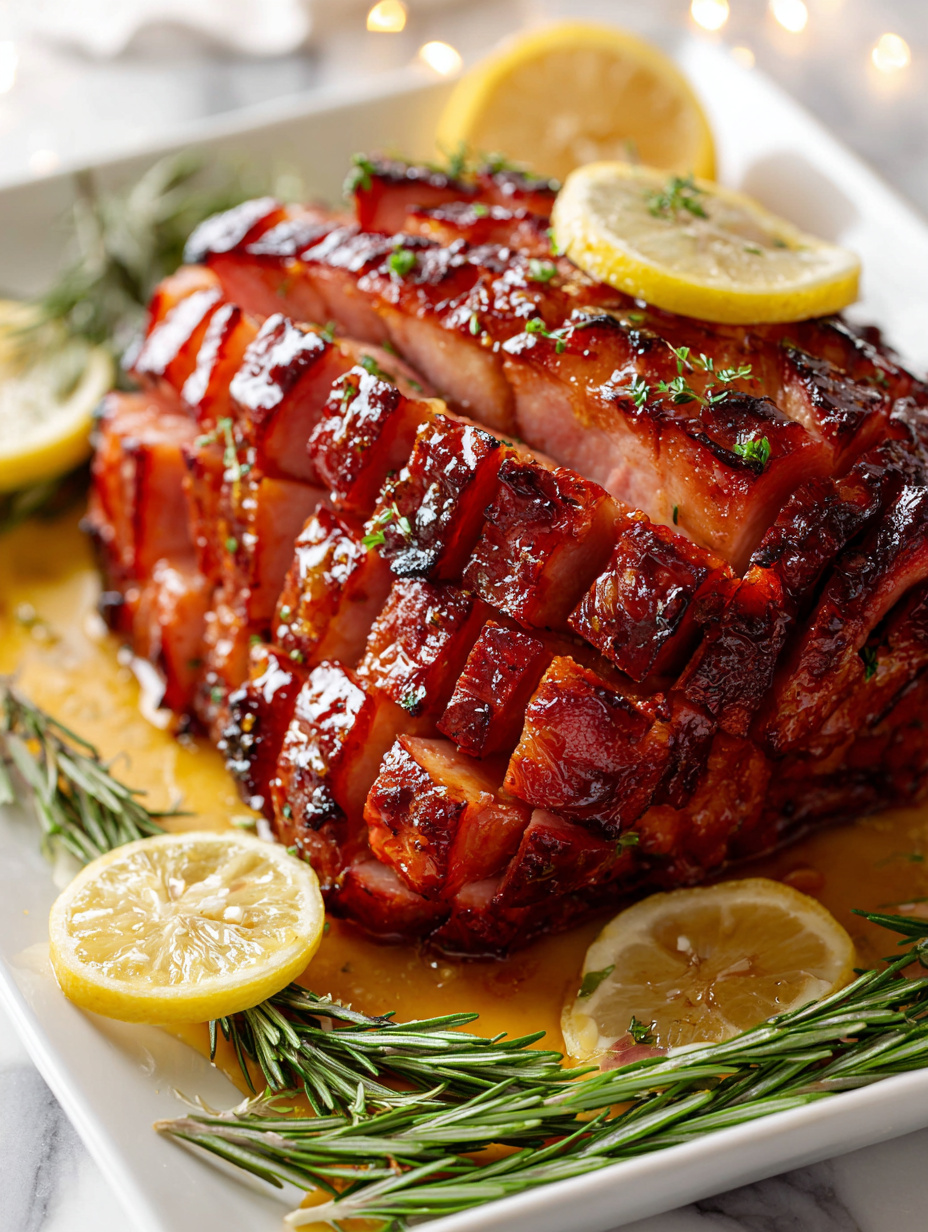
Bourbon Lemon Glazed Ham
Ingredients
Equipment
Method
- Preheat your oven to 160°C (320°F). Place the ham on a baking tray and score the surface in a diamond pattern about 1 cm deep, making sure to cut through the fat but not into the meat.
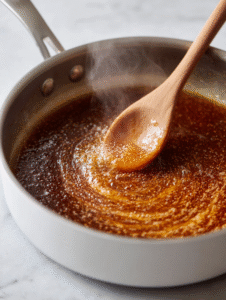
- Combine brown sugar, bourbon, lemon zest, apple cider vinegar, smoked paprika, honey, mustard powder, and soy sauce in a saucepan. Bring the mixture to a gentle boil over medium heat, stirring until the sugar dissolves and the glaze thickens slightly, about 5 minutes.
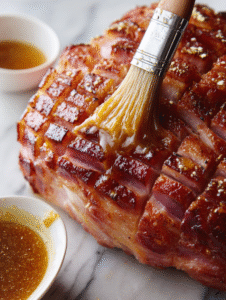
- Brush a generous layer of the glaze all over the scored surface of the ham, making sure to get into the crevices. This initial coat will start to caramelize as it bakes.
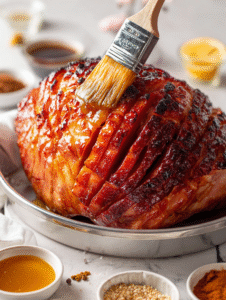
- Place the ham in the oven and bake uncovered. Every 20 minutes, baste it with more glaze using a basting brush, ensuring each layer is smooth and glossy. The aroma of spices and bourbon will fill your kitchen as it bakes.
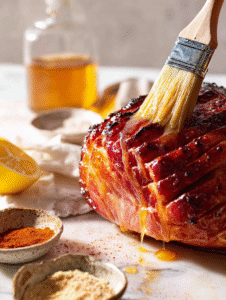
- Continue basting and baking until the glaze is deeply caramelized and sticky, about 1.5 hours. The ham’s surface should be beautifully glossy and golden brown, with some darker caramelized spots.
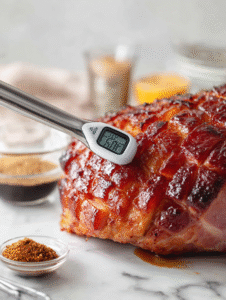
- Insert a meat probe or an instant-read thermometer into the thickest part of the ham. Once it reaches 60°C (140°F), remove the ham from the oven and let it rest for 15 minutes. This helps the juices redistribute and keeps it tender.
- Carve the ham into slices, revealing a juicy, flavorful interior with a beautifully caramelized exterior. Serve warm and enjoy the bright, smoky, sweet notes that make this dish a festive standout.
Cooking Checks and Tips to Nail That Glaze Perfectly
- The glaze should be thick, glossy, and cling to the ham, not runny.
- Look for a deep amber color on the glaze—caramelized and inviting.
- The ham’s internal temperature should reach at least 63°C (145°F) when checked with a probe.
- The edges of the ham should be crispy and slightly charred for a smoky flavor.
Common Mistakes and How to Fix Them
- Over-baking the ham, leading to dry meat.? Brush glaze too early, causing burn; wait until the last 30 minutes.
- Glaze becoming too thick or burnt.? Cover with foil if the glaze darkens too quickly.
- The glaze not sticking or caramelizing properly.? Add a splash of water or broth to loosen a thick glaze.
- Uneven caramelization.? If the ham looks pale, increase oven temp slightly for the last 15 minutes.
This glaze isn’t just a topping; it’s the story of my holiday kitchen chaos, the kind that makes memories stick. The sweet and smoky notes bring a lively brightness to the dense, salty ham, cutting through the richness beautifully. Play around with the acidity—more lemon zest or a splash of vinegar—and make it your own. Every slice should be a little celebration, a reminder that holiday cooking is about loving the mess, the flavors, and the shared table.

Hi, I’m Claire Dawson, and I’m the voice behind The Procrastinators Cookbook. Food has always followed me around, even when I was busy putting other things off. Somewhere between long café shifts, half-finished to-do lists, and meals cooked later than planned, I realized that food was the one thing I always came back to.