
Sometimes I think the best Christmas dinners are the least complicated. This lamb roast is about slow, mindful cooking—letting the meat’s natural flavors shine through. It’s a moment to pause, breathe, and enjoy the process of roasting. No fancy tricks, just honest, straightforward methods that turn out beautifully.
Why I keep coming back to this roast
It’s the perfect balance of effort and reward, especially during the chaos of holiday prep. The lingering smell of roasting lamb fills the house with warmth, making everything feel just right. I love how adaptable it is—herbs, sides, sauces—each tweak makes it feel fresh, familiar, and comforting.
Breaking down the ingredients, honestly
- Lamb leg or shoulder: Meaty, forgiving, with a rich flavor that benefits from slow roasting.
- Salt and black pepper: Basic but essential; they amplify the lamb’s natural taste.
- Garlic cloves: Add a pungent, savory punch—crushed and rubbed in.
- Fresh rosemary or thyme: Herbaceous and fragrant, they brighten the richness.
- Olive oil: Helps create a crispy crust and keeps herbs in place.
- Optional: red wine or beef stock: Use for the pan sauce; adds depth and a smoky, oozy richness.
- Lemon zest or juice: Brightens the flavors, cutting through the richness with a lemon pop.
Tools of the trade for a memorable roast
- Roasting rack: Ensures even heat circulation and keeps the meat elevated for better browning.
- Meat thermometer: Helps monitor internal temperature without guesswork.
- Baking dish: Holds the lamb and catches drippings for gravy or jus.
- Basting brush: Optional, for applying oil or herbs evenly.
- Aluminum foil: For resting and tenting the meat gently.
Step-by-step for a juicy, flavorful Christmas lamb roast
Step 1: Preheat your oven to 220°C (430°F).
Step 2: Rub the lamb generously with a mixture of salt, pepper, and crushed garlic. Let sit for 30 minutes.
Step 3: Place the lamb on a roasting rack in a sturdy baking dish. Roast for 20 minutes to develop a browned crust.
Step 4: Lower the oven temperature to 160°C (320°F). Continue roasting for about 1.5 to 2 hours, or until a thermometer reads 60°C (140°F) for medium rare.
Step 5: Rest the lamb, loosely covered with foil, for at least 15 minutes before carving.
Step 6: Serve with the pan juices spooned over, and maybe some roasted roots for a cozy finish.
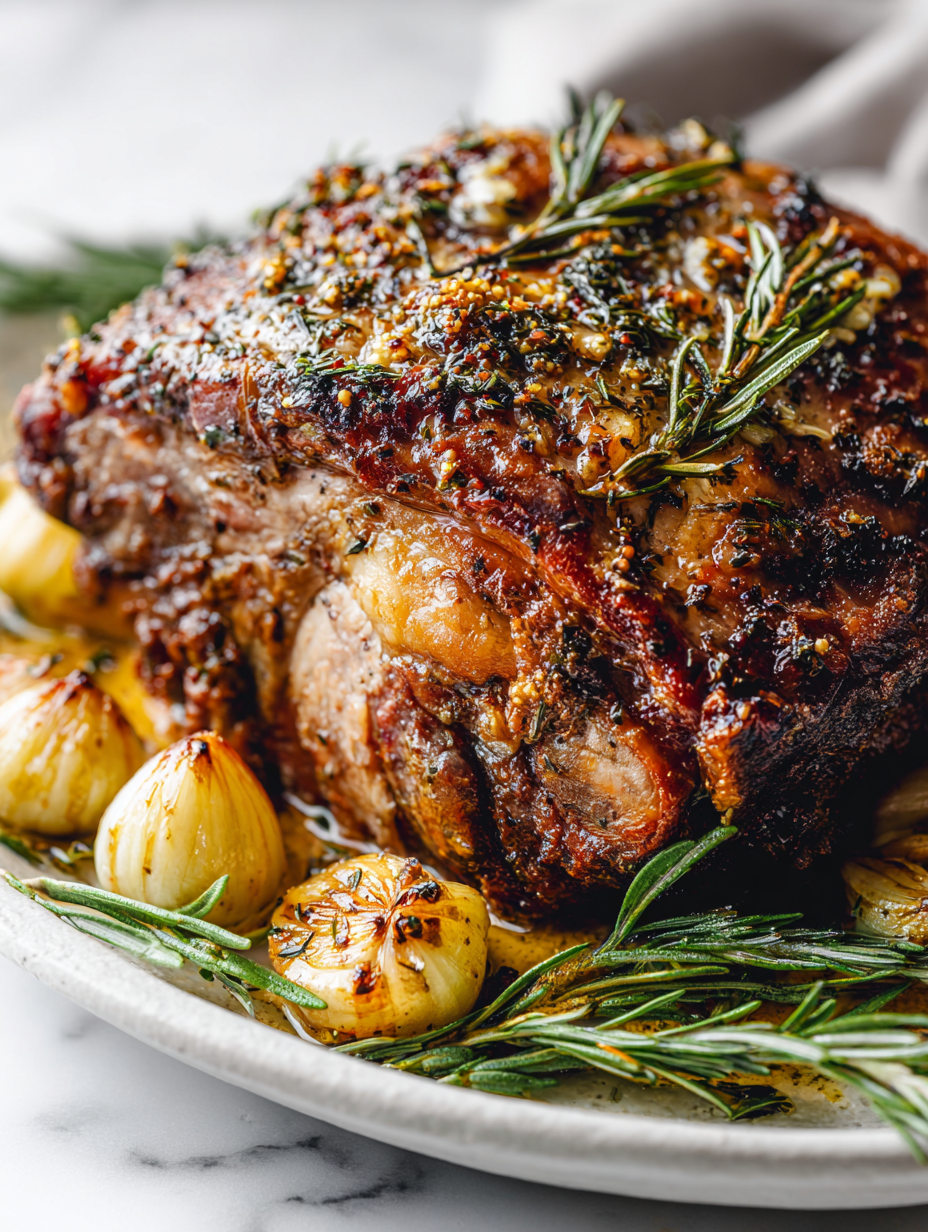
Simple Roast Lamb
Ingredients
Equipment
Method
- Preheat your oven to 220°C (430°F), creating a hot environment for initial browning.
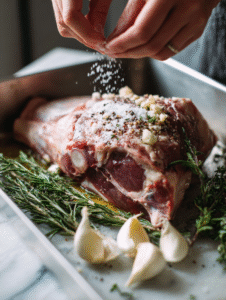
- Rub the lamb generously with a mixture of salt, black pepper, crushed garlic, and olive oil, massaging it into the meat to distribute flavors evenly. Let it sit at room temperature for about 30 minutes to help the seasoning penetrate.
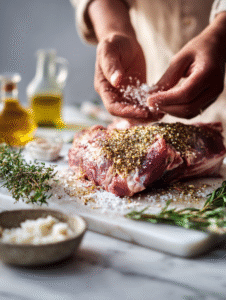
- Place the seasoned lamb on a roasting rack set inside a baking dish; this allows heat to circulate around the meat for even cooking.
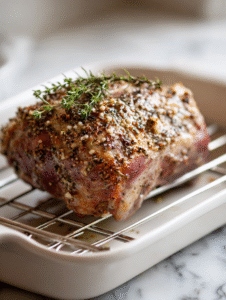
- Put the lamb in the hot oven and roast for 20 minutes, watching as the exterior develops a deep, golden-brown crust and fills the kitchen with savory aromas.
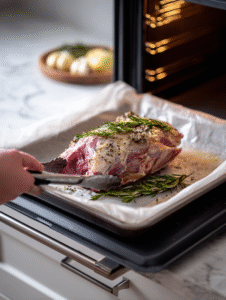
- Lower the oven temperature to 160°C (320°F) to continue slow roasting, ensuring the meat remains juicy inside. Insert a meat thermometer into the thickest part of the lamb.
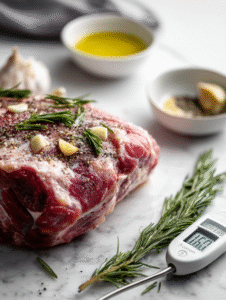
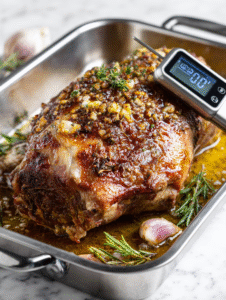
- Roast for approximately 1.5 to 2 hours, or until the thermometer registers about 60°C (140°F) for medium-rare, checking periodically to prevent overcooking.
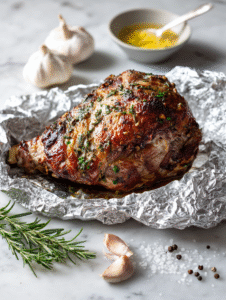
- Remove the lamb from the oven and tent loosely with aluminum foil. Let it rest for at least 15 minutes; this helps juices redistribute, keeping the meat tender and flavorful.
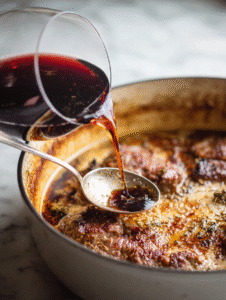
- While the meat rests, optionally deglaze the roasting pan with red wine or beef stock, scraping up browned bits to make a rich pan sauce.
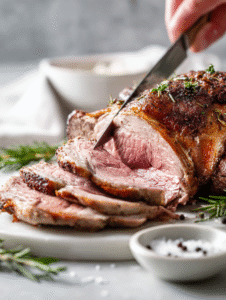
- Slice the lamb against the grain into thick, juicy pieces, revealing its tender interior and rosy hue.
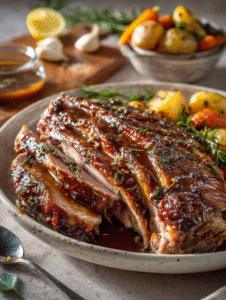
- Serve the slices with a drizzle of pan juices or sauce, accompanied by roasted vegetables or your favorite sides for a hearty, festive meal.
Cooking checkpoints to nail the perfect roast
- Look for a deep, caramelized crust after the initial high heat blast.
- Check internal temperature at the thickest part—aim for 60°C (140°F) for medium rare.
- Ensure the juices run clear when you pierce the thickest part of the meat.
- The meat should be tender but still hold its shape when carved.
Common pitfalls and how to fix them
- Cooking by time alone.? Use a meat thermometer; guesswork often overcooks.
- Cutting into hot meat immediately.? Rest the meat after roasting to retain juices.
- Over-torching the crust.? Increase oven temp for the first 20 minutes, then lower to avoid over-browning.
- Overcooking or undercooking.? Check for doneness early to prevent dry meat.
This roast isn’t just about the meat, it’s about the process and the memories made around the table. The slow roasting lets the flavors deepen and the meat become tender enough to almost melt in your mouth. It’s a simple technique that transforms a humble cut into a centerpiece worth sharing. Enjoy customizing the herbs and sides to make it uniquely yours.

Hi, I’m Claire Dawson, and I’m the voice behind The Procrastinators Cookbook. Food has always followed me around, even when I was busy putting other things off. Somewhere between long café shifts, half-finished to-do lists, and meals cooked later than planned, I realized that food was the one thing I always came back to.