
Eggplant Parmesan is one of those dishes that doesn’t demand perfection. I’ve learned to embrace its rustic charm—thick, uneven slices, a little extra sauce here, a splash of seasoning there. It’s forgiving, almost forgiving in the way you can toss ingredients together without stressing over every detail, which makes it a perfect weeknight dinner or a casual weekend project.
What I love most is how adaptable it is—use whatever eggplants you’ve got, and don’t worry if your slices aren’t uniform. The beauty of this dish lies in its imperfections, where crispy edges meet melty cheese and a rich tomato sauce. It’s honest, hearty comfort food that invites a little chaotic spontaneity at every step, yet still turns out deeply satisfying.
Focusing on how eggplant Parmesan can be a forgiving, rustic dish that thrives on imperfect, hand-cut slices and spontaneous seasoning adjustments, making it accessible for cooks who fear precise uniformity or perfect layering.
Embracing Imperfection in Every Slice
- I used to shy away from eggplant, thinking it always turned mushy—then I discovered how a quick salting step transforms it into something tender yet firm.
- Growing up, my grandma’s eggplant Parmesan was more sauce and cheese than eggplant, but those crispy edges and gooey cheese still haunt my memories.
- There’s a chaotic joy in tossing slices directly into the pan without perfecting each piece—some are thick, some thin, but it always turns out delicious.
- I love how this dish adapts to what’s in the fridge—leftover cheese, extra basil, a splash of balsamic—makes each batch unique and personal.
- Every time I make it, I feel a little bit of nostalgia, as if I’m reconnecting with simpler, honest comfort food that’s been around for generations.
The story behind this recipe
Making eggplant Parmesan has always been a bit of a rebellious act in my kitchen. I remember the first time I tried a version with really thick, rustic slices—no perfect uniformity, just layers of charred edges and melty cheese. That moment made me realize that the charm of this dish is in its imperfections, not perfection. It’s a forgiving recipe that welcomes a bit of chaos and spontaneity, which is exactly how I like to cook when I want something hearty and unpretentious. Over the years, I’ve tweaked it to include bold herbs and a splash of balsamic, all in the name of making it feel like a dish that’s lived a little, just like me.
Eggplant Parmesan Trivia & Origins
- Eggplant Parmesan, or Melanzane alla Parmigiana, has roots in Southern Italy, dating back to the 19th century, where it was a humble yet beloved comfort food.
- Originally, the dish was a simple baked eggplant layered with tomato sauce and cheese, reflecting the rustic peasant cuisine of Sicily and Campania.
- The use of parmesan cheese became prominent in the recipe as trade and culinary exchange increased across the Mediterranean, giving it its iconic name.
- In Italy, regional variations abound—some add ham or mozzarella, while others focus solely on eggplant and tomato, showcasing local flavors.
- Despite its Italian origins, eggplant Parmesan has become a global comfort classic, adapted in countless households with personal twists.
Ingredient breakdown: key components
- Eggplant: I prefer the long, slender variety—less bitter, with a tender, almost silky flesh when cooked. Salt and drain it well to banish excess moisture and bitterness, which keeps slices from becoming mushy.
- Breadcrumbs: Use panko for extra crunch, but seasoned breadcrumbs add a savory boost right out of the bag—skip the salt if you do. Toast them lightly before using for a toasty aroma that enhances every bite.
- Tomato sauce: I like a simple, fresh sauce with garlic and basil, but feel free to swap in roasted tomato purée for deeper sweetness. The sauce should be thick enough to cling, not pool.
- Cheese: Mozzarella melts into gooey goodness, but I add a sprinkle of parmesan on top for a salty, nutty note. Fresh basil adds brightness—don’t skip it, even if just a few leaves for that pop of green.
- Eggs: For breading, I whisk a couple of eggs until frothy—if they’re a bit watery, add a touch more breadcrumbs to help the coating stick better and stay crispy.
- Olive oil: Use a good quality extra virgin—watch for that grassy, peppery aroma as it heats up. It’s the secret to a crispy, golden crust without deep frying.
- Herbs & seasonings: Dried oregano and crushed red pepper flakes bring warmth and a little heat. Fresh thyme or parsley can be tossed into the sauce or sprinkled on top after baking for extra freshness.
Spotlight on Eggplant and Cheese
Eggplant:
- I prefer the long, slender variety—less bitter, with a tender, almost silky flesh when cooked. Salt and drain it well to banish excess moisture and bitterness, which keeps slices from becoming mushy.
- Cheese: Melts into gooey goodness, but I add a sprinkle of parmesan on top for a salty, nutty note. Fresh basil adds brightness—don’t skip it, even if just a few leaves for that pop of green.
Cheese:
- I love the stretchy mozzarella, but the key is its ability to melt into a luscious, gooey layer. Watch for that bubbling, golden top when it’s just right.
- Herbs & Seasonings: Fresh basil and oregano add a fragrant, bright contrast to the richness of the cheese. They’re the finishing touch that wakes up every bite.
Notes for ingredient swaps
- Dairy-Free: Use a plant-based cheese or nutritional yeast for a cheesy flavor. Expect a slightly different melt and texture.
- Gluten-Free: Swap regular breadcrumbs for toasted almond flour or gluten-free panko. Keep an eye on crispness—may be a bit less crunchy.
- Vegan: Replace cheese with a vegan mozzarella or cashew-based sauce. The dish will have a nutty, creamy undertone.
- Low-Sodium: Opt for low-salt cheese and homemade tomato sauce with less salt. You might need to season more with herbs and spices.
- Fresh Eggplant: Use freshly picked eggplants for a firmer, less bitter bite. If store-bought, salting still helps reduce bitterness.
- Olive Oil: Use avocado oil for a lighter, milder flavor. It has a higher smoke point but will subtly alter the flavor profile.
- Herbs & Spices: Fresh basil or oregano can be swapped with dried versions—use half as much to prevent overpowering.
Equipment & Tools
- Large baking dish: To layer and bake the assembled eggplant Parmesan.
- Wide shallow bowls: For breading station—egg wash and breadcrumbs.
- Sharp knife: To slice eggplant evenly.
- Paper towels: To drain excess moisture from eggplant slices.
- Large skillet: For frying eggplant slices to crispy perfection.
Step-by-step guide to eggplant Parmesan
- Equipment & Tools: Gather a large baking dish, wide shallow bowls for breading, a sharp knife, paper towels, and a large skillet. The baking dish will hold the assembled layers, the bowls for breading, and the skillet for frying.
- Prep Eggplant: Slice eggplants into 1/2-inch thick rounds. Salt generously and lay on paper towels. Let sit for 30 minutes to draw out moisture and bitterness. Rinse and pat dry.
- Bread Eggplant: Set up a breading station with seasoned breadcrumbs in one bowl, beaten eggs in another. Dip each slice into egg, then coat thoroughly with breadcrumbs. Shake off excess.
- Fry Slices: Heat 1/4 inch olive oil in skillet over medium heat (~160°C/320°F). Fry eggplant slices in batches, about 2-3 minutes per side until golden and crispy. Drain on paper towels. If oil smokes or burns, reduce heat or switch to oven roasting.
- Assemble Dish: Spread a thin layer of tomato sauce in the baking dish. Layer fried eggplant slices over sauce, then spoon more sauce and sprinkle with cheese. Repeat layers, ending with cheese on top.
- Bake: Preheat oven to 180°C/350°F. Cover dish with foil and bake for 30 minutes. Remove foil and bake an additional 10 minutes to brown the top and bubble the cheese. The edges should be crispy, and the cheese golden.
- Rest & Serve: Let sit for 10 minutes after baking to set. Garnish with fresh basil if desired. Slice and serve while hot, with that rich, cheesy aroma wafting up with each cut.
Rest the dish for 10 minutes out of the oven before slicing. This helps the layers set and prevents cheese from sliding apart. Serve with a sprinkle of fresh basil for color and aroma.
How to Know It’s Done
- Slices are golden and crispy around edges.
- Cheese is melted and bubbly, golden on top.
- Tomato sauce is thick and coats slices without pooling.
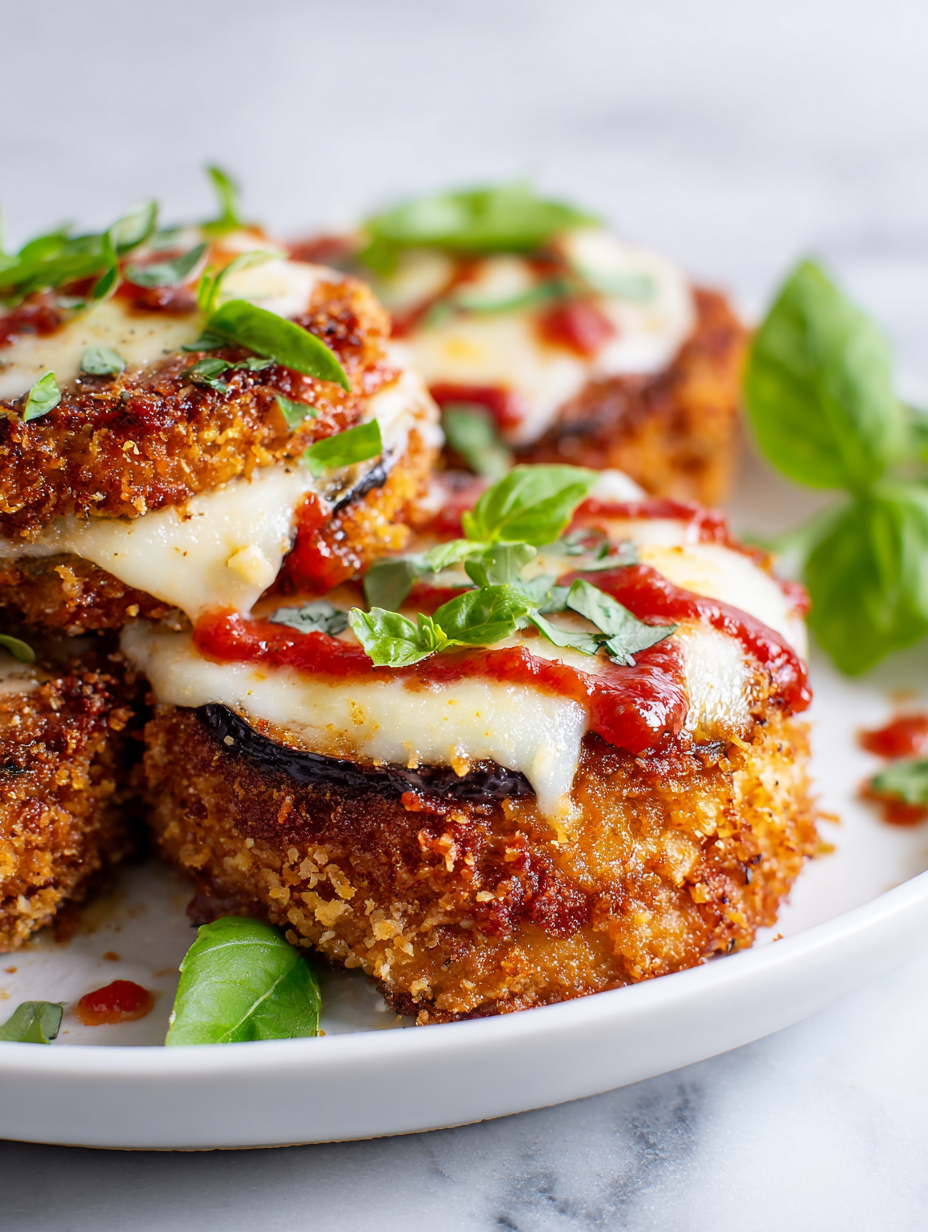
Rustic Eggplant Parmesan
Ingredients
Equipment
Method
- Slice the eggplants into thick, uneven rounds about 1/2 inch thick. Lay the slices on paper towels and generously salt both sides, letting them sit for 30 minutes to draw out excess moisture and bitterness. Rinse the slices with cold water and pat dry with a towel.
- Set up a breading station with a shallow bowl of beaten eggs and another with lightly toasted panko breadcrumbs mixed with dried oregano, salt, and pepper. Dip each eggplant slice into the egg wash, then coat thoroughly with seasoned breadcrumbs, pressing gently to adhere.
- Heat about 3 tablespoons of olive oil in a large skillet over medium heat until shimmering. Fry the breaded eggplant slices in batches, cooking for about 2-3 minutes per side until golden brown and crispy. Transfer to paper towels to drain excess oil.
- Preheat your oven to 180°C (350°F). Spread a thin layer of tomato sauce at the bottom of a large baking dish. Place a layer of fried eggplant slices over the sauce, then spoon more sauce on top, followed by a sprinkle of shredded mozzarella and parmesan cheese. Repeat the layers until all ingredients are used, finishing with a generous cheese topping.
- Cover the assembled dish with foil and bake for 30 minutes, until bubbling around the edges. Remove the foil and bake for an additional 10 minutes to allow the cheese to turn golden and bubbly.
- Once baked, let the dish rest for about 10 minutes to allow the layers to set. Garnish with fresh basil leaves before serving, and enjoy this hearty, rustic eggplant Parmesan with its crispy edges and melty cheese.
Tips & Tricks for Perfect Eggplant Parmesan
- Breading: Use panko breadcrumbs for extra crunch, but seasoned ones add savory flavor—toast lightly for aroma.
- Eggplant prep: Salt and drain slices for 30 minutes to remove bitterness and excess moisture, ensuring crispy edges.
- Frying: Maintain oil temperature around 160°C/320°F; if oil smokes, reduce heat to prevent burning and soggy slices.
- Layering: Don’t overload with sauce; a thin, even spread helps the cheese melt evenly without soggy patches.
- Baking: Remove foil in the last 10 minutes for a bubbly, golden top—watch for that perfect crispy cheese crust.
- Rest time: Let sit for 10 minutes after baking to allow layers to set, making slicing neater and cheese less runny.
- Cheese: Mix mozzarella and parmesan for gooey stretch and nutty depth—don’t forget fresh basil for brightness.
Common mistakes and how to fix them
- FORGOT to drain eggplant slices → Salt and set aside for 30 minutes.
- DUMPED excess oil → Use paper towels to absorb oil after frying.
- OVER-TORCHED cheese → Keep an eye on the oven, 10 minutes at 180°C/350°F is enough.
- MISSED seasoning in breadcrumbs → Add herbs and salt to breadcrumbs for flavor.
Quick kitchen fixes
- When oil shimmers, add eggplant slices quickly to avoid sogginess.
- Splash a bit of lemon juice if sauce is too rich or dull.
- Patch burnt breadcrumbs with fresh, toasted panko for extra crunch.
- DUMPED excess oil? Blot with paper towels before layering.
- When slices are uneven, use a serrated knife to trim for uniform baking.
Prep, store, and reheat tips
- You can prepare the eggplant slices and breading station a day in advance. Keep the slices in an airtight container in the fridge; they stay firm and fresh, with only a slight loss in crispness after reheating.
- Assemble the layered eggplant Parmesan up to the baking stage a day ahead. Cover tightly with plastic wrap and store in the fridge. The flavors meld and deepen overnight, making the final bake more flavorful.
- Stored baked leftovers will keep well for 2-3 days in an airtight container in the fridge. Reheat in the oven at 180°C/350°F for about 15-20 minutes until bubbling and the cheese is melty. The dish will smell rich and inviting, with crispy edges restored after reheating.
- For longer storage, freeze individual portions wrapped tightly in foil and then in a freezer bag. Reheat from frozen, covered in foil, at 180°C/350°F for about 30 minutes. Expect a slightly softer texture but still flavorful, with cheese bubbling through.
- The flavors tend to intensify overnight, especially the tomato sauce and herbs. The dish may be a bit softer after storage, but reheating restores much of the original appeal with crispy edges if you broil it briefly at the end.
Top questions about Eggplant Parmesan
1. Why do I need to salt the eggplant slices?
Salting eggplant slices draws out excess moisture and bitterness, leading to crisper, less mushy slices after cooking.
2. What’s the best oil temperature for frying eggplant slices?
Frying in moderate oil at around 160°C (320°F) gives a crispy crust without soaking up too much fat.
3. How do I prevent my eggplant parmesan from being soggy?
Layer the dish with a thin spread of sauce and cheese to prevent sogginess and ensure even melting.
4. Should I let my eggplant parmesan rest before serving?
Let the assembled dish rest for about 10 minutes after baking. It helps the layers set and makes slicing easier.
5. When do I remove the foil during baking?
Bake uncovered for the last 10 minutes to brown the cheese and achieve a crispy topping.
6. Can I use different breadcrumbs for breading?
Use panko breadcrumbs for extra crunch, but seasoned ones add savory flavor—toast lightly first for aroma.
7. How should I store and reheat eggplant parmesan?
Store leftovers in an airtight container in the fridge for 2-3 days. Reheat in the oven at 180°C (350°F) until bubbly.
8. Can I make this dish vegan?
For a vegan version, swap cheese for a plant-based alternative or nutritional yeast and use vegan-friendly breading.
9. What herbs work best in eggplant parmesan?
Use fresh basil or oregano for vibrant flavor. Dried herbs work too, but add them sparingly to avoid overpowering.
10. What if my eggplant slices are uneven?
If slices are uneven, trim them slightly with a serrated knife to ensure uniform cooking and presentation.
This dish feels like a quiet rebellion—embracing its rustic, imperfect charm is part of the joy. It’s simple, hearty, and grounded in honest flavors that remind me of Sunday dinners long past.
Whenever I make eggplant Parmesan, I slow down and enjoy the process, knowing that the best bites come from those little moments of spontaneous adjustment and care.

Hi, I’m Claire Dawson, and I’m the voice behind The Procrastinators Cookbook. Food has always followed me around, even when I was busy putting other things off. Somewhere between long café shifts, half-finished to-do lists, and meals cooked later than planned, I realized that food was the one thing I always came back to.