
Making lobster ravioli by hand is a tactile adventure. There’s something deeply satisfying about feeling the dough give way under your fingertips as you roll it out, knowing each fold and press is shaping something special. It’s not about perfection but about connecting with the process, feeling the texture and adjusting as you go.
This dish isn’t just a meal; it’s a slow, deliberate act of love. The way the lobster filling comes together—rich, slightly sweet, and tender—makes the effort worth every minute. When I’m folding those delicate pouches, I’m reminded that good food is often about mindful craftsmanship and the joy of creating something with your own hands.
Focusing on the tactile joy of hand-rolling the pasta and creating each lobster ravioli by feel, emphasizing the connection between cook and dish.
The tactile joy of handmade pasta
- The moment I fold that first ravioli, I feel a rush of pride, like I’m crafting a tiny treasure.
- Nothing beats the aroma of lobster cooking, sweet and briny, filling the kitchen with an irresistible scent.
- There’s a nostalgic thrill in making this dish — it takes me back to family dinners by the coast, where seafood was king.
- Seeing the delicate pasta hold the rich filling reminds me that patience and care turn simple ingredients into something memorable.
- Sharing these handmade ravioli with friends, watching their eyes light up as they taste the fresh lobster, makes all the effort worthwhile.
The story behind this recipe
Making lobster ravioli by hand feels like reconnecting with a slower, more intentional way of cooking. I remember the first time I tried shaping those tiny pasta pouches, the way the dough’s supple texture responded to my touch, and the smell of lobster that filled the air—sweet, briny, almost intoxicating. It’s a dish that demands patience but rewards every bit of effort with a sense of craftsmanship I don’t find in more hurried meals. Over the years, it’s become my go-to when I want to feel grounded in the kitchen, turning simple ingredients into something memorable.
Trivia and historical notes
- Lobster ravioli likely originated in Italy’s coastal regions where lobster was abundant and considered a luxury ingredient.
- The combination of lobster and pasta reflects a blend of sea and land flavors that became popular among affluent diners in the 20th century.
- Traditional ravioli date back to the Middle Ages, but adding lobster was a modern twist that gained popularity in fine dining settings.
- In some areas, lobster ravioli is considered a symbol of celebration, often served during special occasions or holidays.
Key ingredients and tips
- Lobster: I love the sweet, briny aroma as it cooks—swap with crab if you want a milder, more accessible seafood scent.
- Pasta dough: It should be firm yet pliable, like a soft leather—use semolina for crunch or all-purpose for tenderness.
- Eggs: They help bind everything together, giving the dough structure—consider a splash of water if it feels too stiff.
- Lobster filling: Rich, creamy, with a hint of lemon—try mascarpone instead of ricotta for extra silkiness.
- Herbs & seasoning: Fresh chives or tarragon brighten the filling—dried herbs can work but lose some of that vibrant punch.
- Butter & olive oil: Use high-quality for that nutty, fruity undertone—skip if you want a lighter sauce, but don’t skip the fat!
- Lemon: Brightens the filling with a zing—zest before juicing for maximum flavor impact.
Spotlight on key ingredients
Lobster:
- I love the sweet, briny aroma as it cooks—swap with crab if you want a milder, more accessible seafood scent.
- Pasta dough: It should be firm yet pliable, like a soft leather—use semolina for crunch or all-purpose for tenderness.
- Eggs: They help bind everything together, giving the dough structure—consider a splash of water if it feels too stiff.
Herbs & Lemon:
- Herbs & zest: Chives or tarragon brighten the filling—dried herbs can work but lose some of that vibrant punch.
- Lemon: Brightens the filling with a zing—zest before juicing for maximum flavor impact.
Notes for ingredient swaps
- Seafood: Lobster is rich and sweet, but you can swap in crab or langoustine for a slightly different briny depth.
- Dough: Semolina gives a slightly gritty texture and firmness—use all-purpose flour for a softer, more tender bite.
- Eggs: They help bind the dough—consider a splash of water or milk if you want a lighter, less chewy pasta.
- Filling: Ricotta adds creaminess—substitute mascarpone for silkier texture, or cream cheese for tang.
- Herbs & zest: Chives offer a mild onion note—try tarragon or basil for different aromatic profiles.
- Lemon: Brightens with a citrus zing—lemon juice for acidity, or lime for a more floral, tropical twist.
Equipment & Tools
- Mixing bowl: To combine and chill the filling ingredients.
- Rolling pin / Pasta machine: To roll out the dough evenly and thinly.
- Ravioli cutter or sharp knife: To cut and shape the ravioli cleanly.
- Large pot: For boiling the ravioli.
- Slotted spoon: To gently lift cooked ravioli from water.
- Skillet: To toss ravioli in butter sauce.
Step-by-step guide to lobster ravioli
- Gather all ingredients: lobster, pasta flour, eggs, herbs, butter, lemon, and tools like a rolling pin, ravioli cutter, and a pastry brush. Prepare workspace with clean towels and a small bowl of water for sealing.
- Make pasta dough: Combine 2 cups of semolina and 1 cup of all-purpose flour on a clean surface. Create a well, crack in 2 eggs, add a pinch of salt, and knead for about 8 minutes until smooth and elastic. Wrap in plastic and rest for 30 minutes.
- Prepare lobster filling: Finely chop cooked lobster meat—about 1 cup. Mix with ½ cup ricotta, 1 tbsp chopped chives, lemon zest, salt, and pepper. Adjust seasoning to taste. Chill the filling for 15 minutes.
- Roll out pasta: Divide dough into 4 portions. Using a rolling pin or pasta machine, roll each piece into thin sheets (~1mm). Keep sheets lightly floured to prevent sticking. Check for even thickness and smooth surface.
- Assemble ravioli: Lightly brush a pasta sheet with water around the edges. Place teaspoon-sized dollops of filling about 2 inches apart. Cover with another sheet, press out air, and seal around each mound. Cut into individual ravioli with a cutter or sharp knife.
- Cook ravioli: Bring a large pot of salted water (~2 liters, 2 tsp salt) to a gentle boil (~100°C/212°F). Drop in ravioli carefully, cook for 3–4 minutes until they float and are tender. Remove with a slotted spoon and drain.
- Finish and serve: In a skillet, melt 2 tbsp butter with a squeeze of lemon juice. Gently toss cooked ravioli in the butter sauce, just enough to coat. Plate immediately, garnishing with fresh herbs and a lemon wedge.
- Rest briefly: Let the ravioli sit for 1 minute to absorb flavors. Serve hot, with extra lemon zest if desired.
Rest the cooked ravioli for 1 minute to let flavors settle. Serve immediately with a drizzle of butter, lemon, and fresh herbs for a bright finish.
How to Know It’s Done
- Pasta sheets should be smooth, thin, and even in thickness.
- Filling should be creamy, well-seasoned, and not watery.
- Ravioli float and are tender when cooked through, with a slight bounce when pressed.
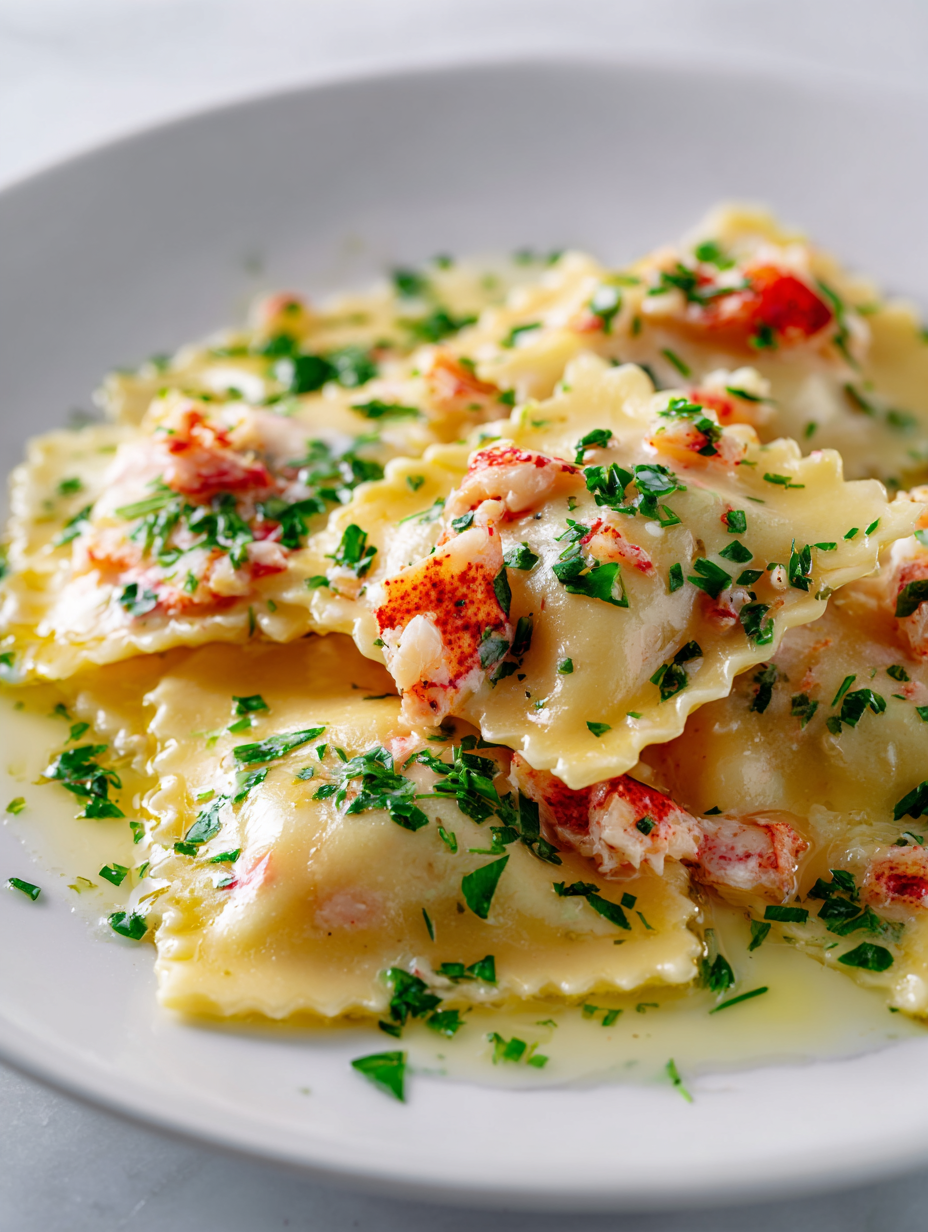
Handmade Lobster Ravioli
Ingredients
Equipment
Method
- Combine the semolina and all-purpose flour on a clean surface, creating a well in the center. Crack eggs into the well, add a pinch of salt, and knead the mixture together until the dough is smooth, firm, and elastic, about 8 minutes. Wrap in plastic wrap and let rest for 30 minutes.
- In a bowl, mix the finely chopped lobster meat with ricotta, chopped chives, lemon zest, salt, and pepper. Chill the filling for 15 minutes to let the flavors meld.
- Divide the rested dough into four portions. Using a rolling pin or pasta machine, roll each piece into very thin sheets, about 1mm thick, keeping the sheets lightly floured to prevent sticking.
- Lay one pasta sheet flat on a floured surface. Lightly brush the edges with water. Place teaspoon-sized dollops of lobster filling about 2 inches apart on the sheet, then cover with another sheet of dough. Gently press around each mound to seal, squeezing out air, and cut into individual ravioli with a cutter or sharp knife.
- Bring a large pot of salted water to a gentle boil. Carefully drop the ravioli into the water, cooking for 3–4 minutes until they float and are tender. Use a slotted spoon to gently lift them out.
- In a skillet, melt the butter over medium heat and add a squeeze of lemon juice. Gently toss the cooked ravioli in the butter sauce until coated and heated through.
- Plate the ravioli immediately, garnishing with extra lemon zest and fresh herbs if desired. Serve hot for a delicate, flavorful experience.
Notes
Tips for perfect lobster ravioli
- Bolded mini-head: Use a light hand when sealing ravioli—press firmly but don’t squeeze out the filling.
- Bolded mini-head: Keep pasta dough covered with a damp cloth—prevents it from drying out and cracking during rolling.
- Bolded mini-head: Flour your work surface generously—this helps prevent sticking and tears in the delicate dough.
- Bolded mini-head: Test water with a piece of pasta—if it sinks and then floats back up, it’s ready for cooking.
- Bolded mini-head: Gently stir ravioli in boiling water—avoid overcrowding to prevent sticking and ensure even cooking.
- Bolded mini-head: Finish with a quick toss in butter and lemon—this amplifies flavor and adds a silky shine.
- Bolded mini-head: Use tongs or a slotted spoon—carefully lift ravioli to avoid breaking the delicate pasta.
Common lobster ravioli mistakes and solutions
- FORGOT to check water temperature → ensure it reaches a gentle boil before adding ravioli.
- DUMPED filling or overfilled ravioli → use small, even teaspoons of filling to prevent bursting.
- OVER-TORCHED pasta edges → seal edges thoroughly and avoid excessive drying or overhandling.
- MISSED resting dough → let dough rest at least 30 minutes for better elasticity and easier rolling.
Quick fixes and pantry swaps
- When water shimmers, drop ravioli swiftly to prevent sticking.
- Splash a bit of olive oil if ravioli starts to clump together.
- Patch a torn pasta edge with a tiny dab of water and press gently.
- DUMPED filling? Rethink your teaspoon size—less is more to avoid bursting.
- Shield delicate ravioli from vigorous boiling by stirring gently and cooking in batches.
Prep, store, and reheat tips
- Prep the lobster filling up to a day ahead; keep chilled in an airtight container to preserve freshness and aroma.
- Assemble and cut the ravioli a few hours before cooking; lay flat on a floured tray and cover loosely with plastic to prevent drying out.
- Store uncooked ravioli in the fridge for up to 4 hours; avoid stacking to prevent sticking, and dust with a little more flour if needed.
- Cooked ravioli can be refrigerated for up to 24 hours; reheat gently in simmering water or lightly sauté in butter for best texture.
- Reheated ravioli will lose some freshness, so aim to serve soon after cooking for optimal tender pasta and briny lobster flavor.
Top questions about lobster ravioli
1. Can I use frozen lobster for ravioli?
Use fresh lobster meat if possible; it’s sweeter and more tender, but frozen works in a pinch. The key is to avoid overcooking it to keep that delicate, briny flavor.
2. How do I know when lobster is cooked?
Cook the lobster until just firm and opaque, about 3-4 minutes if fresh. Overcooked lobster gets rubbery and loses its sweet aroma.
3. How thin should the pasta dough be?
Roll the dough as thin as possible without tearing—about 1mm. Thinner pasta makes for more tender bites, and the filling shines through beautifully.
4. Can I make the filling ahead of time?
Yes, you can prepare the filling a day ahead, kept chilled. Keep the assembled ravioli covered in the fridge if not cooking immediately, to prevent drying out.
5. How long do I cook lobster ravioli?
Cook the ravioli in a large pot of salted boiling water, about 3-4 minutes, until they float and are tender. Don’t overcrowd the pot—work in batches if needed.
6. What’s the best way to finish the dish?
Use a good quality butter and fresh lemon juice for the sauce. The butter should be melted and slightly nutty, with a bright squeeze of lemon to brighten the rich filling.
7. How do I prevent ravioli from sticking?
If the ravioli stick together, toss them gently with a bit of olive oil or flour. When boiling, stir carefully and avoid overcrowding for even cooking.
8. What are good substitutes for lobster?
You can swap lobster for crab or langoustine for a different briny flavor. Use milder seafood like shrimp if you prefer less intensity, but keep in mind the flavor profile will change.
9. How do I seal the ravioli properly?
Ensure the pasta sheets are evenly rolled and sealed tightly. Seal edges well, pressing out air to prevent bursting during cooking.
10. How should I reheat leftover ravioli?
Reheat cooked ravioli gently in simmering water or a light butter sauce. Avoid microwaving, as it can make the pasta rubbery and diminish the delicate flavor.
There’s something about making lobster ravioli that feels like a quiet act of rebellion—taking the time to craft each piece by hand, feeling the dough soften beneath your fingertips, and knowing that each bite is packed with care. It’s a dish that demands patience but rewards with a sense of connection, both to the ingredients and to the process itself.
Sharing this dish with someone you love, or even just savoring it solo, reminds me that good food isn’t about perfection but about the honest joy of creation. When those tender bites melt with the bright lift of lemon and the rich sweetness of lobster, it’s a moment worth savoring—simple, true, and undeniably special.

Hi, I’m Claire Dawson, and I’m the voice behind The Procrastinators Cookbook. Food has always followed me around, even when I was busy putting other things off. Somewhere between long café shifts, half-finished to-do lists, and meals cooked later than planned, I realized that food was the one thing I always came back to.