
Making mini spring rolls is a quiet act of focus. Each tiny wrapper, each delicate fold demands patience and a gentle touch, turning simple ingredients into something satisfying and refined. It’s almost like a meditation, a way to slow down and pay attention to the smallest details.
These little bites aren’t just about the taste—they’re about the process. The way the crispy wrapper crackles on your tongue, the fresh burst of herbs, and the subtle umami of pork or tofu. Everything feels more intentional when you’re working at this small scale, and that makes eating them all the more rewarding.
In a world that rushes past, these mini spring rolls remind me to savor the moment. They’re perfect for a quiet snack or a casual appetizer, a chance to practice finesse and enjoy the simple joy of crafting something with care. It’s about embracing the tiny details that make these bites special.
Focusing on the art of making miniature spring rolls as a personal meditation on patience and finesse, emphasizing the tiny details that transform simple ingredients into a delicate, satisfying bite.
The meditative art of tiny bites
- Making these tiny spring rolls is like a quiet dance; each fold and roll feels almost meditative.
- I love how the crisp wrapper shatters with a satisfying crack, revealing fresh, vibrant fillings inside.
- There’s a nostalgic rush when I see these mini bites come together, reminding me of family gatherings and shared meals.
- Filling and rolling these little treats always sparks a moment of pride—each one a tiny handmade accomplishment.
The story behind this recipe
- Making these tiny spring rolls started as a way to turn a simple snack into a mindful practice. I was craving something crunchy and fresh, but I wanted the process to slow me down, not rush me through. Folding each one felt like a small act of care, a quiet moment in a busy day.
- They remind me of childhood afternoons spent helping in the kitchen, rolling tiny wraps with my family. That sense of hands-on patience, the smell of garlic and herbs filling the air, is what I chase each time I make these. It’s a small ritual that reconnects me to slower, simpler joys.
- heading: The meditative art of tiny bites
Tiny bites with rich history
- Mini spring rolls originated in Vietnam, where they are known as ‘cha gio’, a tradition dating back centuries.
- These tiny bites became popular in dim sum collections across China, as a delicate, shareable appetizer.
- The art of rolling small spring rolls is believed to have evolved as a way to serve more guests with less ingredients, emphasizing finesse.
- In recent years, chefs worldwide have embraced the miniature version as a way to elevate presentation and encourage mindful eating.
Key ingredients for perfect mini spring rolls
- Rice paper: I love how it’s almost translucent and crisp when dry, but becomes tender and chewy once hydrated—just watch out, it can tear easily if you’re not gentle.
- Fresh herbs: I rely on cilantro and mint for that bright, lemony zing. If you hate cilantro, swap in Thai basil for a different aromatic punch that’s just as lively.
- Filling mix: Usually a combo of shredded cabbage, carrots, and proteins—I find a little soy sauce or fish sauce adds that umami depth, but a splash of sesame oil can give it a toasted aroma.
- Protein: Pork or tofu, both work—pork is porkier and richer, tofu is lighter and more neutral. I prefer tofu for a vegetarian vibe, but make sure to press out excess water first.
- Dipping sauce: Sweet chili is my go-to, with a splash of lime juice for brightness. If you don’t have chili, a drizzle of honey with vinegar can mimic that sweet-spicy balance.
- Oil for frying: Neutral vegetable oil is best—nothing competes with the delicate wrapper, but if you want less fuss, bake these at 200°C (390°F) until crispy.
Spotlight on key ingredients
Rice paper:
- I love how it’s almost translucent and crisp when dry, but becomes tender and chewy once hydrated—just watch out, it can tear easily if you’re not gentle.
- Fresh herbs: I rely on cilantro and mint for that bright, lemony zing. If you hate cilantro, swap in Thai basil for a different aromatic punch that’s just as lively.
- Filling mix: Usually a combo of shredded cabbage, carrots, and proteins—I find a little soy sauce or fish sauce adds that umami depth, but a splash of sesame oil can give it a toasted aroma.
Fresh herbs:
- Herbs: Cilantro and mint bring a fresh, aromatic burst that makes each bite lively. They behave differently during rolling—cilantro can be a bit fragile, so handle gently.
- Filling: The shredded vegetables and protein warm up quickly when fried, releasing a fragrant aroma—watch for that golden hue to signal readiness, not overcooking.
Notes for ingredient swaps
- Rice paper: I prefer the rice paper that’s slightly thicker—more forgiving when wrapping, and it stays tender without tearing. If you want a lighter bite, go for ultra-thin sheets, but handle with care.
- Herbs: Cilantro and mint bring brightness, but basil or Thai basil can provide a different aromatic punch—use what’s fresh and fragrant in your kitchen today.
- Filling: Pork can be swapped for shredded chicken or turkey for a leaner option. Tofu works well; press out excess water first to prevent sogginess.
- Vegetables: Carrots and cabbage are classic, but shredded bell peppers or zucchini add color and moisture. Keep in mind, wetter vegetables might need a slight squeeze to avoid sogginess.
- Dipping sauce: Chili sauce is spicy and bright, but if you prefer milder, a sweet hoisin or plum sauce can complement the flavors. A splash of lime juice can also brighten up any dip.
- Oil for frying: Neutral oils like canola or sunflower are best. For a healthier twist, bake at 200°C (390°F) until crispy—less mess, less fuss.
Equipment & Tools
- Deep frying pan or wok: For frying rolls evenly and quickly.
- Slotted spoon: To lift and drain fried rolls.
- Damp towel: To soften rice paper without sticking.
- Small bowl of warm water: To hydrate rice paper for rolling.
- Cutting board and knife: For prepping filling and shaping.
Step-by-step guide to mini spring rolls
- Gather all ingredients: rice paper, filling prep, and tools. Set near your workspace.
- Prepare filling: mix shredded cabbage, carrots, minced pork or tofu, soy or fish sauce, and herbs. Keep aside.
- Heat oil in a deep pan or wok to 180°C (356°F). Test with a small piece—should sizzle immediately.
- Soften rice paper: dip one sheet into warm water for about 5 seconds until pliable but not floppy. Lay flat on a damp towel.
- Place a small spoonful of filling near one edge of the rice paper. Fold the sides inward, then roll tightly from the filled edge to the other end. Seal the edge with a dab of water if needed.
- Repeat until all filling and rice paper are used. Keep assembled rolls covered to prevent drying out.
- Fry in hot oil, turning occasionally, for about 2-3 minutes until golden and crispy. Watch for crackling and deep amber color.
- Remove with a slotted spoon; drain on paper towels. Check for crispness and even color.
- Rest for 1-2 minutes, then arrange on a platter. Serve with dipping sauce and fresh herbs.
Let fried rolls rest briefly on paper towels to drain excess oil. Serve warm with dipping sauce and herbs for maximum crunch and freshness.
How to Know It’s Done
- Wrapper is golden and crispy, not pale or burnt.
- Filling is hot and cooked through, no raw smell.
- Rolls hold shape without unrolling or tearing during frying.
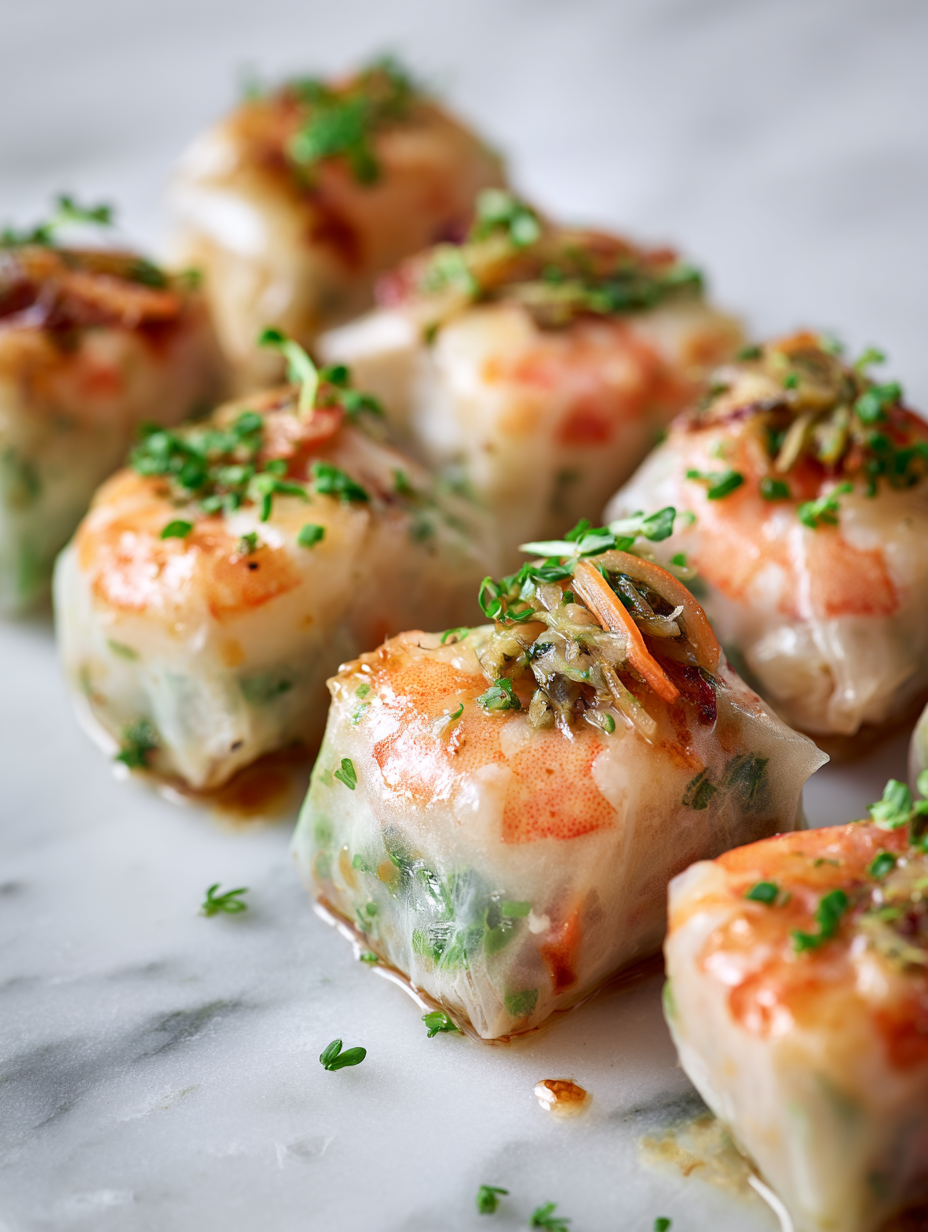
Mini Spring Rolls
Ingredients
Equipment
Method
- Prepare your filling by combining shredded cabbage, carrots, minced pork or tofu, soy sauce, sesame oil, and chopped herbs in a bowl. Mix well until evenly coated and vibrant.
- Fill a small bowl with warm water. Dip one rice paper sheet into the water for about 5 seconds until it becomes soft and pliable, then lay it flat on a damp towel to prevent sticking.
- Place a small spoonful of filling near one edge of the softened rice paper, keeping it slightly away from the edge to allow for folding.
- Fold the sides inward gently, then roll tightly from the filled edge toward the other end, sealing the edge with a dab of water if needed to prevent unrolling.
- Repeat the process with the remaining rice paper sheets and filling, keeping the assembled rolls covered with a damp towel to prevent drying out.
- Heat oil in a deep frying pan or wok to 180°C (356°F). Carefully lower the rolls into the hot oil, frying in batches to avoid overcrowding.
- Fry each batch for 2-3 minutes, turning occasionally, until the rolls are golden brown and crispy, with crackling sounds as they fry.
- Use a slotted spoon to lift the rolls out of the oil, draining excess oil on paper towels for a moment.
- Arrange the crispy mini spring rolls on a serving platter, garnished with extra herbs if desired, and serve immediately with sweet chili dipping sauce.
Pro tips for perfect mini spring rolls
- Use warm water to soften rice paper quickly, but don’t soak too long or it tears.
- Keep your filling dry—excess moisture can make the wrapper soggy and difficult to seal.
- Fry at 180°C (356°F) for a crisp, golden finish—use a thermometer for accuracy.
- Tuck in the sides as you roll to keep the filling snug and prevent leakage during frying.
- Rest fried rolls on paper towels to drain excess oil and maintain that crunch.
- If rolls crack open, check sealing edges—use a tiny bit of water to help them stick better.
- For an even fry, don’t overcrowd the pan; fry in batches if needed, to keep oil temperature steady.
Common mistakes and how to fix them
- FAILED TO SEAL: Use a damp finger to seal edges properly, prevents filling from escaping.
- OVER-ROLLING: Keep rolls tight but not too firm, or they can burst during frying.
- TOO OILY: Maintain oil at 180°C (356°F), too hot causes burning, too cold causes greasiness.
- UNDERCOOKED: Fry until golden and crispy, test a roll for a crackle and even color.
Quick Fixes and Pantry Swaps
- When rolls crack open, gently press edges to seal with a damp finger.
- If oil shimmers unevenly, lower temperature to 180°C (356°F) to prevent burning.
- Splash a few drops of water on hot oil if frying slows down or smokes.
- Dumped a roll in the oil? Quickly lift it out and gently press to drain excess oil.
- When rice paper tears, keep a damp cloth nearby to add moisture and mend tears.
Prep, store, and reheat tips
- Prep filling ingredients ahead: shred vegetables and mix with seasonings. Store in an airtight container in the fridge for up to 24 hours, keeping the flavors fresh and vibrant.
- Soften rice paper just before assembly; don’t leave it out longer than 10 minutes to prevent drying out and tearing.
- Uncooked rolls can be assembled a few hours in advance, then covered tightly with plastic wrap and refrigerated for up to 4 hours. They may soften slightly but remain workable.
- Fried rolls are best enjoyed immediately for maximum crispness, but can be stored in an airtight container in the fridge for up to 1 day. Reheat in a 200°C (390°F) oven for 5-7 minutes until warm and crispy, watching for that crackling sound and golden glow.
- Avoid freezing raw or cooked rolls, as the texture suffers—freezing can make the wrapper soggy or tough when reheated.
Top questions about mini spring rolls
1. How do I soften rice paper properly?
Use warm water to soften the rice paper quickly—about 5 seconds dip, then lay flat. Handle gently to prevent tearing.
2. How can I prevent my filling from making the wrapper soggy?
Keep your filling dry and well-mixed; excess moisture can make wrapping tricky and cause sogginess during frying.
3. What’s the ideal frying temperature and time?
Fry at 180°C (356°F) until golden and crispy, about 2-3 minutes. Use a thermometer for best results.
4. How do I seal the spring rolls properly?
Seal edges with a damp finger or brush of water to keep filling from escaping during frying.
5. Why are my rolls cracking open?
If rolls crack open while frying, check that they’re sealed tightly and handle gently during rolling.
6. How should I rest the rolls after frying?
Rest fried rolls on paper towels for 1-2 minutes to drain excess oil and maintain crunch.
7. How do I remove rolls from oil without breaking them?
Use a slotted spoon to lift rolls from oil, then drain well before serving. Keep oil at steady temperature.
8. Can I prepare these in advance?
Store uncooked assembled rolls in the fridge, covered tightly, for up to 4 hours. Reheat in oven for crispness.
9. Can I freeze mini spring rolls?
Frozen raw or cooked rolls tend to lose crispness. Best enjoyed fresh or reheated quickly in the oven.
10. What if the oil starts to smoke or splatter?
If your oil smokes or splatters, lower heat and add a small splash of water to shush the noise.
These tiny spring rolls aren’t just a snack—they’re a mindful act of creation, a moment to slow down and focus on each delicate fold. The crackle of the crispy wrapper, the burst of fresh herbs, and the warm, savory filling make every bite a small celebration of patience and care.
In times when simplicity feels most needed, I find myself returning to this recipe. It’s a quiet reminder that the best moments often come from tiny, purposeful gestures—these mini bites are no exception.

Hi, I’m Claire Dawson, and I’m the voice behind The Procrastinators Cookbook. Food has always followed me around, even when I was busy putting other things off. Somewhere between long café shifts, half-finished to-do lists, and meals cooked later than planned, I realized that food was the one thing I always came back to.