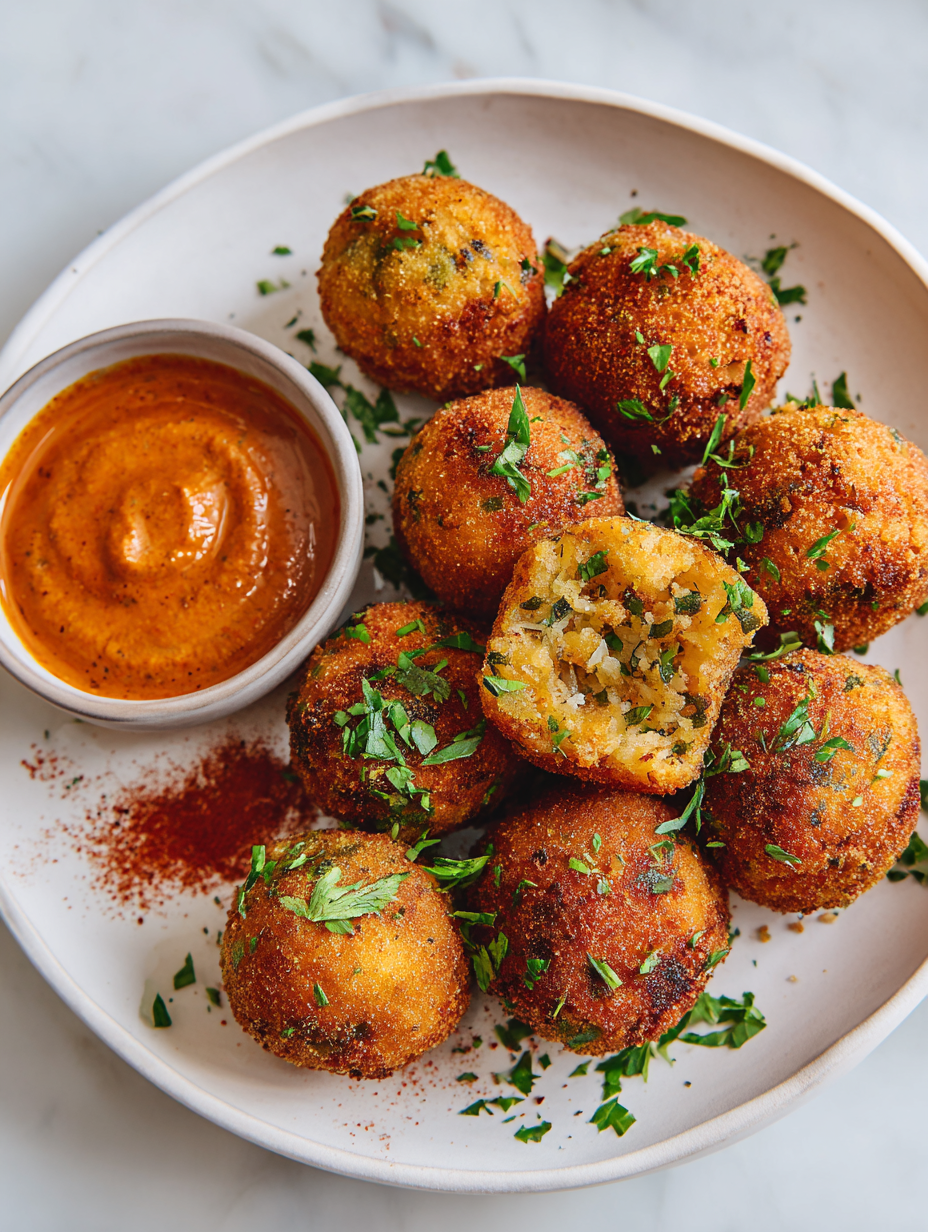
Potato croquettes might seem like simple comfort food, but I love how they can be turned into a nostalgic handheld treat with just a few tweaks. This recipe is about capturing that childhood warmth—crispy on the outside, soft and flavorful inside—while adding a touch of modern freshness with herbs and a smoky dip.
There’s something about shaping warm mashed potatoes into little logs and frying them that feels almost primal. It’s a messy, satisfying process that reminds me of simpler times, yet I like to elevate it a bit—using fresh herbs and a punchy paprika sauce to keep it interesting. It’s a dish that’s cozy but not boring, familiar but with a bit of a twist.
Focusing on turning potato croquettes into a nostalgic, handheld comfort food that evokes childhood memories, but with a modern twist—adding unexpected herbs and a smoky paprika dip.
Nostalgic Handheld Comfort
- Making these croquettes always takes me back to lazy Sunday afternoons in my childhood, when my grandma’s kitchen smelled of butter and fresh herbs.
- I get a little proud every time I see that golden, crispy exterior crackle as I cut into a warm croquette, revealing its soft, flavorful interior.
- There’s a chaotic joy in rolling the potato mixture into perfect logs—sometimes they’re lopsided, but they still taste amazing.
The story behind this recipe
- Making potato croquettes has always been a bit of a messy ritual in my kitchen, but it’s that very chaos that makes them special. I remember the first time I tried to perfect that crisp exterior without overcooking the soft interior—ended up with more broken logs than perfect logs, but I learned a lot about patience and oil temperature. Now, it’s become a little tradition to tweak the herbs and spices each time, trying to find that sweet spot between nostalgia and freshness.
- There’s a quiet satisfaction in shaping those little logs, watching them turn golden, crackling softly as they fry. It’s a humble dish that feels like a small act of love—something you can whip up quickly, but still make with care. Every batch reminds me that sometimes, the simplest foods are the ones that stick around longest in your memory.
- heading:
Trivia and Historical Tidbits
- Potato croquettes have roots in French cuisine, where they’re known as ‘croquettes de pommes de terre,’ dating back to the 19th century.
- The idea of frying mashed potatoes likely traveled from France to other parts of Europe, evolving into regional variations over time.
- In some cultures, similar croquettes are fried with leftover mashed potatoes, turning simple ingredients into a crispy delight.
- The crispy exterior paired with soft, fluffy potato interior makes these a universal comfort food, found in many countries with local twists.
- Adding herbs and spices to potato croquettes became popular in the 20th century, giving them a modern, personalized touch.
Ingredient breakdown
- Russet potatoes: I prefer these because they become fluffy and light when mashed, giving a tender interior. Swap with Yukon Gold if you want a creamier, slightly denser texture.
- Butter: I add a generous knob for richness and flavor, especially when mixing the potatoes. You could use olive oil for a lighter, slightly fruity note, but it changes the classic richness.
- Egg: Helps bind the mixture and gives the croquettes structure. If you’re vegan, try a flaxseed egg—just expect a slightly denser, less tender result.
- Breadcrumbs: I use panko for extra crunch, but regular breadcrumbs work fine if that’s what you have. Toasted breadcrumbs add an extra layer of flavor and crispness.
- Fresh herbs: Parsley and chives give brightness, especially when fried until golden. Dried herbs can be used, but they won’t add the same fresh punch and might taste dull after frying.
- Salt & pepper: I season generously, tasting as I go. A pinch of smoked paprika mixed into the potato mix can add a smoky depth, which I love.
- Oil for frying: Neutral oil like vegetable or canola works best for high heat and crispiness. If you want a slightly healthier option, you could try avocado oil, which also shimmers beautifully when hot.
Spotlight on key ingredients
Russet potatoes:
- I prefer these because they become fluffy and light when mashed, giving a tender interior. Swap with Yukon Gold if you want a creamier, slightly denser texture.
- Butter: I add a generous knob for richness and flavor, especially when mixing the potatoes. You could use olive oil for a lighter, slightly fruity note, but it changes the classic richness.
- Egg: Helps bind the mixture and gives the croquettes structure. If you’re vegan, try a flaxseed egg—just expect a slightly denser, less tender result.
Breadcrumbs and herbs:
- Breadcrumbs: I use panko for extra crunch, but regular breadcrumbs work fine if that’s what you have. Toasted breadcrumbs add an extra layer of flavor and crispness.
- Fresh herbs: Parsley and chives give brightness, especially when fried until golden. Dried herbs can be used, but they won’t add the same fresh punch and might taste dull after frying.
Notes for ingredient swaps
- Dairy-Free: Swap butter for olive oil or dairy-free margarine. It’ll be less rich, but still flavorful.
- Vegan: Use flaxseed meal mixed with water instead of eggs. The texture will be slightly denser, but binding still works.
- Gluten-Free: Replace breadcrumbs with crushed rice crackers or gluten-free panko. Expect a slightly different crunch and flavor.
- Low-Starch: Sweet potatoes can work, but expect a sweeter, moister croquette with less crispness unless you double fry.
- Herb Variations: Fresh chives or thyme can replace parsley and chives. They bring their own aromatic punch, so use sparingly.
- Oil: Try avocado oil for a subtle nutty flavor and high smoke point. It shimmers beautifully but costs more.
- Additional Flavor: Smoked paprika in the potato mix adds smoky depth, but cayenne can kick up the heat if you like it spicy.
Equipment & Tools
- Large mixing bowl: For mashing and mixing potatoes.
- Saucepan: To boil potatoes.
- Piping bag or plastic sandwich bag: For shaping croquettes.
- Shallow dish with beaten eggs: For breading station.
- Plate with breadcrumbs: To coat croquettes for crispiness.
- Slotted spoon or spider: For frying and removing croquettes.
- Paper towels: To drain excess oil.
Step-by-step guide to potato croquettes
- Equipment & Tools: Gather a large mixing bowl (for mashing), a saucepan (for boiling potatoes), a spoon (for mixing), a piping bag or plastic sandwich bag (for shaping), a shallow dish with beaten eggs, a plate with breadcrumbs, a slotted spoon or spider (for frying), and paper towels (for draining).
- Boil potatoes: Peel and cut potatoes into chunks. Boil in salted water at 100°C / 212°F for about 15 minutes until very tender. Drain well and let steam dry for a minute or two.
- Mash potatoes: Pass hot potatoes through a ricer or mash thoroughly until smooth. Add a knob of butter, a pinch of salt, and chopped herbs. Mix until combined, tasting for seasoning.
- Shape logs: While still warm, spoon the potato mixture into a piping bag or plastic bag. Pipe or roll into small logs or ovals, about 2 inches long. Chill in the fridge for 15 minutes if too sticky to handle.
- Prepare for frying: Set up a breading station—beat eggs in a shallow bowl, spread breadcrumbs on a plate. Dip each log into egg, then roll in breadcrumbs, pressing lightly to adhere. Repeat if you want extra crunch.
- Heat oil: Pour vegetable or canola oil into a deep frying pan or pot. Heat to 180°C / 355°F. To test, drop a small piece of bread—if it sizzles and turns golden in 30 seconds, it’s ready.
- Fry croquettes: Carefully lower logs into hot oil using a slotted spoon. Fry in batches, turning occasionally, until golden brown and crispy, about 3-4 minutes. Watch for bubbling and a deep amber color.
- Drain & rest: Remove croquettes with a slotted spoon. Drain on paper towels. Let rest for 2-3 minutes to settle and finish crisping.
- Serve: Plate hot, optionally with a smoky paprika dip. They should be crispy outside, tender inside, with a faint herb aroma and a satisfying crackle with each bite.
Let fried croquettes rest briefly on paper towels. Serve immediately while hot and crispy. For best texture, avoid stacking too soon; serve on a warm plate to keep them from cooling and softening.
How to Know It’s Done
- Croquettes are golden and crispy all over.
- Interior is soft, fluffy, and not gummy.
- Oil temperature stays consistent at 180°C / 355°F during frying.
Herb-Infused Potato Croquettes with Smoky Paprika Dip
Ingredients
Equipment
Method
- Place peeled and chopped potatoes into a large saucepan and cover with salted water. Bring to a boil over high heat and cook until very tender, about 15 minutes. Drain well and let steam dry for a minute or two.
- Pass the hot potatoes through a ricer or mash thoroughly until smooth. Mix in a knob of butter, chopped herbs, smoked paprika, and season generously with salt and pepper. Taste and adjust the seasoning as needed.
- While still warm, spoon the potato mixture into a piping bag or plastic sandwich bag. Pipe or roll into small logs about 2 inches long. Chill the logs in the refrigerator for 15 minutes to firm up.
- Set up a breading station: beat the egg in a shallow dish and place breadcrumbs on a plate. Dip each chilled log into the beaten egg, then roll in breadcrumbs, pressing lightly to coat evenly. Repeat if you prefer a thicker crust.
- Heat vegetable or canola oil in a deep pan or pot to 180°C (355°F). To test, drop a small piece of bread—if it sizzles and turns golden within seconds, the oil is ready.
- Carefully lower the croquettes into the hot oil using a slotted spoon. Fry in small batches, turning occasionally, until they are golden brown and crispy, about 3-4 minutes.
- Remove the croquettes with a slotted spoon and drain on paper towels. Let them rest for a couple of minutes to settle and finish crisping.
- Meanwhile, prepare the smoky paprika dip: mix mayonnaise with minced garlic, olive oil, smoked paprika, and a pinch of salt. Stir well until smooth.
- Serve the croquettes hot, accompanied by the smoky paprika dip. They should be crispy outside, tender inside, with a fragrant herbal aroma and a satisfying crunch.
Notes
Pro tips for perfect croquettes
- Cold hands: Keep your hands cold while shaping croquettes to prevent sticking and make handling easier.
- Oil temperature: Maintain a steady 180°C / 355°F for perfect crispiness—use a thermometer for accuracy.
- Small batches: Fry in small batches to avoid overcrowding, which can lower oil temperature and cause sogginess.
- Double coating: For extra crunch, dip in egg twice and coat again with breadcrumbs before frying.
- Rest before frying: Chill shaped logs for 15 minutes; this helps them hold shape and crisp evenly.
- Proper draining: Drain croquettes on paper towels immediately after frying to keep them crispy longer.
- Serve hot: These are best enjoyed straight from the oil—crispy outside, soft inside, with that irresistible crackle.
Common mistakes and how to fix them
- FORGOT to check oil temperature → Use a thermometer to prevent burning.
- DUMPED too many croquettes at once → Fry in small batches for even crisping.
- OVER-TORCHED croquettes → Lower heat slightly and cook until golden, not dark.
- FAILED to dry potatoes thoroughly → Excess moisture causes soggy croquettes; drain well.
Fast fixes for crispy perfection
- When oil shimmers, splash a tiny bit of water to check heat—listen for a crackle.
- If croquettes stick, patch with a sprinkle of cold water on your hands before shaping again.
- Splash a little vinegar into oil if smoke appears—calms down the fumes immediately.
- Rescue burnt croquettes by draining and quick-frying in fresh oil—crackle will return.
- Pantry swap: use crushed Cornflakes instead of breadcrumbs for an extra crispy bite—crunch shimmer!
Prep, store, and reheat tips
- Prepare the mashed potato mixture and shape the logs a day ahead; keep covered in the fridge for up to 24 hours. The flavors meld and they firm up, making frying easier.
- Store baked or fried croquettes in an airtight container in the refrigerator for up to 2 days. Reheat in a hot oven at 180°C / 355°F until crispy, about 10 minutes, for the best texture.
- For longer storage, freeze uncooked or cooked croquettes in a single layer on a baking sheet, then transfer to a bag. They’ll keep for up to a month. Fry directly from frozen, adding an extra minute or two.
- Reheating frozen croquettes in the oven keeps them crisp and hot through the center. Avoid microwaving, which will make them soggy and limp. Instead, aim for that crackling exterior with a soft, warm interior.
Top questions about potato croquettes
1. What type of potatoes should I use?
Use starchy potatoes like Russets for a fluffy interior that holds together well. Waxy potatoes may turn out too dense or gummy.
2. How hot should the oil be?
Make sure your oil is at 180°C (355°F) before frying. Too hot and they burn; too cool and they get soggy.
3. Do I need to chill the croquettes before frying?
Chill shaped logs for at least 15 minutes before frying. This helps them keep shape and crispen evenly.
4. Can I use regular breadcrumbs?
Use panko breadcrumbs for extra crunch. Regular breadcrumbs work but won’t give the same crispy texture.
5. My croquettes fall apart when frying. What do I do?
If the croquettes fall apart, check the mixture’s moisture. Add a bit more egg or flour to help hold them together.
6. How can I make these vegan?
For a vegan version, substitute the egg with a flaxseed or chia seed gel. It might be slightly denser but still tasty.
7. How do I reheat leftover croquettes?
To reheat, bake in a preheated oven at 180°C (355°F) for about 10 minutes until crispy and hot inside.
8. Should I fry all croquettes at once?
Fry in small batches to prevent overcrowding. It keeps the oil temperature steady and ensures crispness.
9. Can I add other spices?
Adding smoked paprika to the potato mix adds a warm, smoky flavor that complements the crispy exterior.
10. Why are my croquettes greasy or soggy?
Ensure the potatoes are thoroughly dried after boiling to avoid soggy croquettes. Let them steam dry for a minute or two.
Potato croquettes may seem like simple comfort food, but they carry a nostalgic punch that’s hard to beat. There’s something about that crispy crunch and soft, warm interior that makes them perfect for any season or mood.
They’re a reminder of childhood, a little bit chaotic to shape, but so worth the effort. Plus, they’re endlessly adaptable—whether you keep it classic or add a modern twist, they always bring a smile.

Hi, I’m Claire Dawson, and I’m the voice behind The Procrastinators Cookbook. Food has always followed me around, even when I was busy putting other things off. Somewhere between long café shifts, half-finished to-do lists, and meals cooked later than planned, I realized that food was the one thing I always came back to.