
Focusing on the overlooked technique of achieving the perfect, ultra-crisp tempura batter that stays light and airy, even after multiple batches, makes the process almost meditative. It’s about embracing the messy, joyful chaos of frying and learning to read the oil’s whispers for the ideal frying moment. There’s a quiet satisfaction in getting that delicate crunch just right, in a way that feels both humbling and rewarding.
I’ve spent years chasing that elusive crunch—sometimes too thick, sometimes soggy, never quite right. Tempura isn’t just about the ingredients; it’s about the rhythm, the timing, and the patience during the fry. This recipe is my honest attempt to share what I’ve learned from countless messy trials, so you can enjoy that perfect, airy crisp without the fuss and frustration.
Focusing on the overlooked technique of achieving the perfect, ultra-crisp tempura batter that stays light and airy, even after multiple batches, making the process feel almost meditative rather than rushed. It’s about embracing the messy, joyful chaos of frying and learning to read the oil’s whispers for the ideal frying moment.
The overlooked joy of crispy batter
- Cracking open that first batch of tempura always sparks a little joy, like a secret I finally unlocked.
- Watching the prawns puff up and turn a perfect, glossy pink reminds me why I love fried food—so simple, yet so satisfying.
- There’s a quiet pride in mastering the batter—light, airy, and just barely holding together—like a fragile cloud I built myself.
- I get nostalgic about weekend dinners with friends, the table full of crispy bites and messy dips, all of us laughing at our kitchen disasters.
- Frying can be chaotic, but there’s a strange calm in watching the oil shimmer and knowing you’ve got this moment perfectly under control.
The joy of perfect tempura
I first got hooked on making tempura during a rainy weekend when I was craving something crispy but light. It’s a simple joy to see the prawns puff up and turn that glossy pink, a little reminder that great things come from patience and attention. Over the years, I’ve played with the batter’s thickness and oil temperature, trying to find that elusive balance of crunch and fluff. This recipe is my honest attempt to capture that moment of perfect fry, a bit messy but deeply satisfying each time.
Historical and cultural tidbits
- Tempura originated in Japan in the 16th century, likely influenced by Portuguese frying techniques introduced by missionaries and traders.
- The word ‘tempura’ is believed to derive from the Latin ‘tempora,’ referencing the fasting days when fried foods became a special treat in Japan.
- Traditionally, tempura batter was kept cold to create a light, airy crust—this technique has remained a secret among seasoned tempura chefs.
- In Japan, tempura was once considered an elite dish, served in high-end restaurants, but today it’s a beloved street food staple.
- Modern tempura emphasizes the contrast of crispy batter and tender seafood or vegetables, a balance chefs have refined over centuries.
Key ingredients and tweaks
- Prawns: I like them peeled but with tails on for presentation—gives that extra crunch and visual pop. Swap for scallops if you prefer a milder seafood flavor.
- Tempura Batter: I use ice-cold sparkling water to keep it airy—without it, the batter turns heavy. You can substitute seltzer if needed, but avoid still water for that crisp lift.
- Flour: I stick with all-purpose flour, but rice flour can make it even crispier and lighter—just halve the wheat flour to keep the batter balanced.
- Cornstarch: I add a touch for extra crunch—don’t skip it if you want that signature crackle. Tapioca starch works too, but it’s a bit more delicate.
- Oil: I prefer neutral oils like vegetable or peanut for high smoke points and clean flavor. If you want a more pronounced nutty taste, try toasted sesame oil sparingly—though it’s strong.
- Lemon or Lime: I squeeze fresh for brightness—brightens the fried batter and gives a touch of tang. Skip if you prefer a more neutral flavor, but it really lifts the overall bite.
- Salt: I season the batter lightly; too much can make the batter soggy. Use flaky sea salt right after frying for that perfect finishing touch.
Spotlight on key ingredients
Prawns:
- I prefer them peeled but with tails on for presentation—gives that extra crunch and visual pop. Swap for scallops if you like a milder seafood flavor.
- Tempura Batter: I use ice-cold sparkling water to keep it airy—without it, the batter turns heavy. You can substitute seltzer if needed, but avoid still water for that crisp lift.
- Flour: I stick with all-purpose flour, but rice flour can make it even crispier and lighter—just halve the wheat flour to keep the batter balanced.
Oil and seasonings:
- Oil: I prefer neutral oils like vegetable or peanut for high smoke points and clean flavor. If you want a more pronounced nutty taste, try toasted sesame oil sparingly—though it’s strong.
- Lemon or Lime: I squeeze fresh for brightness—brightens the fried batter and gives a touch of tang. Skip if you prefer a more neutral flavor, but it really lifts the overall bite.
- Salt: I season the batter lightly; too much can make the batter soggy. Use flaky sea salt right after frying for that perfect finishing touch.
Notes for ingredient swaps
- Protein: Shrimp work best, but scallops are a milder swap that still hold up well in tempura. Keep tails on for presentation.
- Flour: All-purpose flour is standard, but rice flour makes it even crispier. Use half rice, half wheat for balance.
- Sparkling Water: I insist on ice-cold for airy batter—seltzer works in a pinch, but avoid still water to keep it light.
- Oil: Vegetable or peanut oil has high smoke points and neutral flavor. Sesame oil adds aroma but risks overpowering if used excessively.
- Lemon or Lime: Fresh citrus brightens the batter—skip if you prefer a subtler taste, but it really lifts that crispy bite.
- Salt: Use flaky sea salt immediately after frying for crunch. Too much salt in batter can cause sogginess, so season sparingly.
- Vegetables: Sweet potatoes or zucchini can be tempura’d, but they have different moisture levels—adjust frying time accordingly.
Equipment & Tools
- Deep-fryer or heavy-bottomed pot: To hold enough oil for frying evenly.
- Wire rack: To drain excess oil and keep tempura crisp.
- Slotted spoon: For gently lowering and removing prawns from oil.
- Mixing bowl: To prepare the batter without overmixing.
- Thermometer: To monitor oil temperature accurately.
Step-by-step to crispy prawn tempura
- Equipment & Tools: Gather a deep-fryer or heavy-bottomed pot, a wire rack, a slotted spoon, and a mixing bowl. Use the wire rack for draining, the slotted spoon for handling prawns, and the bowl for batter prep.
- Prepare the prawns: Peel and devein, leaving tails on for presentation. Pat dry thoroughly with paper towels to remove excess moisture, which can cause splattering.
- Make the batter: In a mixing bowl, combine 1 cup all-purpose flour, 2 tbsp cornstarch, a pinch of salt. Add 1 cup ice-cold sparkling water gradually, stirring lightly until just combined. Do not overmix; a few lumps are fine.
- Heat the oil: Fill your pot with 2-3 inches of oil (vegetable or peanut). Heat to 180°C (350°F). Use a thermometer for accuracy. Check readiness by dropping a small bit of batter—if it sizzles and rises immediately, the oil is ready.
- Fry the prawns: Dip each prawn into the batter, letting excess drip off. Carefully lower into hot oil, one or two at a time to avoid overcrowding. Fry for 2-3 minutes, until golden and crisp, flipping gently if needed.
- Monitor the fry: Keep an eye on oil temperature—if oil darkens or smokes, lower heat. Batter should crackle loudly when prawns are added, and turn a light, airy golden. Adjust heat as needed.
- Drain & rest: Remove prawns with a slotted spoon, place on a wire rack. Rest for 1-2 minutes to let excess oil drip off and batter set. Serve immediately for maximum crunch.
- Check doneness: Prawns should be pink and opaque, batter crisp and golden, with a slight bounce when pressed. The oil should shimmer but not smoke, and batter should crackle loudly upon frying.
- Plate & finish: Sprinkle with flaky sea salt, a squeeze of lemon if desired. Serve with dipping sauces or as part of a larger meal.
Rest the fried prawns on a wire rack for 1-2 minutes. Serve immediately with lemon wedges or dipping sauce for the best crunch and flavor contrast.
How to Know It’s Done
- Batter bubbles vigorously and turns light golden within 2-3 minutes.
- Prawns are opaque pink and firm, not translucent or rubbery.
- Oil maintains steady temperature at 180°C (350°F) without smoking.
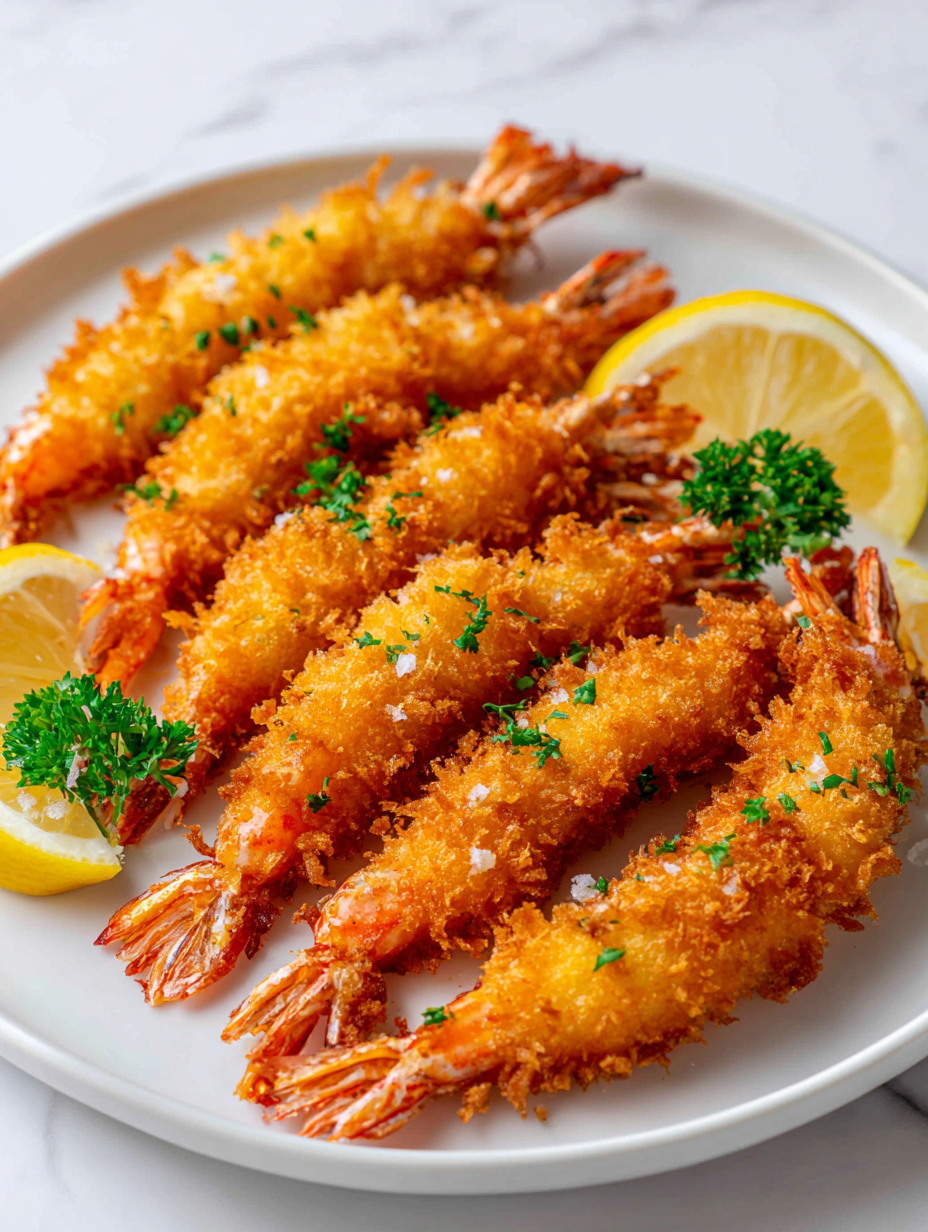
Perfect Light Tempura Prawns
Ingredients
Equipment
Method
- Gather your deep-fryer or heavy-bottomed pot, a wire rack, a slotted spoon, a mixing bowl, and a thermometer. Set everything nearby for a smooth frying process.
- Peel your prawns, leaving the tails on for a nice presentation, and pat them thoroughly dry with paper towels. This step helps prevent splattering and ensures crisp batter adhesion.
- In a mixing bowl, whisk together the sifted flour, cornstarch, and a pinch of salt. Add the ice-cold sparkling water gradually, gently folding until just combined; the batter should be lumpy and light, not smooth.
- Pour vegetable or peanut oil into your pot, filling it about 2-3 inches deep. Attach your thermometer and heat the oil to 180°C (350°F). Watch for the oil shimmering and a slight ripple effect.
- Once the oil reaches the right temperature, gently dip a prawn into the batter, letting excess drip off, then carefully lower it into the hot oil using a slotted spoon. Fry in small batches to avoid overcrowding.
- Listen for a lively crackling sound as the prawn hits the oil. Fry for 2-3 minutes, turning gently if needed, until the batter turns a light golden and puffs up slightly.
- Use the slotted spoon to lift the prawns out, letting excess oil drain, then transfer to the wire rack. Repeat with remaining prawns, maintaining the oil temperature.
- Squeeze fresh lemon or lime over the crispy prawns to add brightness. Serve immediately while the batter is still crisp and tender inside.
Notes
Pro tips for perfect tempura
- Use ice-cold sparkling water to keep batter light and airy.
- Drop the battered prawns gently into hot oil to avoid splattering.
- Maintain oil temperature at 180°C (350°F); adjust heat to keep it steady.
- Rest fried prawns on a wire rack briefly for maximum crunch.
- Crackle loudly when prawns are ready—batter should be golden and crisp.
- Use a thermometer for precise oil temp, avoiding burnt or undercooked tempura.
- Add a squeeze of lemon right after frying for a bright, fresh contrast.
Common tempura frying mistakes and solutions
- FORGOT to dry prawns thoroughly → They cause splatter, dry well for crispier batter.
- DUMPED batter into oil → Drop gently to avoid splattering and ensure even coating.
- OVER-TORCHED oil → Keep oil at steady 180°C (350°F), adjust heat to prevent burning.
- SKIPPED resting prawns → Rest for 1 minute after frying to avoid soggy batter and improve crunch.
Quick fixes and pantry swaps
- When oil smokes, splash in a few ice cubes to cool it quickly and restore temperature.
- If batter clumps, whisk in a splash of cold water to loosen it up.
- Splash a little vinegar into the oil if it starts to smoke for a quick fix.
- Patch soggy batter by briefly increasing oil heat for a few seconds, then reduce.
- Shield delicate prawns from splattering by gently lowering them with a slotted spoon.
Prep, store, and reheat tips
- Prep the prawns: peel, devein, and pat dry the day before; keeps them firm and ready to fry.
- Make the batter: mix and chill for up to 2 hours; cold batter helps maintain that airy crunch.
- Store fried tempura: let cooled tempura sit in an airtight container for up to 2 hours at room temperature—texture stays crisp if not stacked too tightly.
- Reheat leftovers: briefly warm in a hot oven at 180°C (350°F) for 5–7 minutes—listen for that crackle, smell that toasted aroma.
- Avoid reheating in microwave; it makes batter soggy and limp, losing that delicate crispness.
Top questions about prawn tempura
1. What size prawns work best?
Use large, fresh prawns peeled with tails on for presentation. Keep them dry to avoid splatter when frying.
2. Why use sparkling water in the batter?
Ice-cold sparkling water in the batter creates a light, airy crust. Avoid still water, which can make it heavy.
3. What temperature should the oil be?
Heat your oil to 180°C (350°F). Use a thermometer for accuracy; too hot or cold affects crispness.
4. How many prawns should I fry at once?
Fry in small batches to prevent temperature drops. This keeps the batter crispy and prevents sogginess.
5. Should I rest the tempura after frying?
Rest the fried prawns on a wire rack for 1-2 minutes. This prevents sogginess and enhances crunch.
6. How soon should I serve the tempura?
Serve immediately for best crunch, with lemon wedges or dipping sauce. Tempura loses crispness as it cools.
7. Can I use different oil?
Use neutral oils like vegetable or peanut. They handle high heat and keep the flavor clean.
8. How do I avoid soggy tempura?
Overcrowding causes temperature drops and soggy batter. Fry in small batches for perfect crispness.
9. My batter is too thick. What now?
If batter is too thick, gently stir in a little cold water. It should be light and lumpy, not smooth.
10. Can I prepare prawns in advance?
Yes, you can freeze raw prawns for up to 2 months. Thaw thoroughly and pat dry before frying.
Frying tempura might seem simple, but mastering that perfect crunch is a quiet victory. It’s a messy, noisy process that rewards patience and attention to detail. When you bite into that crispy prawn, you’re tasting more than just fried seafood—you’re tasting a little bit of kitchen joy.
This dish feels like a nod to tradition, a celebration of texture and freshness. It’s perfect for sharing, for making a moment feel special, even if it’s just a weeknight craving. There’s something honest about fried food that keeps bringing me back, especially when it’s this satisfying.

Hi, I’m Claire Dawson, and I’m the voice behind The Procrastinators Cookbook. Food has always followed me around, even when I was busy putting other things off. Somewhere between long café shifts, half-finished to-do lists, and meals cooked later than planned, I realized that food was the one thing I always came back to.