
There’s something almost hypnotic about watching pork ribs slowly bake in a sticky, caramelized glaze. It’s not just about the end result, but the quiet process of building layers of flavor—basting, waiting, and patiently watching that glossy coating develop. It feels like a small act of mindfulness, turning simple ingredients into something deeply satisfying.
This recipe doesn’t rely on fancy tricks or hard-to-find ingredients. It’s about embracing the messy, joyful chaos in the kitchen—smeared hands, smoky smells, and that irresistible smell of sugar and pork mingling in the oven. When those ribs finally come out, glazed and sticky, it feels like a little victory, a reward for patience and a love of slow-cooked goodness.
Focusing on the sticky, caramelized glaze that develops during slow oven baking, this recipe emphasizes the meditative process of building layers of flavor through patience and careful basting, transforming simple pork ribs into a glossy, irresistible dish.
The magic of caramelized glaze
- There’s a certain rush in that first sticky, smoky bite—like a small victory every time.
- I love how the glaze clings to the ribs, sticky and glossy, each bite packed with caramelized sweetness.
- Nothing beats the chaos of basting, the kitchen filling with that irresistible aroma of sugar and pork.
- It’s oddly meditative watching the glaze deepen and thicken, patience turning into flavor.
- Sharing these ribs with friends feels like a messy, joyful celebration of simple ingredients turned special.
The story behind this recipe
- I first stumbled on this sticky pork ribs recipe during a chaotic family cookout. The ribs slow-cooked in the oven, glazed with a sticky, sweet-savory sauce, became the highlight of that afternoon. It was one of those moments where I realized the magic isn’t in fancy ingredients, but in patience and a good glaze that turns everything glossy and irresistible.
- Ever since, I’ve kept coming back to this process—basting, watching the caramelization deepen, and smelling that smoky-sweet aroma fill the kitchen. It’s like a small act of mindfulness, turning simple pork into something almost celebratory. No matter how busy life gets, those ribs remind me to slow down and savor the process.
- heading
- story_type
Fun facts about sticky pork ribs
- Pork ribs have been a staple in many cultures, from American BBQ traditions to Asian slow-cooked styles, each adding their own glaze or marinade twist.
- The sticky glaze on pork ribs likely originated from the need to preserve and add flavor, with sugar or honey used historically as natural preservatives.
- In some Asian cuisines, ribs are glazed with soy, honey, and five-spice, creating a sticky, savory-sweet coating that’s deeply rooted in centuries-old recipes.
- The technique of slow-baking ribs with a caramelized glaze became popular in the mid-20th century, especially in American barbecue culture, emphasizing patience and layered flavor.
Ingredient breakdown
- Pork ribs: I prefer meaty, well-marbled ribs for that juicy, melt-in-your-mouth texture. If yours are lean, add a touch of fat or extra marinade for moisture.
- Brown sugar: It’s the backbone of that sticky caramelized glaze—don’t skimp. Swap with honey or maple syrup if you want a different floral or fruity note, but expect a slightly different sheen.
- Soy sauce: Adds a salty, umami punch that balances sweetness. Tamari works well if you need gluten-free, but reduce the salt if you’re using a saltier soy.
- Garlic: Fresh garlic brings that pungent, savory kick—roast it first if you want a mellower, toasted flavor. Powder works in a pinch but won’t give the same punch.
- Rice vinegar: Brightens up the glaze with a lemon-bright tang. Apple cider vinegar can substitute, offering a softer, fruitier acidity, but skip if you prefer a cleaner finish.
- Honey: Adds extra sticky sweetness and depth—use agave or corn syrup if honey’s not available, but keep in mind they’re less floral and more neutral.
- Five-spice (optional): I love a dash for that aromatic twist, but skip if you want pure sweet and savory. It’s a small addition that makes a big difference in complexity.
Spotlight on key ingredients
Brown Sugar:
- I love how it melts into the glaze, creating that rich, sticky, caramelized coating that seals in flavor. You can swap with honey or maple syrup but expect a slightly different sheen and depth.
- Pork ribs: The star of the show, their marbled fat renders down, turning tender and juicy. Look for well-marbled cuts; leaner ribs need extra care to stay moist and flavorful.
Pork Ribs:
- Soy sauce: It’s the umami backbone, adding a salty, savory punch that balances the sweetness. Tamari can be a gluten-free swap, but reduce the salt if using a saltier soy.
- The backbone of the dish—juicy, fatty, and forgiving if cooked slowly. The marbling melts down, enriching every bite with flavor and moisture.
Notes for ingredient swaps
- Dairy-Free: Swap honey for agave syrup—less floral, still sticky and sweet, but watch for slightly different gloss.
- Sweetener: Use maple syrup instead of brown sugar for a richer, caramel flavor with a hint of smokiness.
- Soy Sauce: Tamari works perfectly if you’re gluten-free, but reduce the salt slightly to avoid oversalting.
- Vinegar: Apple cider vinegar makes a softer tang—skip if you prefer a sharper, more direct acidity.
- Sugar: Coconut sugar can replace brown sugar—adds a slight caramel note and a darker glaze, but less glossy.
- Five-Spice: Omit if you want a simpler, more straightforward glaze—less aromatic complexity, pure sweet and salty.
- Pork Ribs: Bone-in short ribs or country-style ribs can work, but they might need slightly different cooking times.
Equipment & Tools
- Baking sheet: To hold the ribs during baking and glazing.
- Foil: To line the baking sheet for easy cleanup and to trap moisture.
- Basting brush: To apply the glaze evenly over the ribs.
- Small saucepan: To simmer and thicken the glaze.
- Kitchen tongs or fork: To handle hot ribs safely.
Step-by-step guide to sticky ribs
- Preheat your oven to 150°C (300°F). Gather a baking sheet, foil, basting brush, and a small saucepan for sauce prep.
- Remove the thin membrane from the ribs if not already done. Pat dry with paper towels. Rub with salt and a little pepper, then set aside.
- Mix your glaze: combine brown sugar, soy sauce, minced garlic, rice vinegar, honey, and a pinch of five-spice in a saucepan. Bring to a gentle simmer over medium heat (about 5 minutes).
- Lay the ribs on the foil-lined baking sheet, meaty side up. Cover tightly with foil. Bake for 2.5-3 hours until the meat is tender and pulls away from the bone slightly.
- Carefully remove from oven. Remove the top foil, and brush a generous layer of the warm glaze over the ribs. Increase oven temperature to 200°C (390°F) and bake uncovered for 15-20 minutes.
- During this time, baste the ribs every 5 minutes with more glaze. The surface should turn deeply caramelized and sticky, with a glossy sheen.
- Once the glaze is thick and sticky, check for doneness: ribs should be juicy, and the glaze should be bubbling and caramelized at the edges.
- Rest the ribs for 5 minutes out of the oven. Slice between the bones, serve with extra glaze if desired, and enjoy that sticky, smoky goodness.
Let the ribs rest for 5 minutes out of the oven. Slice between the bones, then serve with any extra glaze brushed on top for extra stickiness and flavor.
How to Know It’s Done
- The glaze is deeply caramelized and sticky, with a glossy sheen.
- Meat is tender and pulls away from the bone easily when gently tested.
- Surface is dark, crackling, and slightly crisp around the edges.
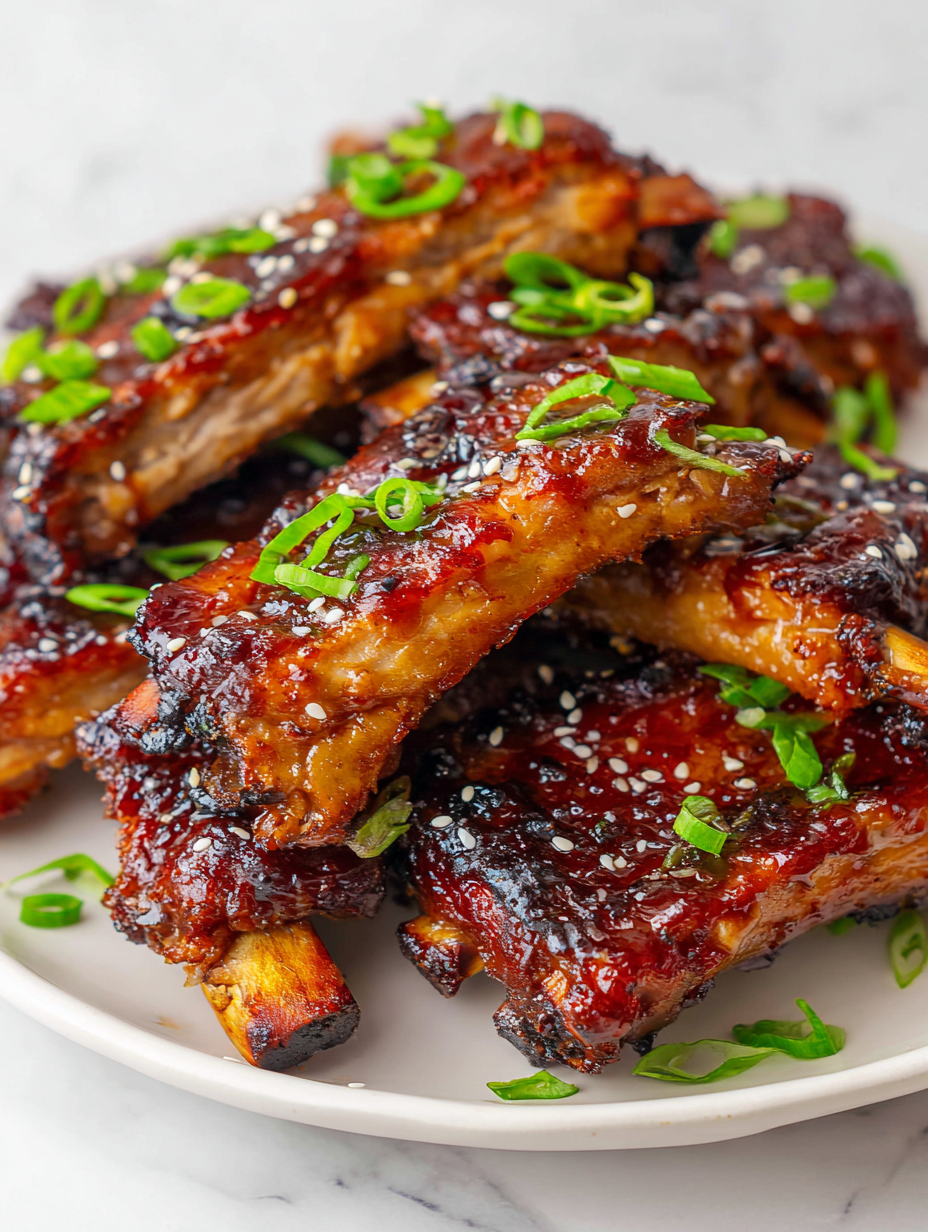
Sticky Caramelized Pork Ribs
Ingredients
Equipment
Method
- Preheat your oven to 150°C (300°F). Line a baking sheet with foil for easy cleanup. Remove the thin membrane from the ribs if present, then pat them dry with paper towels. Rub the ribs with a little salt and pepper, then set aside.
- In a small saucepan, combine brown sugar, soy sauce, minced garlic, rice vinegar, honey, and five-spice powder if using. Bring the mixture to a gentle simmer over medium heat, stirring until the sugar dissolves and the sauce thickens slightly, about 5 minutes. The sauce should be fragrant and bubbling gently.
- Place the ribs on the foil-lined baking sheet, meaty side up. Cover tightly with another sheet of foil to trap moisture. Bake in the preheated oven for about 2.5 to 3 hours, or until the meat is tender and pulls away easily from the bones. You will hear a gentle bubbling from the oven, and the aroma of slow-cooked pork will fill your kitchen.
- Carefully remove the ribs from the oven. Remove the top foil and discard. Increase the oven temperature to 200°C (390°F). Use a basting brush to generously coat the ribs with the warm glaze. Spread the glaze evenly to cover all sides.
- Return the ribs to the oven, uncovered, and bake for an additional 15-20 minutes. During this time, baste the ribs with more glaze every 5 minutes. Watch as the glaze deepens in color, turns glossy, and starts to crackle slightly at the edges, filling your kitchen with a smoky-sweet aroma.
- Once the glaze is thick, sticky, and deeply caramelized, remove the ribs from the oven. Let them rest for about 5 minutes to allow the juices to settle and the glaze to set slightly. Then, slice between the bones and serve immediately, enjoying that glossy, smoky, sweet-savory exterior with tender, juicy meat.
Notes
Tips for perfect sticky ribs
- Bolded Mini-Head: Use a silicone brush to apply the glaze evenly—avoids drips and ensures a glossy finish.
- Bolded Mini-Head: Keep the glaze warm during basting—cool glaze will thicken and won’t stick as well.
- Bolded Mini-Head: When roasting, elevate the ribs on a rack—helps excess fat drip away for crispier edges.
- Bolded Mini-Head: Watch the oven temperature closely—too high and the glaze burns; too low and it won’t caramelize properly.
- Bolded Mini-Head: Rest the ribs uncovered—allows the glaze to set and prevents them from being too sticky to handle.
- Bolded Mini-Head: Use tongs to turn ribs—gives control and keeps glaze from sliding off during basting.
- Bolded Mini-Head: Finish with a quick broil—just 2-3 minutes for an extra caramelized, crackly top.
Common mistakes and how to fix them
- TOO LITTLE SAUCE: Brush more glaze to prevent dry, bland ribs.
- OVER-TORCHED GLAZE: Lower oven temp if the glaze burns and turns bitter.
- MISSED RESTING TIME: Rest ribs 5 minutes for juicier, easier slicing.
- SKIPPING PREP: Remove membrane for tender, flavorful ribs without toughness.
Quick fixes and pantry swaps
- When glaze shimmers without crackling, splash a splash of vinegar for brightness.
- If ribs are dry, baste with warm glaze and cover with foil for 5 minutes.
- DUMPED sugar caramelizes too quickly—reduce heat or add a splash of water to cool.
- Over-torched glaze? Shield ribs with foil and lower oven temp immediately.
- When in doubt, pantry swap soy with coconut aminos for a milder, sweeter note.
Prep, store, and reheat tips
- You can prep the ribs a day ahead—season and refrigerate uncovered for up to 24 hours, which helps the flavors penetrate deeper and makes cooking smoother.
- The cooked ribs stay good in the fridge for up to 3 days. Keep them in an airtight container, and expect the glaze to become a little sticky as flavors meld.
- Reheating is best done gently in the oven at 160°C (320°F), covered with foil to prevent drying out. Expect the glaze to re-soften and shimmer with that familiar sticky sheen.
- For freezer storage, wrap the ribs tightly in foil and then place in a freezer bag—good for up to 2 months. Thaw overnight in the fridge before reheating.
- The flavor might intensify after a day or two—more caramelized, richer. Reheat gently to preserve that sticky, tender texture, aiming for a crackle on the glaze.
Sticky Pork Ribs FAQs
1. What kind of pork ribs should I buy?
Look for ribs with good marbling and a little fat—this keeps them juicy and tender through slow cooking.
2. Can I substitute the brown sugar?
Use brown sugar for that deep caramel flavor, but honey or maple syrup can add a different sweetness and shine.
3. How long do I cook the ribs?
Bake at 150°C (300°F) for about 2.5-3 hours until the meat is tender and pulls away from the bone.
4. How do I get that perfect sticky glaze?
Apply the glaze in layers, and increase oven temp to 200°C (390°F) for the final 15-20 minutes for that sticky, crackly coating.
5. Why do I need to rest the ribs?
Rest the ribs for about 5 minutes after baking to let the juices redistribute and make slicing easier.
6. What if the glaze burns or turns bitter?
If the glaze burns, reduce oven temperature or cover the ribs loosely with foil during baking to prevent over-charring.
7. How should I store and reheat leftovers?
Store cooked ribs covered in the fridge for up to 3 days; reheat gently at 160°C (320°F) covered to keep moist.
8. Can I prepare these ribs ahead of time?
To make ahead, season and refrigerate ribs overnight. The flavors deepen, and it speeds up cooking day-of.
9. My glaze isn’t sticky enough, what can I do?
If the glaze is too runny, simmer it longer to thicken or add a small pinch of cornstarch dissolved in water.
10. Any tips for basting without mess?
Use tongs to turn and baste the ribs for even coverage without knocking off the glaze or burning your fingers.
These sticky pork ribs are more than just a meal; they’re a ritual of patience and simple joy. The way the glaze deepens and clings, the smoky aroma filling the kitchen—it’s a reminder to slow down and savor the process.
Sharing these ribs, with their glossy, caramelized finish, always feels like a small celebration. They’re perfect for when you want something unpretentious but deeply satisfying, a dish that pulls everyone to the table with its irresistible aroma and flavor.

Hi, I’m Claire Dawson, and I’m the voice behind The Procrastinators Cookbook. Food has always followed me around, even when I was busy putting other things off. Somewhere between long café shifts, half-finished to-do lists, and meals cooked later than planned, I realized that food was the one thing I always came back to.